Integrated photonics accelerates the search for new medicines
Technology that originated at TNO has found its way back to TNO in a new form. TNO spin-off Delta Life Science has turned years of research in integrated photonics into the inQuiQ, a photonic biosensor designed to help researchers develop new medicines faster. Today, the commercial instrument is also being used by TNO itself.
From TNO technology to spin-off and back to TNO
The technology behind Delta Life Science has its roots at TNO. In 2018, Bart de Boer founded the company together with TNO, supported by the TNO tech transfer team and, in particular, Hans Boumans. The ambition was to translate expertise in integrated photonics into a new generation of instruments for life-science research.
What started with early prototypes and experiments demonstrating exceptionally low noise levels gradually developed into a commercially available instrument. Around the technology, Delta Life Science built a multidisciplinary team of photonics engineers, application specialists and business development professionals. In 2025, this development resulted in the market introduction of the inQuiQ, the company’s first commercial product.
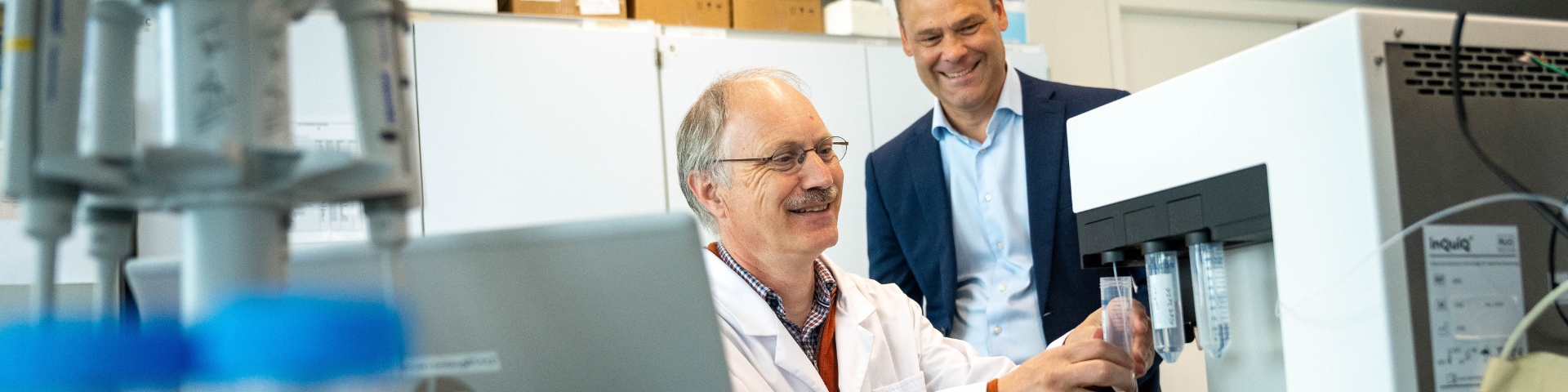
The technology has since come full circle. The inQuiQ is now used by research institutes and companies across Europe, including TNO, where systems have been placed at the Eindhoven and Leiden locations.
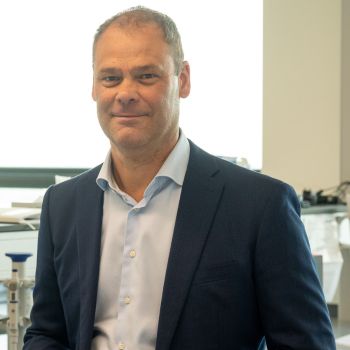
‘Our technology helps life-science researchers develop new medicines and diagnostic tests faster, so that innovative treatments reach patients sooner.’
More sensitive measurements for drug development
The need for technologies such as the inQuiQ is closely linked to one of healthcare’s major challenges: developing new and more effective medicines. An ageing population, rising healthcare costs and diseases for which effective treatments are still lacking are increasing the pressure to accelerate pharmaceutical research.
The development of a new medicine involves large numbers of experiments to determine how molecules interact, for example how a potential drug binds to its biological target. Being able to measure these interactions accurately is an important part of understanding whether a new drug candidate could work.
This places high demands on biosensors. Researchers need to detect increasingly small molecules and low concentrations while processing growing numbers of samples. Faster and more accessible measurements can help researchers evaluate potential drug candidates more efficiently and ultimately support the development of new treatments.
Integrated photonics opens new possibilities
Researchers currently rely mainly on two established technologies for biosensing. Surface plasmon resonance (SPR) has been the standard for more than 30 years, but offers limited room for further gains in sensitivity, throughput and cost. Biolayer interferometry (BLI) can handle more samples, but is less sensitive, making small molecules and weak interactions harder to measure.
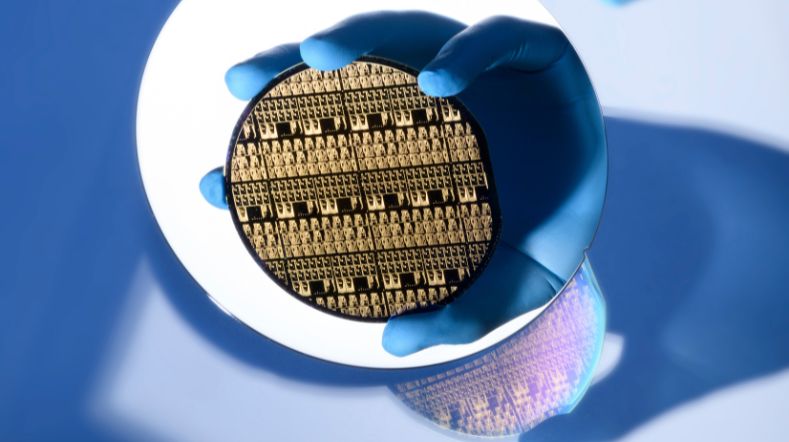
The inQuiQ puts integrated photonics to work. Using optical chips, it generates significantly more data per sample than conventional instruments and is sensitive enough to detect even the smallest molecules. At a substantially lower price than competing instruments, it makes highly sensitive biosensing accessible to more researchers.
First applications across Europe
Following its initial launch in the Benelux, the inQuiQ is now being used by research institutions and companies in several European countries. Users include Maastricht University, the University of Kraków and the Milan Centre of Oncology, with systems in use in countries including the Netherlands, Belgium, Ireland, Italy, Poland and the Czech Republic.
Delta Life Science is also expanding its European distribution network, with partners covering markets including Scandinavia, Switzerland, Italy and Central Europe. At TNO, inQuiQ systems are in use at the Eindhoven and Leiden locations.
‘The inQuiQ proves that integrated photonic sensing is ready for real-world use. Its high sensitivity and multiplexing capabilities make it a versatile instrument for TNO, from the development of next-generation diagnostics in healthcare to detection applications in CBRN defence.’
Towards higher-throughput drug discovery
Delta Life Science is now working to further increase the number of measurements researchers can perform. The inQuiQ can analyse interactions across a broad range of molecule sizes, from small drug compounds to antibodies and larger particles. This also makes the platform applicable to emerging therapeutic approaches, including bispecific antibodies, molecular glues and lipid nanoparticles.
An important property of photonic sensing is that multiple sensors can be read simultaneously without sacrificing sensitivity. Delta already uses this principle to measure multiple biomolecules within a single sample.
The next step is the inQuiQ768, an ultra-high-throughput version of the technology that is scheduled to launch soon. The system is designed to analyse many samples simultaneously and can be added as an upgrade to an existing inQuiQ.
This increased capacity responds to a growing challenge in areas such as antibody development. Pharmaceutical researchers need to screen and characterise increasing numbers of potential antibodies, creating demand for technologies that combine sensitive measurements with substantially higher throughput.
By bringing integrated photonics into life-science laboratories at scale, Delta Life Science aims to shorten this part of the drug-development process. The journey from TNO research to spin-off and back into TNO’s own laboratories illustrates how technology developed within an innovative organisation can mature into a commercial product and create new possibilities for research.
Get to know Delta Life Science
Contact us
-

Janneke Hendrikx
Functie:Press officerSpokeperson for hightech industry & space and TNO Ventures (spin-offs)
-
Standplaats:Den Haag - New Babylon
-
Telefoon:+31 6 11 10 72 56
-
Email:Email Janneke
-
LinkedIn:Janneke on LinkedIn
-
Get inspired
TNO and ASML join forces to scale European photonic chip manufacturing

Industrial photonic chip factory in Eindhoven launched

Gerwin Gelinck Honorary Professor Integrated Photonics at the University of Twente

Time setter story: Boudewijn Docter

TNO signals start of photonic chip pilot line