
Collaborating to accelerate climate-neutral cities
The Netherlands aims to become climate neutral by 2050. While that target year may still seem far away, seven Dutch cities are already working towards a much more ambitious timeline. Through NetZeroCities, an EU initiative involving more than one hundred cities across Europe, they are striving to achieve climate neutrality by 2030. Their plans and concrete actions offer valuable lessons for others. As a close partner in this European programme, TNO Vector will launch a Community of Practise this autumn for Dutch cities that also want to accelerate their transition to climate neutrality.
The urban dynamism that makes cities attractive places to live and work, with all its economic and societal benefits, is often still accompanied by significant greenhouse gas emissions. The challenge is therefore clear: how can cities become climate neutral while preserving their economic vitality and social value? It is a major undertaking, but one that is achievable. Moreover, the transition offers opportunities to address other societal challenges at the same time.
Sources of greenhouse gas emissions
To reduce emissions in a structural way, municipalities first need a comprehensive understanding of where emissions originate. How many industrial activities still rely on fossil fuels? How many buildings have poor energy performance ratings? To what extent has transport already become fossil free? These are just some sources of emissions. . Reliable insight into emissions is essential for developing a well-founded climate strategy. Municipalities cannot do this alone. Residents, businesses and other stakeholders must be actively involved in the process to ensure effective and widely supported actions.
Dutch mission cities
Seven Dutch cities have already developed concrete plans to accelerate the reduction of greenhouse gas emissions: Amsterdam, Rotterdam, The Hague, Utrecht, Groningen, Eindhoven and Helmond. These cities participate in NetZeroCities, a mission-driven EU-funded programme launched in 2021 that brings together 112 cities across Europe.

‘Participating cities are expected to do everything they can to achieve climate neutrality by 2030, twenty years earlier than 2050, the year by which the Netherlands aims to become climate neutral.’
An ambitious goal
For cities participating in NetZeroCities, developing a Climate City Contract is one of the programme requirements. According to Geiske Bouma, Principal Researcher at TNO Vector, the ambition of the initiative cannot be overstated. ‘Ambitious is definitely the right word,’ she says. ‘Participating cities are expected to do everything within their power to become climate neutral by 2030. That is twenty years earlier than the national target of 2050.’
More time needed, but significant progress achieved
The scale of the challenge is reflected in current progress. With only a few years remaining, it has become clear that the 2030 objective is not always achievable in every area. Dutch mission cities have indicated that additional time is needed for some challenges.
Grid congestion is currently the most significant bottleneck in the Netherlands. Because this is a national issue that cities themselves have limited influence over, the NetZeroCities assessment panel approved the collective request for additional time.
Utrecht recently submitted its Climate City Contract, while the other Dutch mission cities have already received the official Mission Label. According to Geiske Bouma, this recognition is well deserved. ‘Participation in the EU programme has clearly accelerated progress. In fact, the seven Dutch mission cities are genuine frontrunners within the Netherlands.’
Sharing knowledge and practical solutions
Each city has developed its own areas of expertise, explains David Dooghe, Senior Researcher at TNO Vector. ‘The Eindhoven metropolitan region, which includes Helmond, has become a strong advocate of biobased construction, an approach that many other cities find highly relevant. Groningen is developing advanced methods for monitoring energy use and preventing grid congestion. The Hague has established climate agreements with residents, entrepreneurs, large companies and societal organisations. These are just a few examples.’
The seven mission cities also actively collaborate with one another. For example, they are working together on a NetZeroCities pilot focused on a district investment platform.
‘Many of the challenges currently faced by Dutch mission cities are likely to be encountered by other cities in the future as well.’
Paving the way
Experimenting, sharing knowledge and collective learning are key drivers of progress. Even initiatives that do not proceed as planned provide valuable lessons. According to David Dooghe, many of the challenges currently faced by Dutch mission cities will eventually affect other municipalities as well. The mission cities demonstrate the importance of working together to address systemic barriers. Grid congestion provides a clear example. By presenting a united position to the Dutch government, the European Commission and the reviewers of the Climate City Contracts, they have strengthened their ability to address shared challenges.
Sharing experiences
A key question is whether Dutch cities share enough similarities to learn effectively from one another's experiences. Geiske Bouma believes they do. ‘At TNO Vector, we conducted a cross-sectional analysis of the Climate City Contracts developed by the Dutch mission cities. The results show that their approaches can make a substantial contribution to climate goals in many other municipalities as well. It therefore makes sense to share these insights with interested cities. That is exactly why TNO Vector, together with the Netherlands Enterprise Agency (RVO) and the Association of Dutch Municipalities (VNG), is establishing a Community of Practise.’
Interested in learning from the experiences that the seven Dutch NetZeroCities have gained over recent years?
You are welcome to join our new Community of Practise for cities that want to accelerate their journey towards climate neutrality. Contact us to learn more or to stay informed about the meetings and events planned for this autumn.
Meet the authors


Contact us
-
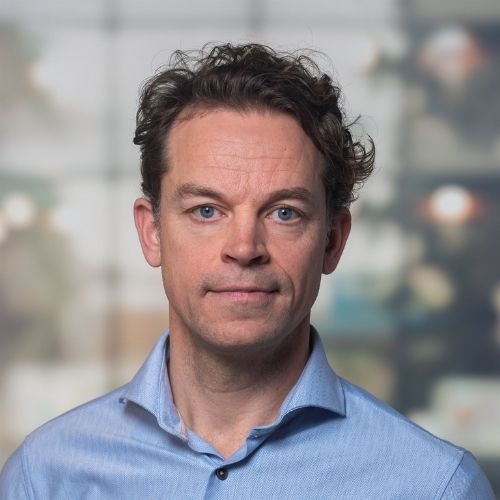
Chris van der Valk
Functie:Senior Partnership DeveloperAt TNO Vector, I develop new partnerships and build further upon existing ones for a more sustainable, livable and resilient society. Together with my excellent team of researchers, consultants and project managers – at TNO Vector and TNO-wide – I address societal challenges mainly from three areas of expertise: economics, governance and spatial use. To get to well-balanced integral solutions, we mostly combine these knowledge areas and even connect them to others like digitalisation.
-
Standplaats:Den Haag - New Babylon
-
Email:Email Chris
-
-
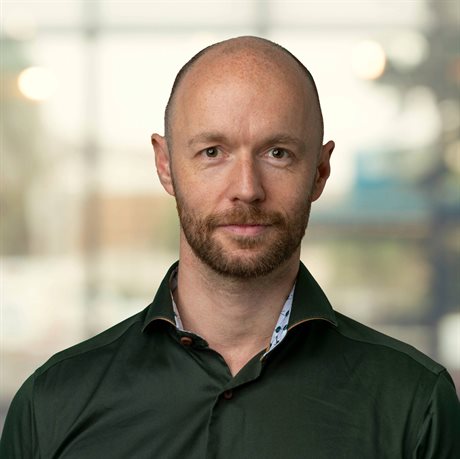
David Dooghe
Functie:Senior researcher and advisor in space, technology, and transitionDavid Dooghe is a senior researcher and advisor on space, technology, and transitions at TNO Vector. Trained as an architect and urban planner, he focuses on spatial (policy) challenges and the integration of technologies, as well as broader transitions such as those in healthcare, energy, and mobility.
-
Standplaats:Den Haag - New Babylon
-
Email:Email David
-
-

Geiske Bouma
Functie:Principal consultantI am Geiske Bouma, senior researcher in the field of spatial planning, transitions and urban innovation at TNO Vector. In my work, with a specialisation in spatial development and governance innovation, I focus on urban issues and the connection to policy and governance.
-
Standplaats:Den Haag - New Babylon
-
Email:Email Geiske
-
Get inspired
Multiple bottlenecks are slowing the growth of Dutch tech start-ups

Orchestrating Innovation Learning Programme
TNO appoints Lotte de Groen as Market Director of TNO Vector
Time setter story: Consultant Ilse Hellemans
High-tech industry in 2040