From test lab to digital twin: how TNO makes heat pumps smarter
The heat pump market is entering a new phase. After years of focusing on hardware and efficiency, attention is shifting towards smart controls, system optimisation and digital twins. According to TNO, these developments offer major opportunities to improve performance, reduce grid congestion and accelerate the energy transition.
From products to performance
Heat pumps have become a mature technology. As a result, innovation is increasingly focused on how systems perform in real-world conditions rather than on hardware alone.
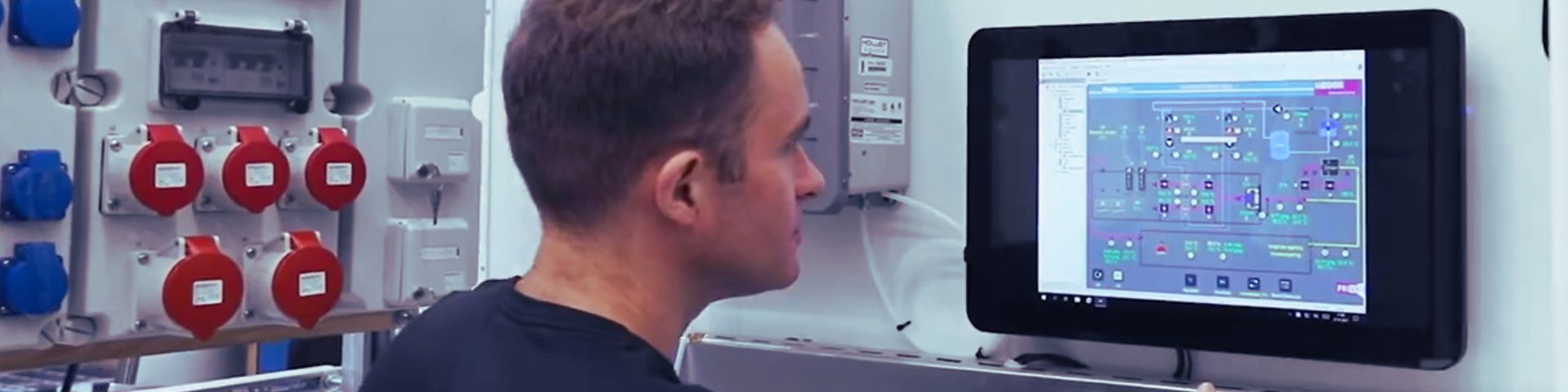
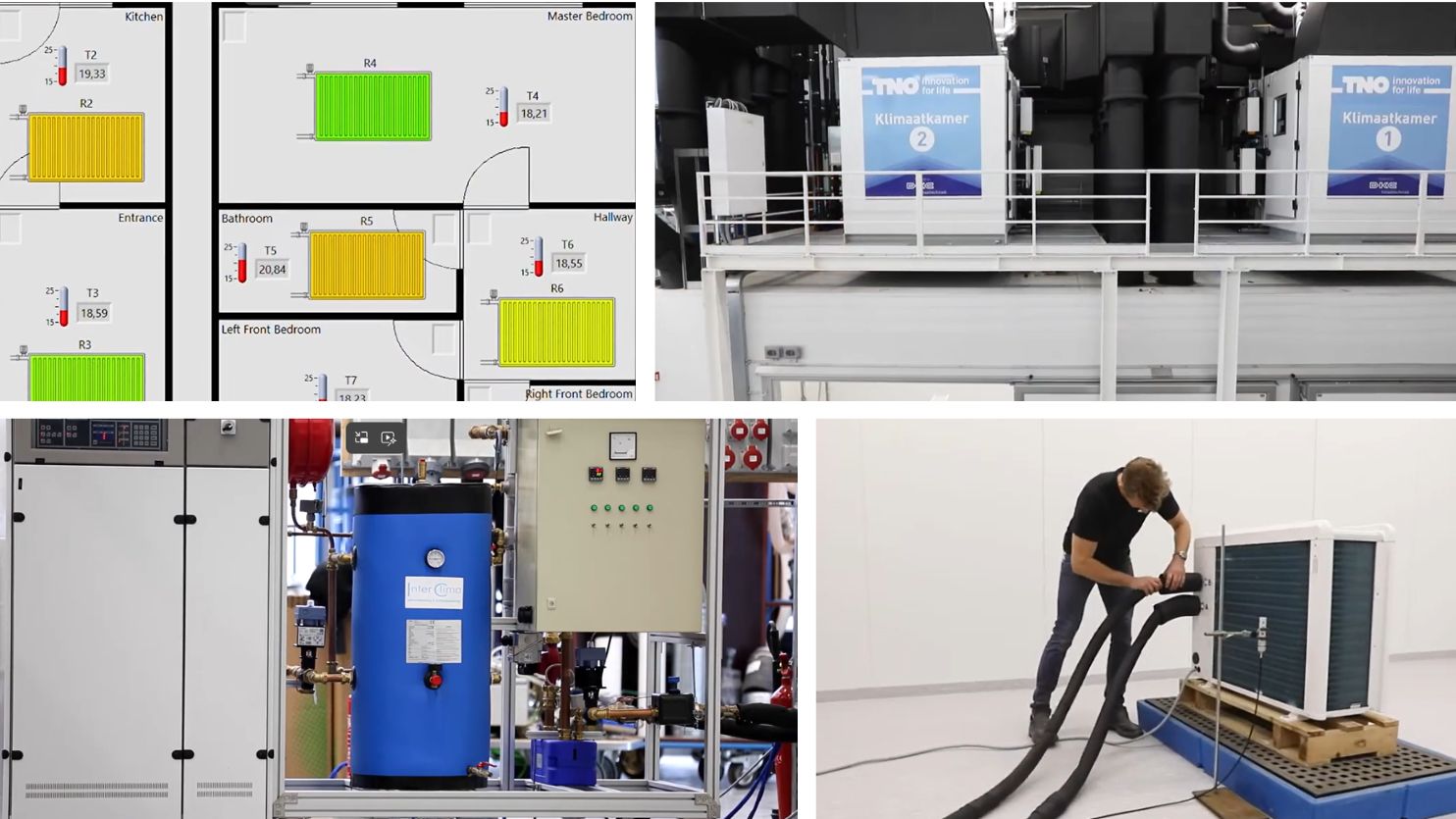
Since around 2018, TNO has expanded its research from individual products to the interaction between buildings, users, heating systems and control strategies. One important step has been the development of dynamic test facilities where real heat pumps are connected to virtual buildings. This allows researchers to recreate realistic operating conditions and investigate why apparently similar systems often perform differently in practice.
According to Dr Richard Kemp, Senior Scientist Buildings and Energy Systems and HVAC Consultant at TNO, the explanation is often not found in the hardware itself: 'Small changes in a control setting can have bigger impact on performance than a five or ten percent difference between two different heat pumps based on static performance ratings. Interactions with heat emitter and hot water systems play a role in this.'
That insight shifted the focus of research from component performance to smarter system operation.
Improving real-world performance
For manufacturers, installers and building owners, this is an important lesson. Product specifications do not always reflect how systems behave in real homes.
To better understand this gap, TNO developed a hardware-in-the-loop testing environment. In this setup, a real heat pump operates in a laboratory while a digital building model recreates realistic operating conditions. This approach allows researchers to evaluate control strategies without relying solely on long-term field trials.
The results show that configuration settings, building characteristics and user behaviour often have a greater impact on energy performance than small differences between products.
At the same time, the industry faces a practical challenge. Many installers originally specialised in boilers and now have to deploy heat pumps at scale in limited time. Achieving optimal performance calls for the necessary time to be taken, specialised knowledge and careful configuration.
TNO is therefore investigating how systems can learn and optimise themselves, making high performance less dependent on manual settings.
'The real difference comes from how intelligently a system can interact with the building, the user and the wider energy system.'
Smart control becomes essential
The rapid growth of electric vehicles, solar panels and heat pumps is placing increasing pressure on electricity networks. Grid congestion has become one of the major challenges of the energy transition. At the same time, dynamic electricity tariffs are creating new opportunities for flexible energy use. Consumers can increasingly benefit from shifting electricity consumption to periods with lower prices.
According to Kemp, this is where the next generation of heat pumps will make the difference. 'Hardware is becoming less of a differentiator. The real difference comes from how intelligently a system can interact with the building, the user and the wider energy system.'
To support this transition, TNO is working on a toolbox of building models, product models and optimisation techniques. Using existing sensors, these tools can determine how quickly a building heats up, how much thermal mass it contains and when energy demand can be shifted without affecting comfort. This creates opportunities to reduce energy costs while simultaneously lowering peak demand on the grid.
Digital twins as an enabler
A key element of this vision is the digital twin. In essence, a digital twin is a virtual representation of a specific building, heating system or heat pump. The concept combines a trainable building model, a product model and an optimisation engine capable of making decisions based on predefined objectives such as cost reduction, flexibility or comfort.
Because these models continuously learn from operational data, they become increasingly accurate over time.
This enables a wide range of applications. Digital twins can estimate how much flexibility a building can offer to the electricity grid, support retrofit decisions and evaluate future system upgrades before investments are made.
The technology also opens the door to predictive maintenance. By continuously comparing measured performance with expected performance, deviations can be detected at an early stage. Potential faults can therefore be identified before they develop into costly failures.
'We know that hybrid heat pumps can often reduce gas consumption in existing homes by 75 to 80 percent.'
Looking at the whole system
According to TNO, the future challenge is not individual products but integrated energy systems.
More and more homes combine heat pumps with solar PV, home batteries, electric vehicle charging and home energy management systems. The challenge is ensuring that all these technologies work together effectively.
This system-level perspective is where TNO believes it can make the greatest contribution.
'We are not going to design a better heat pump than a manufacturer. What we can do is help understand how complete systems perform in practice and how those systems can be made smarter.' TNO combines expertise in building physics, HVAC systems, simulation modelling, data analytics and optimisation. Advanced testing facilities allow new concepts to be validated under realistic and controlled conditions.
Where the biggest sustainability gains can be achieved
While much attention is focused on new construction, the greatest sustainability challenge lies in existing buildings. New homes can be designed for low energy consumption from the outset. Existing housing stock is far more difficult and expensive to renovate to the highest standards.
For that reason, Kemp sees a major role for hybrid heat pumps. These systems combine a heat pump with a boiler and can often be installed in existing homes without major renovations.
'We know that hybrid heat pumps can often reduce gas consumption in existing homes by 75 to 80 percent.' According to Kemp, this makes them one of the most practical and scalable solutions available today for achieving significant CO₂ reductions.
Would you like to explore how smart controls, digital twins or system optimisation can improve heat pump performance? Contact one of our experts.
Our expert

Contact us
-

Marnus Witte
Functie:Medior Business Developer-
Standplaats:Delft - Molengraaffsingel
-
Email:Email Marnus
-
Get inspired
Technical catalogue based on Danish model to accelerate the roll-out of district heating networks
Heating and cooling systems

TNO and Kiwa to draw up test protocol for heat pump systems
SolarICE: new off-grid cooling technology