Rising material use in electronics and climate-control value chains calls for additional policy measures
The energy transition requires heat pumps, smarter electronics and further electrification. This reduces energy use and emissions, but also increases demand for materials and critical raw materials. Two new product group analyses map the electronics and climate-control systems value chains and show why circular policy must look beyond collection and recycling alone.
What is a product group analysis?
Product group analyses (PGAs) are part of the Circular Economy Knowledge Programme, a collaboration between knowledge institutes, policy assessment agencies and public-sector organisations, led by the Netherlands Environmental Assessment Agency (PBL). The Dutch government aims to achieve a fully circular economy by 2050. The programme monitors and evaluates progress towards this goal and provides the government with the knowledge needed to develop or adjust policy.
Each PGA examines one product value chain using the circular strategies of reduction, lifetime extension, substitution and high-quality processing. A PGA maps the scale of material flows, the associated environmental impacts, which circular strategy offers the greatest potential, the bottlenecks and barriers that impede scaling, and the policy levers available to remove those barriers. The findings contribute to the evidence base for PBL’s Integral Circular Economy Report (ICER), which describes progress in the transition every two years and helps to guide the National Circular Economy Programme.
PGA Electronics: all circular strategies are needed
Electronics cover a wide range of products, from smartphones and laptops to white goods and lighting. Without additional policy, both primary material use and the environmental impact of this value chain will continue to rise towards 2050. The analysis shows that policy must address the entire value chain and apply all circular strategies, from reduced consumption and longer lifetimes to repair, reuse, substitution and the recovery of critical and other materials. Only by combining these strategies can a circular electronics value chain come closer to becoming a reality.
Up to 53%
lower total material demand
Up to 89%
lower inflow of primary materials
Up to 52%
lower climate impact
The figures illustrate the potential impact of such a combined approach. Together, all strategies could reduce total material demand in the electronics value chain by 25 to 53 per cent in 2050, while the inflow of primary materials could fall by as much as 40 to 89 per cent. These measures would also substantially reduce climate impact, by 18 to 52 per cent in 2050.
These figures cover the production and processing of products and their constituent materials; emissions during use are excluded. By combining all circular strategies, policymakers can address the entire value chain, from design and purchasing to use, repair, reuse and high-quality processing.
Recommendations for policymakers:
- Restrict the import and sale of electronics with a very short lifetime or intended for single use.
- Make socially responsible procurement mandatory for public contracts.
- Clarify warranty rules so that repair becomes a more attractive standard option than replacement.
- Use European product legislation (ESPR) to set minimum recycled-content requirements for plastics and metals, linked to recovery targets for critical and other materials.
- Improve collection, for example through home collection by parcel delivery services or a deposit-return system, combined with stricter enforcement.
Read the full PGA Electronics report
PGA Climate-control systems: the greatest gains come before recycling
The decarbonisation of buildings is driving a rapid shift from high-efficiency boilers to heat pumps, hybrid systems, ventilation, cooling and smart controls. This is essential for the energy transition, but it also broadens material demand because products are becoming more complex, contain more electronic components and depend on critical materials. Growth in the housing stock places further pressure on total material demand. The analysis shows that policy currently focuses mainly on energy performance and electrification, while material use, lifetime, value retention and high-quality processing are not yet sufficiently considered. Better recycling is therefore necessary, but not enough to make the value chain circular.
Up to 39%
lower total material demand
Up to 73%
lower inflow of primary materials
Up to 45%
lower climate impact
The figures show that reduction is the most promising individual strategy for climate-control systems. Designing systems more intelligently and with fewer materials, using collective solutions and avoiding oversizing could reduce the inflow of primary materials by 18 to 35 per cent in 2050. Climate impact would also fall by 18 to 36 per cent compared with business as usual.
These figures cover the production and processing of systems and materials, excluding emissions during use, such as those from natural gas combustion. If all measures are applied together, combining reduction with lifetime extension, substitution and high-quality processing, the inflow of primary materials could fall by 33 to 73 per cent and climate impact by 20 to 45 per cent.
The analysis also shows that the main constraints are not technical. The five principal barriers relate primarily to targets, governance, regulation, risk perception and business cases. The challenge is therefore to make circularity as concrete as energy performance, comfort and costs.
Recommendations for policymakers:
- Embed low-installation construction and renovation in legislation, standards and subsidy schemes.
- Adapt energy, environmental and comfort standards so that lower material use is rewarded.
- Include circular criteria as standard in public procurement.
- Make maintenance, repair and reuse more financially attractive than full replacement.
- Refocus extended producer responsibility more strongly on reuse and high-quality processing.
Read the full PGA Climate-Control Systems report
This report was produced as part of the Circular Economy Knowledge Programme. The programme is a partnership between Centraal Bureau voor de Statistiek (CBS), Centrum voor Milieuwetenschappen Leiden (CML), het Centraal Planbureau (CPB), het Rijksinstituut voor Volksgezondheid en Milieu (RIVM), RVO.nl, Rijkswaterstaat, TNO en de Universiteit Utrecht (UU) onder leiding van het Planbureau voor de Leefomgeving (PBL).
TNO led the core teams for the electronics and climate-control systems analyses. The electronics core team comprised TNO, Rijkswaterstaat, Utrecht University and CE Delft; the climate-control systems core team comprised TNO, Utrecht University and Copper8.
The Dutch government aims to achieve a fully circular economy by 2050. The knowledge programme monitors and evaluates progress along the pathway set by the government towards 2050 and provides the government with the knowledge needed to develop or adjust policy. More information about the Circular Economy Knowledge Programme is available at the PBL website.
TNO connects models, systems expertise and practice
TNO coordinated the analyses and mapped material flows, stocks and environmental impacts for the current situation and future scenarios. Combining quantitative models with knowledge of policy, markets and value-chain dynamics reveals where measures can intervene, which unintended effects may arise and where instruments have the greatest potential.
This integrated approach helps governments and businesses look beyond a single product, life-cycle phase or circular strategy. The next step is to work with value-chain partners to test and quantify promising policy options further and translate them into implementable rules, standards and investment decisions. Download the reports for the full analyses or contact TNO to explore how material-flow and environmental-impact models can support policy and strategy.
Contact us
-

Tim Bulters
Functie:Business Developer Sustainable Energy & Circularity Transition PathwaysTim has always had a drive to contribute to a more sustainable world. During his career, Tim has specialised in the Circular Economy. His goal is to create a fair and sustainable economy with enough materials for everyone. Since starting as Business Developer at TNO, Tim's focus has been on the plastics sector. His area of expertise is Microplastics and Circular Plastics Modelling.
-
Standplaats:Utrecht - Princetonlaan
-
Email:Email Tim
-
LinkedIn:Tim on LinkedIn
-
-

Wouter de Wolf
Functie:Business Developer Circular EconomyContact me to partner with TNO on Circular Economy related topics like: Recycling and other R-strategies, Critical Raw Materials and Environmental Impact Assessment (LCA).
-
Standplaats:Utrecht - Princetonlaan
-
Email:Email Wouter
-
LinkedIn:Wouter on LinkedIn
-
Get inspired
ENLIT Europe 2026
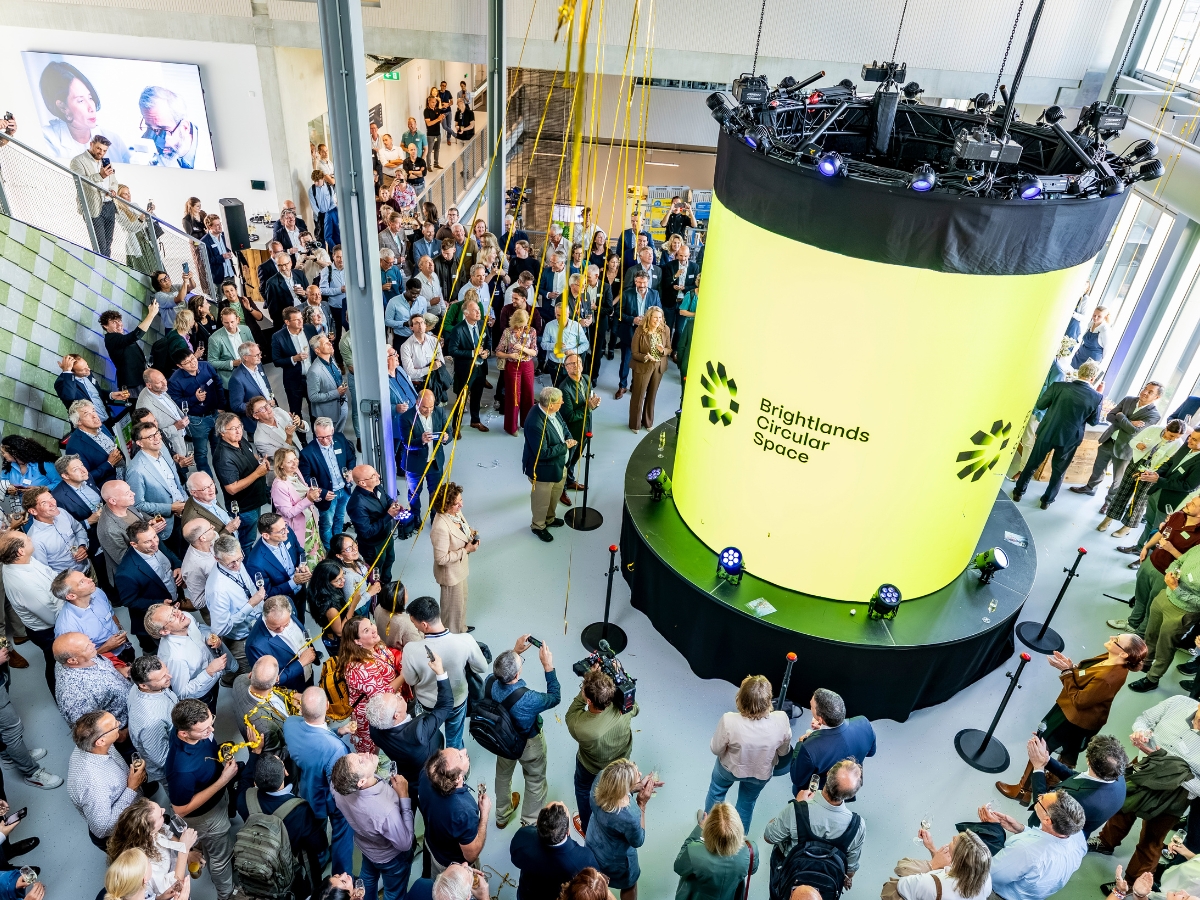
Brightlands Circular Space opens: TNO helps companies scale up plastic innovations faster
First projects launched at FLIE: test environment accelerates industrial electrification
TNO smart windows applied in buildings and homes for the first time

SkiesFifty and TNO collaborate to strengthen independent insight in Sustainable Aviation Fuel investments