New polyester seals enable mono-material PET food packaging
Status
September 2025 - March 2029
Partners
DuFor Resins B.V., TNO and the University of Twente
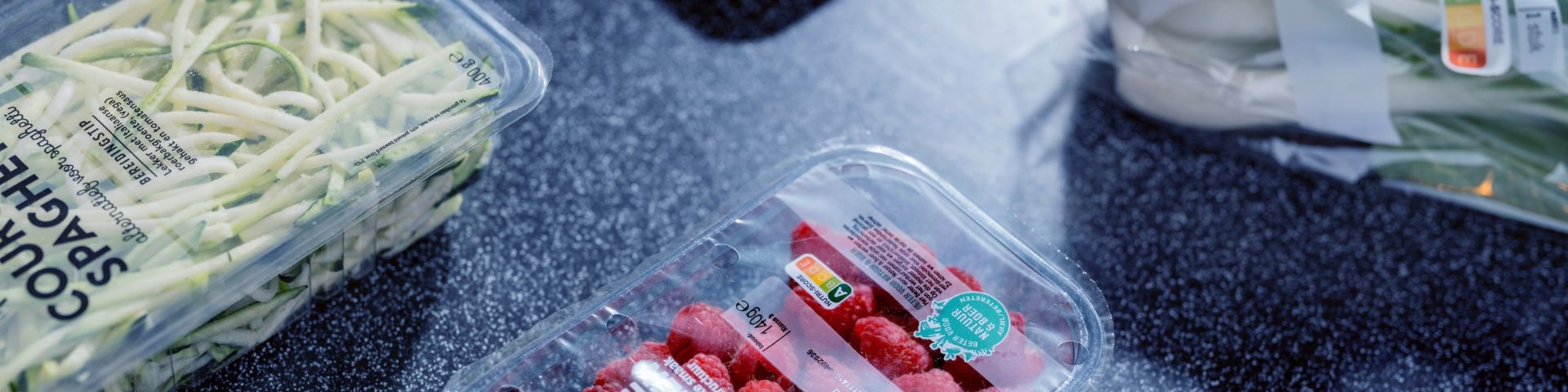
Stakeholders across the Dutch polyethylene terephthalate (PET) food-packaging value chain face a key recyclability challenge. PET trays currently often require non-PET sealing materials because conventional PET grades do not provide optimal sealing performance.
This creates multi-material structures that can hinder recycling. PET may be incompatible with commonly used sealing materials, such as polyolefins, and the layers can be difficult to separate after use.
The Sealing it project addresses this challenge by developing packaging in which both the tray and sealing film are based on PET. The aim is fully recyclable PET food packaging that supports the transition towards a circular Dutch packaging value chain.
Developing polyester seals that perform in real conditions
The project brings together DuFor Resins, TNO and the University of Twente to develop new polyester-based sealing materials, known as sealPETs, for recyclable mono-material PET food packaging.
The partners are developing sealPET films and sheets with a lower seal initiation temperature, high seal strength and reliable sealing when food contamination is present. At the same time, the materials must remain compatible with PET recycling.
The research examines the fundamental relationship between polyester properties and sealing behaviour. It also studies how contaminants such as fats, proteins, moisture and particles affect seal formation and micro-leakage.
From material knowledge to predictive design guidelines
The project will translate this knowledge into a machine-learning model that predicts sealing behaviour. The findings will also inform design guidelines for future PET sealing materials.
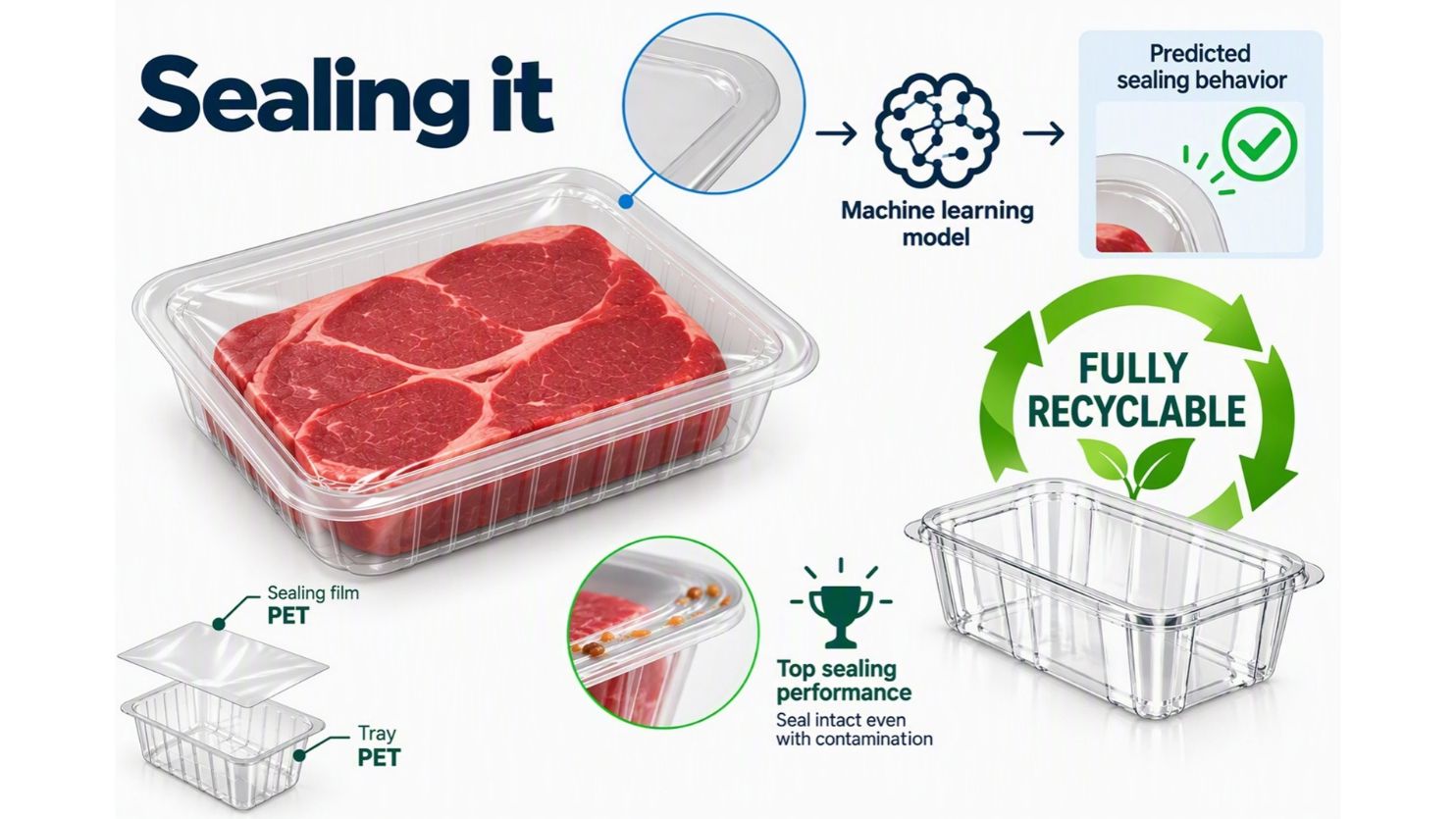
The work progresses from material development and fundamental understanding to industrial-scale production and validation. Expected results include a new sealPET formulation with improved sealing performance and recyclability, a predictive model for PET grades, deeper scientific understanding of sealing and contamination effects, and design guidelines for flexible PET packaging.
Testing PET sealing films at industrial scale
The developed material will ultimately be validated at technology readiness level 7 (TRL 7). This includes industrial-scale production of sealing films and processing into biaxially oriented PET (BOPET)/sealPET double-layer films without polyurethane (PU) lamination resin.
The project will then validate prototype sealing films in food-packaging applications. This step is intended to show whether the materials and processing routes can meet practical packaging requirements at industrial scale.
Turning sealing knowledge into practical solutions
The project is expected to deliver a fully recyclable PET cover film with improved sealing performance in the presence of contamination. It also explores PU-free film-processing routes, such as casting or blowing, to further improve packaging recyclability.
For TNO, the project generates knowledge about the relationship between material properties, film processing and sealing performance. TNO translates this knowledge into solutions that can be applied by industry.
After the project, the focus shifts to further industrial validation, scale-up, commercialisation and market introduction of the sealPET solution. DuFor Resins and its customers across the PET food-packaging value chain will support these steps.
Overall, the project can contribute to a more circular PET packaging value chain by reducing dependence on non-PET sealing materials, improving recyclability and reducing waste. It may also create a new market opportunity for DuFor Resins. Sales are projected to reach 2,400 tonnes per year by 2033, corresponding to €480,000 in net revenue
Work with TNO on circular packaging
Through the Circular Packaging programme, TNO supports stakeholders across the packaging value chain in making packaging more circular without compromising functionality. Our expertise covers design for recycling, the integration of recycled materials and the development of reusable packaging. We also consider key performance requirements, including sealing.
Projects such as Sealing it translate this expertise into practical solutions. They help industry make informed material and design choices and accelerate the transition towards circular packaging.
Would you like to explore how TNO can support your circular packaging challenge?
Partners


Contact us
-

Marieke Havermans
Functie:Senior Business Developer, Circular Plastic PackagingMarieke is a packaging technologist with a passion for sustainability. With 20 years' experience in the industry, she understands the impact and associated challenges of the Packaging & Packaging Waste Directive (PPWD) for the industry. Her believe is that a successful transition is only possible through collaboration across the value chain.
-
Standplaats:Geleen - Brightlands Materials Center
-
Email:Email Marieke
-
LinkedIn:Marieke on LinkedIn
-
Co-funded by
Get inspired
Progress in circular packaging for soups and sauces
Circular packaging