Brightlands Circular Space: Circular plastics in practice
Pressure on the plastics value chain is increasing. Raw materials are becoming scarcer, regulations are becoming stricter and demand for circular solutions is growing. Companies are investing in new materials, recycling technologies and sustainable products. And everyone in the plastics industry knows that the greatest challenge is no longer developing new ideas, but putting them into practice.
Working together to bring circular plastics to market
Many innovations stall because the step from research to application is considerable, costly and risky. Brightlands Circular Space (BCS) helps bridge the gap. We can help answer questions such as:
- What happens when a promising material is processed not in kilograms, but in tonnes?
- How does a new product or packaging concept perform outside the laboratory?
- Which material choices deliver the best results?
- How do you validate new solutions before investing in scale-up?
- And which partnerships are needed to bring innovations to market successfully?
Companies, knowledge institutions and public authorities come together in an open innovation environment. Here, you can develop, test and validate circular plastics solutions and scale them up towards industrial application. From material and process development and product design to validation, scale-up and collaboration across the value chain. This is not an isolated research project, but a place where innovations make the transition into practice.
~70%
of collected plastic is incinerated, resulting in the loss of valuable raw materials.
4,000 m²
of equipment for plastics processing, analysis and R&D support.
> 150 experts
in areas including plastic materials, modelling, packaging, recycling and design for circularity.
How we can help you
Schedule a visit or meeting
Discover what BCS could mean for your material, process or product question.
Discuss your case
Explore how to have your circular plastics innovation tested, validated or scaled up.
Request facility availability
See which equipment, space and support are available for your test or demonstration.
From idea to industrial application
A circular plastics innovation can only be applied once it has been tested, validated and scaled up. Brightlands Circular Space brings the development, testing and scale-up chain together in a single pre-industrial environment. Here, organisations work on new materials, processing, product development, material analysis, validation and value chain collaboration, all before investing in industrial implementation.
Discover what is possible within BCS
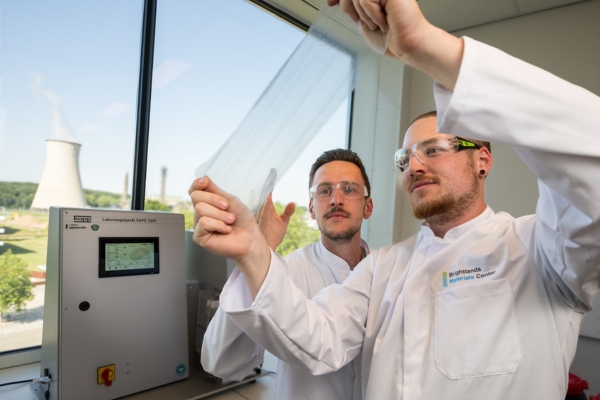
Testing and scaling up materials and processes
Test recyclates, new materials and compounds in processing facilities at pilot and demonstration scale. BCS provides access to equipment, operator support and a realistic environment for process validation.
Product development and prototyping
Develop, design and test new applications in our Circular House. Here, you can investigate material choices, product design and processability in an integrated way.
Material analysis and validation
Gain insight into mechanical properties, chemical composition, processability and quality. For example, compare virgin and recycled material to make better-informed choices.
Pre-industrial validation before investment
Reduce technical and commercial risks by validating materials, processes and applications before scaling up or investing in industrial implementation.
Collaboration across the entire value chain
Collaborate with material producers, converters, recyclers, brand owners, knowledge institutions and other value chain partners in an open innovation environment.
Evidence for the market, policy and the business case
Use data, practical experience and validation to better substantiate material choices, circularity claims, policy questions and investment decisions.
BRAITA, BCS’s AI conversation partner
At Brightlands Circular Space, you will find the facilities, expertise and ecosystem behind circular plastics. BRAITA, BCS’s AI conversation partner, invites visitors to ask questions, explore choices and view circularity from different perspectives. As a concept in development, BRAITA evolves through the insights, experiences and conversations that emerge within the BCS ecosystem.
Our real-world examples
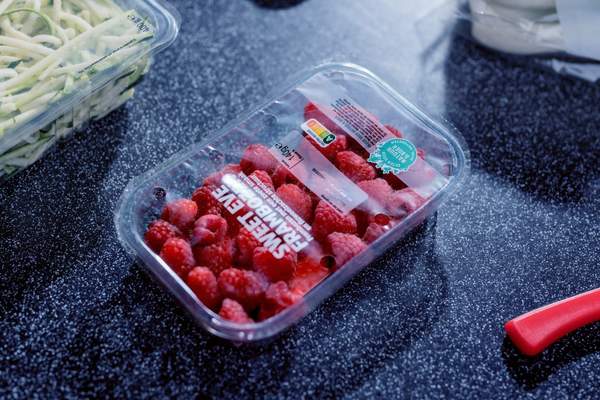
Circular packaging
Develop and validate packaging solutions that are more recyclable and meet future regulations and quality requirements.
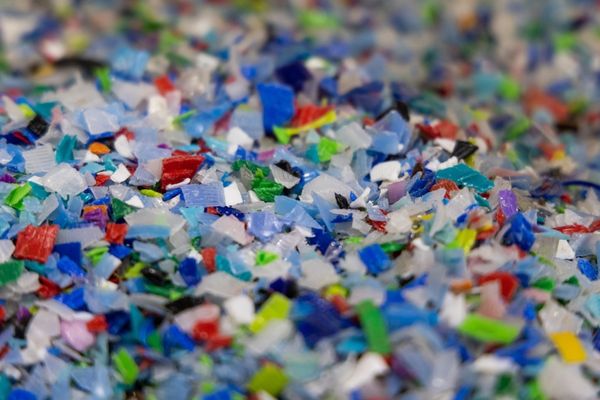
Recyclate quality and application
Investigate how recyclate behaves during processing and in applications, and how to increase its quality and value.
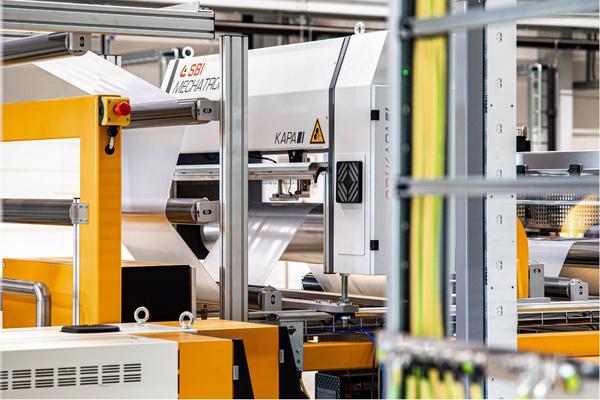
From lab to practice
Use facilities, expertise and partners to demonstrate and validate innovations faster and move them towards the market.
An innovation environment for the entire value chain
The circular plastics value chain consists of organisations that each view the same transition from a different perspective. That is why TNO does not offer a standard solution within Brightlands Circular Space. Instead, we provide an environment in which organisations can address their own challenges and collaborate with partners across the value chain.
The relevant support depends on your position in the value chain. Below, you can read about the key challenges for each type of organisation and how TNO and BCS support them with expertise, facilities and equipment.
Demand for circular materials is growing rapidly. At the same time, market requirements are becoming increasingly stringent. Materials must be more sustainable while meeting the same quality, performance and processing requirements as existing solutions.
TNO helps material producers and compounders bring new materials towards industrial application faster and with greater confidence.
TNO combines expertise in areas such as polymer materials and processing, recycling technologies, application knowledge and scaling up from laboratory to pilot scale. This helps companies bring their materials from idea to market faster.
BCS: facilities and equipment
At Brightlands Circular Space, you will find the facilities, equipment and expertise to develop and test circular plastics for industrial application. Here, you can upgrade recyclates, process them into new material formulations and test them for applications in different markets.
All equipment at BCS is designed to demonstrate this in practice, helping you bring innovations to market faster. Examples include the KraussMaffei tandem recycling and compounding extrusion line, a Collin seven-layer cast and blown film line, the Brückner Karo 5.0 biaxial stretcher and our Kahl compactor for pre-processing low-density plastics feedstock.
New materials offer opportunities, but also create uncertainty:
- What does a change in material or formulation mean for product quality?
- How does a circular material behave in your existing processes?
- And what risks arise when scaling up a material to industrial production?
TNO helps converters and manufacturers answer these questions. The answers enable you to make informed decisions about material use, process adjustments and implementation.
Inks, adhesives and other functional materials
Inks and adhesives are also important for packaging circularity. They must be compatible with recycling and available for plastics with high recyclate content. New recyclable barrier materials that can incorporate recyclate are also needed for multilayer films.
An environment that reflects industrial practice
Within BCS, you test materials and processes in an environment that closely reflects industrial practice. It provides the facilities, equipment and expertise required. Using our equipment, including the Collin seven-layer cast and blown film line and the Brückner Karo 5.0 biaxial stretcher, we produce materials and products in quantities and formats suitable for further processing.
This gives you valuable insights into processability, process stability and product quality without changing your own production environment. It makes the step towards implementation manageable and based on practical experience rather than assumptions.
Packaging producers also face a complex challenge. Their packaging must contain more circular feedstock, become more recyclable and comply with new laws and regulations. At the same time, it must meet stringent requirements for functionality, food safety, shelf life and appearance.
TNO helps packaging producers develop future-proof packaging solutions that continue to meet today’s requirements. The breadth of our expertise means that we can support not only product-technical questions, but also design choices and societal issues.
The place to bring packaging towards market introduction
Within BCS, we bring together the facilities and expertise needed to develop new packaging concepts. Production and validation take place under conditions that reflect real-world practice.
Our equipment, including the Collin seven-layer cast and blown film line and the Brückner Karo 5.0 biaxial stretcher, can produce a wide range of end materials and products.
This enables you to investigate how mono-material solutions perform, how circular feedstock affects product properties and which material and design choices contribute to future circularity targets. It provides greater confidence in performance, processability and commercial viability before packaging is introduced to the market.
Good news: sustainability targets are becoming increasingly specific. In the packaging industry, for example, you will need to comply with the EU Packaging and Packaging Waste Regulation (PPWR). At the same time, material and packaging choices must continue to support quality, availability, brand value and consumer confidence.
For brand owners, the challenge is to make the right choices. Which solution delivers genuine impact? Which risks are acceptable? And how can you substantiate investments for internal stakeholders and the market?
TNO helps brand owners translate sustainability ambitions into evidence-based decisions. We do this by clarifying what is and is not technically possible, while also considering economic aspects.
Within BCS, we demonstrate what is possible. For example, our Collin seven-layer cast and blown film line can produce multilayer packaging material.
By collaborating with material producers, converters, recyclers and researchers, you gain insight into performance, feasibility, risks and impact. This helps translate sustainability targets into solutions that are technically, commercially and operationally viable.
The quality of recyclate increasingly determines its economic value. The higher the quality, the wider its potential use and the greater the opportunities for high-value applications.
BCS draws on a range of expertise, from materials knowledge and technology development to the use of AI. This enables us to help recyclers and waste processors optimise material streams, improve separation technologies and increase recyclate quality, as well as develop new applications.
BCS brings facilities and expertise together in an environment where you can upgrade, improve and validate plastics streams for new applications. Our KraussMaffei tandem recycling and compounding extrusion line features in-line melt filtration, degassing and deodorisation, improving recyclate quality.
From waste stream to valuable feedstock
BCS has several in-line sensors for measuring chemical composition during processing, using techniques such as Raman spectroscopy and infrared. This allows you to optimise recyclate quality. You can then use the Collin seven-layer cast and blown film line to validate whether the recyclate is suitable for multilayer film solutions. In this way, you work on quality improvement, process optimisation and new high-value applications for recycled materials.
The links between recyclers, material producers, converters and brand owners provide insight not only into the technical possibilities, but also into market demand for circular feedstock. This enables you to turn a waste stream into valuable feedstock.
Many innovations stall between a successful pilot and their first commercial application. This is not because the technology does not work, but because access to facilities, expertise, validation opportunities and industrial partners is lacking. For start-ups and scale-ups, the challenge is often not developing the technology, but demonstrating that it can be scaled up successfully.
Within BCS, start-ups and scale-ups gain access to testing facilities, real-world validation and partners from across the value chain.
The circular transition requires policy that reflects technical, economic and societal realities. Effective decisions require insight into both the possibilities and limitations of new materials, processes and value chain solutions. Policymakers are therefore increasingly looking for practical experience that shows what actually works.
Within BCS, you can see how innovations perform under realistic conditions and which prerequisites are needed for successful implementation. By linking pilots, demonstrations and validation projects to policy questions, you can make better-informed decisions on circularity, raw material use and future regulation.
System models and scenarios can help reveal potential effects on costs, circularity, climate and the environment. They provide a basis for investment and policy advice, resulting in policy that is not only ambitious, but also feasible and effective.
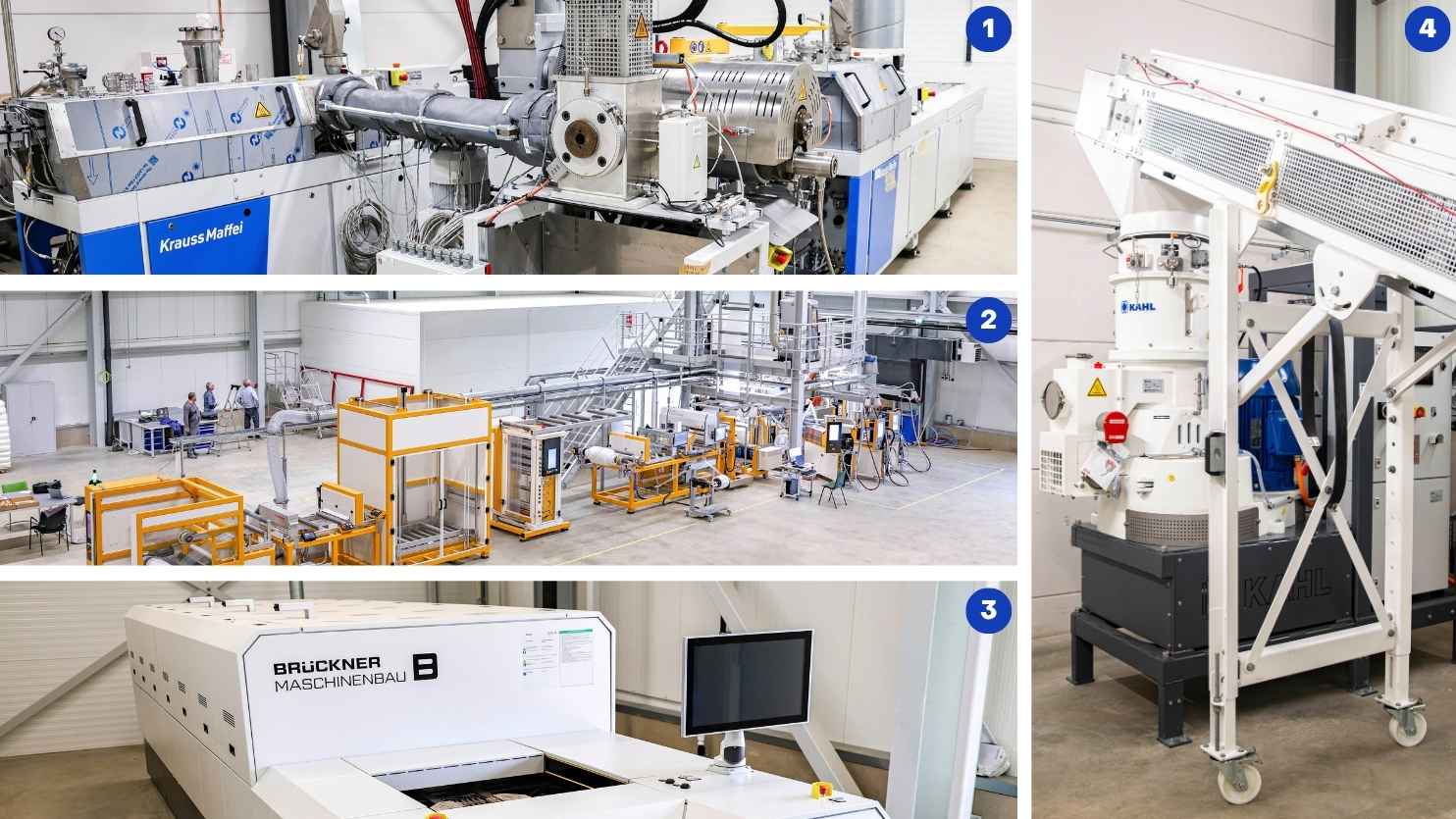
KraussMaffei (1), Collin line (2), Brückner Karo (3) en Kahl compactor (4).
Discuss your challenge
Would you like to discover what Brightlands Circular Space can do for your material, process or product challenge? Contact TNO’s experts.
Contact us
-
Peter Versloot
Functie:Senior Business Developer Circulaire PlasticsPeter Versloot brings technology and markets together to create sustainable solutions. As a Business Developer at TNO, he focuses on the plastics sector, with expertise in Microplastics and Circular Plastics Modelling.
-
Standplaats:Eindhoven - High Tech Campus 25
-
Email:Email Peter
-
LinkedIn:Peter on LinkedIn
-
Get inspired
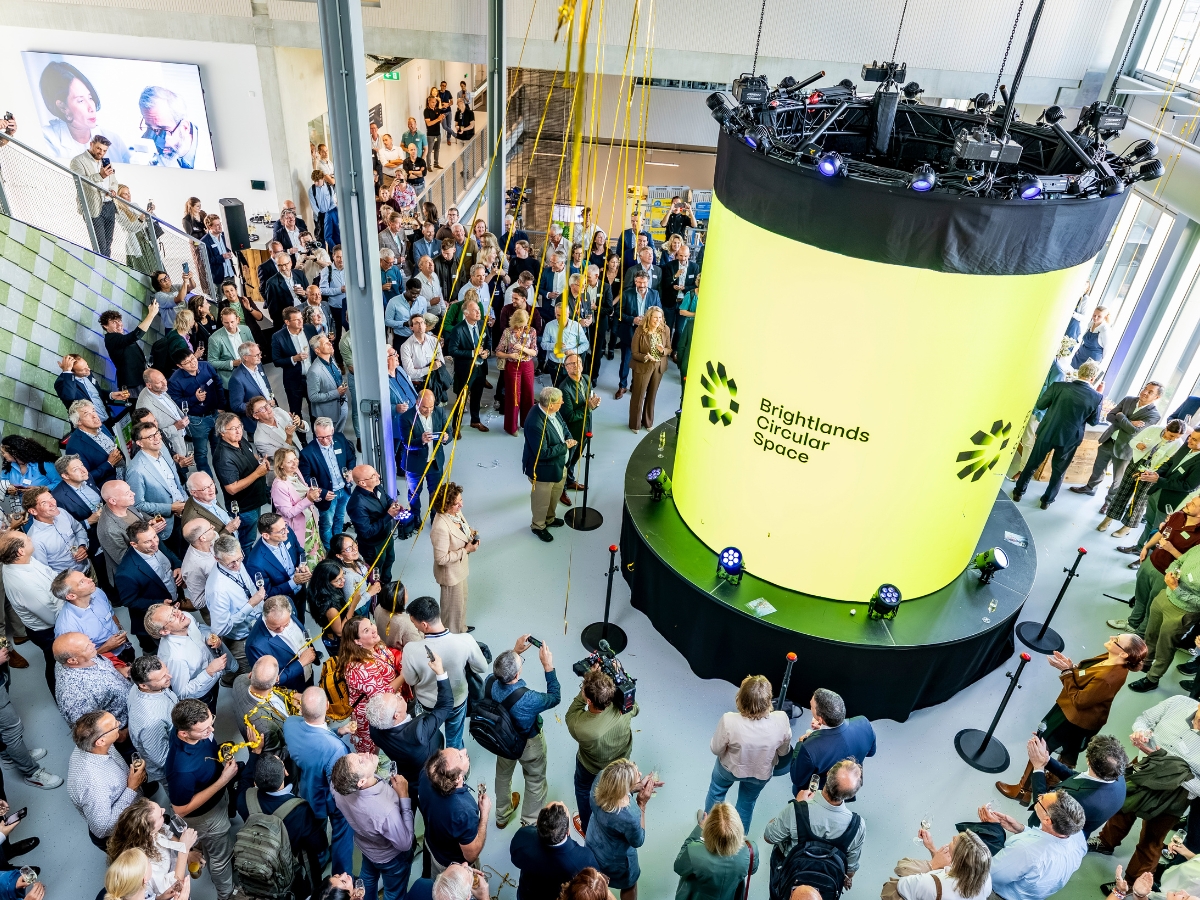
Brightlands Circular Space opens: TNO helps companies scale up plastic innovations faster
Turning textile waste into new chemical building blocks
An objective standard to assess recycled plastic quality
Fewer microplastics and higher yields in plastic recycling
New routes for sorting and composite separation