

Remote Data Collection Platform: device-agnostic infrastructure for secure digital health studies
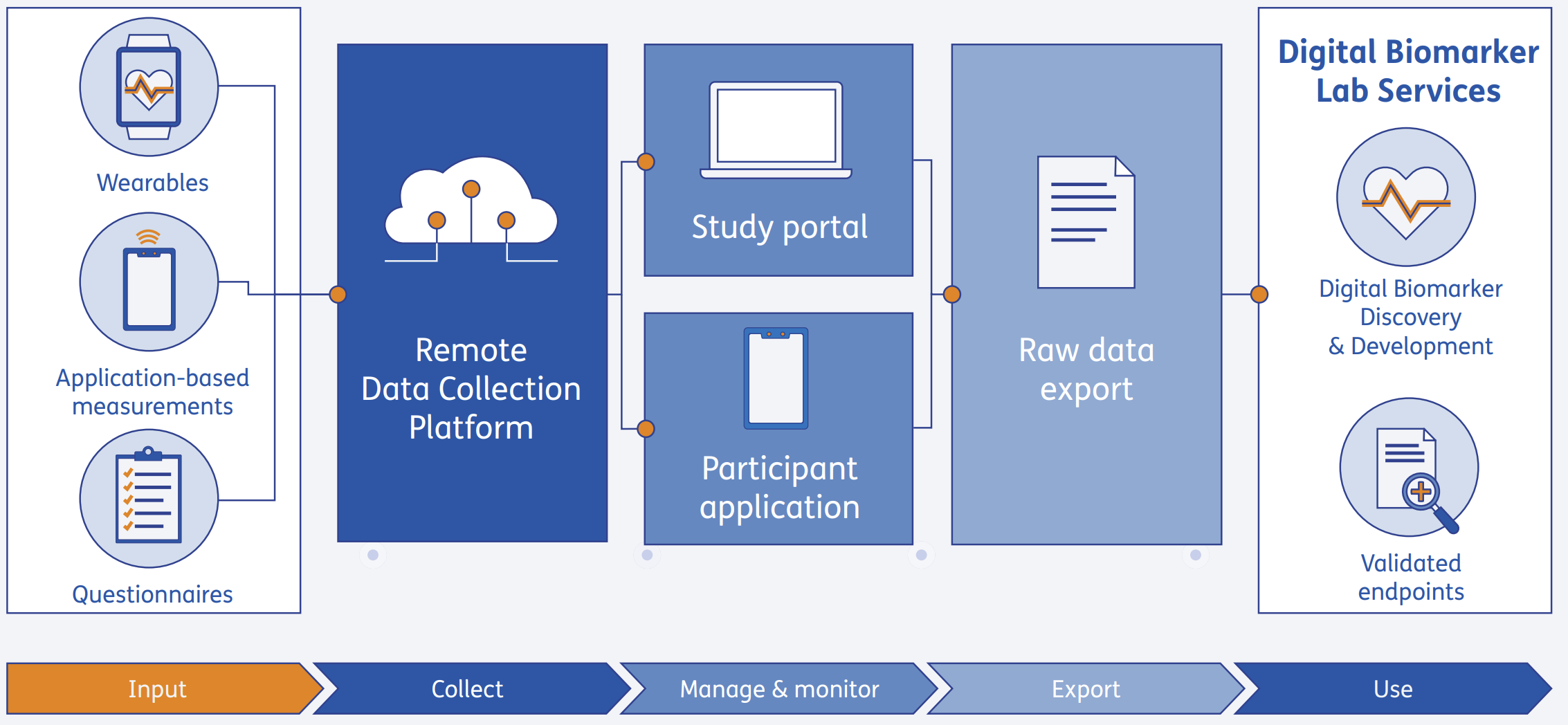
TNO’s Remote Data Collection Platform is a certified, GDPR (AVG)-compliant, device-agnostic platform for remote and hybrid studies. It brings together data from wearables, smartphone sensors, and questionnaires (including PROMs) in one secure environment, with a study portal for monitoring and a participant app for data collection and engagement.
The challenge of remote data collection
Remote studies often involve multiple devices and data streams, but many platforms are tied to a single vendor ecosystem. This limits device choice and makes it harder to combine wearable data, app-based measures, and questionnaires into one study dataset. At the same time, certified infrastructure for sensitive health data is scarce, so teams spend time building or setting up their own infrastructure with compliant workflows before a study can begin.
This is why we built the Remote Data Collection Platform: a secure ISO- and NEN-certified, GDPR-compliant environment, suitable for sensitive health data, designed for clinical and research settings, for both feasibility pilots and larger deployments.
By removing the need to build infrastructure for each study, the platform shortens the time to study launch, keeps costs proportional to use through a pay-per-use model, and improves data quality through integrated monitoring. In the longer term, it aims to support wider adoption of digital biomarkers in clinical practice and their regulatory acceptance, contributing to the transition towards patient-centric, real-world evidence in healthcare.
What sets TNO's platform apart
-
Device-agnostic approach:
The platform integrates diverse medical-grade wearables, apps, and custom devices in various ways, avoiding vendor lock-in.
-
Scalable setup:
Supports small-scale pilots, medium studies, and large multi-site clinical trials with rapid deployment.
-
Data transparency and research-grade governance:
Full access to data, standardised biomarker pipelines and a validation-driven approach, enable reproducible research and publication-ready results.
-
Trusted, independent partner:
The platform benefits from scientific credibility and the neutral position of TNO. TNO can also assist in setting up the study, device selection, and data analysis.
How the platform works
The platform supports digital questionnaires and integrates data from a variety of wearable sensors. Because the integration approach is flexible, the platform can be configured to connect with a wide range of consumer-grade wearables and apps, as well as medical-grade wearables. The platform also supports a scalable Bring Your Own Device set-up, allowing participants to use their own wearables.
Study teams can configure data capture and monitor data quality, participant progress, and logistics in a study portal. Participants use a dedicated app for remote onboarding and device pairing, and can receive reminders and personal data visualisation (real-time feedback can be enabled or switched off where needed).
The platform can also connect to EHR (Electronic Health Record) systems in hospitals, enabling seamless integration with existing clinical workflows. Study execution support can also be added to help keep studies running smoothly and data quality high.
Selecting the right wearable for the study
Choosing the right wearable is one of the first, and most consequential, decisions in a remote study. We offer evidence-based device selection support: we are building a structured library of validation studies for widely used consumer- and medical-grade wearables, organised according to the DiMe V3+ framework.
For each device, it shows which digital biomarkers have been validated, against which reference standard, in which population and setting, and how robust and independent that evidence is. It also includes key technical specifications. This evidence library helps study teams choose devices that fit their intended use and target population, and supports a well-founded rationale for device choice for ethics committees, regulators and publications.
Measurement modules: from vital signs, to physical activity and sleep
Depending on the study objectives, different types of digital measurements can be collected through the platform. We currently offer three modules, covering vital signs, activity and mobility, and sleep:
Vital signs
- Heart rate
- Heart rate variability (HRV)
- Respiratory rate
- Skin temperature
- Core body temperature
- SpO₂ (oxygen saturation)
- Cuffless Non-Invasive Blood Pressure (NIBP)
- Bioimpedance
- Glucose levels
Physical activity & mobility
- Step count
- Walking bouts
- Walking speed, cadence and gait
- Time spent in sedentary, light and moderate-to-vigorous physical activity
- Body postures and postural transitions
- Postural sway and balance
- Energy expenditure and Metabolic Equivalent of Task (MET)
Sleep
- Total sleep time
- Wake after sleep onset (WASO)
- Sleep efficiency
- Sleep fragmentation
- Snore detection
- Sleep onset latency
- Postures during night
- Movement time & intensity during night
Want to know more?
Read more about our physical activity and mobility module.
Our portfolio
The platform already supports clinical studies across chronic disease areas, including inflammatory bowel disease, rheumatoid arthritis and obstructive sleep apnea, covering remote disease monitoring, prediction of disease flares and assessment of treatment response. Besides, it is used in lifestyle interventions, workplace health monitoring, and emotional state prediction.
TNO uses the platform for research purposes, often in collaboration with hospitals and academic medical centres, research teams, pharmaceutical companies developing digital biomarkers for clinical trials, and MedTech companies validating medical devices and digital health technologies. Below are some examples of these collaborations and applications.

Example 1: Personalised lifestyle intervention with digital support
SLIMMER: A combined personalized lifestyle intervention incorporating physical activity, nutrition, and behaviour maintenance, with guidance provided by physiotherapists, dietitians, and lifestyle coaches. The predecessor to the Remote Data Collection Platform was used to collect participants' responses to questionnaires, allow them to set goals, provide feedback and advice, and gather data from their wearable devices. For healthcare professionals, a dashboard was created to monitor the participants' progress.
Example 2: from everyday wearables to digital biomarkers: the IBDigital BYOD study
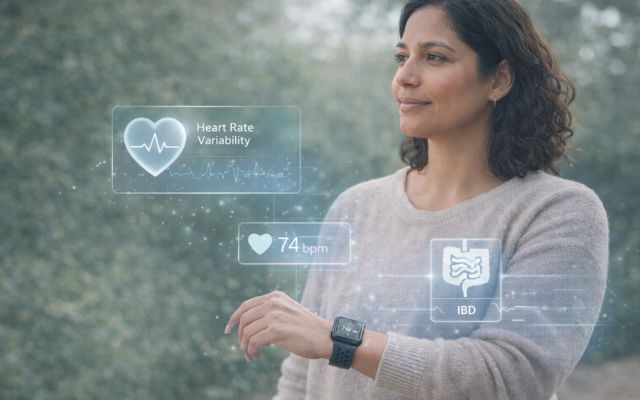
IBDigital aims to enrich existing IBD telemonitoring platforms with digital biomarkers that can help identify and predict changes in disease activity. As part of the project, a prospective multicenter BYOD (bring-your-own-device) study has been launched at Maastricht University Medical Center+, Jeroen Bosch Hospital and Franciscus Gasthuis & Vlietland. Participants use their own smartwatch and smartphone, with data collected via TNO’s Remote Data Collection Platform.
Over one year, the study will investigate whether changes in heart rate variability relative to each participant’s individual baseline can predict mucosal inflammation, alongside the potential value of sleep and activity patterns, differences between inflammatory and symptomatic flares, and differences in measurements between wearable brands.

Example 3: Predicting emotional states using wearables and questionnaires
The CAMSTAM study aimed to develop models for predicting emotional states using various data sources (e.g., physiological signals via wearable sensors, questionnaires) over time. It focused on creating both individual-specific and general prediction models to improve accuracy in measuring emotions. The predecessor of the platform was used to gather questionnaire and wearable data.
Example 4: Monitoring sleep apnea
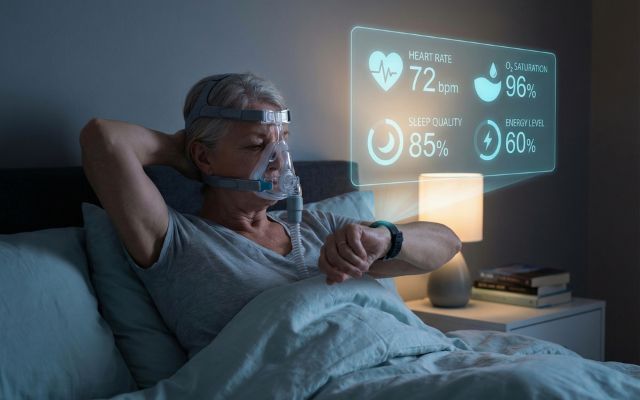
The TNO OSA monitoring study collects data to monitor patients with obstructive sleep apnea (OSA) around diagnosis and 3 months after treatment initiation.
The study combines medical-grade wearable and nearable sensors with daily questionnaires and validated PROMs in patients starting on therapy.
Contact us
-

Meike van den Eijnden
Functie:Scientific Consultant Digital BiomarkersI believe that digital biomarkers only become truly valuable when healthcare, research, and industry work together. As a scientific consultant at the Digital Biomarker Lab, I build collaborations to support the development, validation, and implementation of digital biomarkers that are clinically relevant and practically applicable.
-
Standplaats:Leiden - Sylviusweg
-
Email:Email Meike
-
-

Ferry Jagers
Functie:Systems EngineerFeel free to contact me for more information about the digital solutions we provide within the human studies domain, including support for the development of digital biomarkers. Central to this is our Remote Data Collection Platform: a flexible, scalable, and certified platform for collecting a wide variety of data.
-
Standplaats:Leiden - Sylviusweg
-
Email:Email Ferry
-
-

Annika van Rosmalen
Functie:Business Development Manager Pharma & Digital HealthAnnika van Rosmalen is a Business Development Manager in the field of Pharma & Digital Health. She develops value propositions and strategic collaborations focused on patient‑generated data, real‑world data, digital biomarkers and patient‑centric digital trials. She connects partners to accelerate innovation in digital health.
-
Standplaats:Leiden - Sylviusweg
-
Email:Email Annika
-
LinkedIn:Annika on LinkedIn
-