Can your own smartwatch predict an IBD flare?
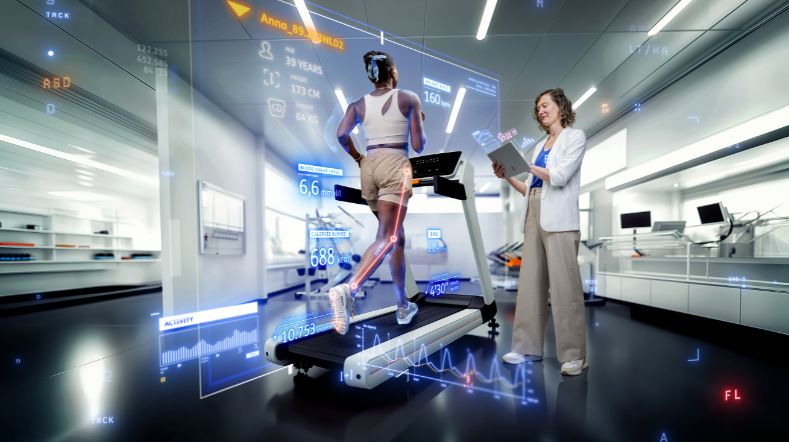
Wearables are rapidly moving from fitness tracking towards continuous health monitoring. Within the IBDigital project, TNO and its clinical partners have now launched a bring-your-own-device (BYOD) study to investigate whether data from patients’ own smartwatches can help predict inflammatory bowel disease flares.
From wearables to digital biomarkers
Continuous insight into how people feel and function in their daily lives could complement healthcare in ways that occasional measurements cannot. Rather than relying solely on periodic assessments or hospital visits, wearable devices could provide a more complete picture of physiological changes between clinical appointments.
Smartwatches and smart rings were originally designed for lifestyle and fitness purposes: counting steps, estimating calories and supporting sports performance. Today, many also measure heart rate, heart rate variability, sleep, blood oxygen saturation and, in some cases, electrocardiogram (ECG) signals. These capabilities create opportunities for developing digital biomarkers: objective, quantifiable physiological or behavioural measures that reflect normal biological processes, disease states or responses to treatment.
Consumer wearable companies are positioning themselves accordingly, and are actively seeking regulatory authorisation for specific health features: Apple’s hypertension notifications are FDA-cleared, while Samsung’s sleep apnea feature and the Withings ScanWatch 2 carry CE marking as medical devices under the EU Medical Device Regulation (MDR). This raises an important question for research: should we rely on medical-grade devices (certified as a medical device for a specific intended use), or on consumer wearables that millions of people already use every day?
Medical-grade devices are developed and validated for specific clinical applications, providing assurance of safety and performance. Consumer wearables offer unprecedented opportunities for large-scale, continuous monitoring in real-world settings, but often differ in algorithms and software updates.
Rather than replacing existing clinical measurements, researchers and clinicians increasingly see them as complementary. Medical-grade devices remain essential when high diagnostic accuracy is required, while consumer wearables enable long-term monitoring in daily life at a scale that would otherwise be difficult to achieve. The key challenge is therefore to understand when wearable-derived measurements are sufficiently reliable and clinically meaningful to support healthcare and research.

'Digital biomarkers can help patients understand their health better and see changes earlier. That can reduce worry, make people feel more in control of their disease and potentially mean fewer hospital visits. That is why it matters that patients are involved from the very beginning, so these tools are reliable, user-friendly and truly fit daily life.'
Why continuous monitoring matters for IBD
Inflammatory bowel disease (IBD) is a chronic condition characterised by periods of remission and unpredictable disease flares. Current monitoring relies on a combination of outpatient visits, questionnaires, blood and stool tests, imaging and endoscopy. Telemonitoring platforms already make it possible to monitor symptoms, lifestyle and psychosocial factors remotely. Nevertheless, much of the data collection still relies on burdensome questionnaires and is performed only periodically.
As a result, gradual physiological changes that develop between clinical assessments may go unnoticed. Wearables could help fill this gap by continuously measuring changes in heart rate variability, resting heart rate, sleep and physical activity.
IBDigital aims to enrich existing IBD telemonitoring platforms with digital biomarkers that may help identify or predict changes in disease activity. The project brings together clinical, technical and methodological expertise to combine wearable data with established clinical measurements.
The long-term ambition is to detect meaningful changes earlier, identify disease flares before they become clinically apparent, support more personalised monitoring and help patients and healthcare professionals act at the right time.
A new bring-your-own-device study
As part of IBDigital, a prospective observational multicenter study has now been launched in which participants use their own smartwatch and smartphone. The study is being conducted at Maastricht University Medical Center+, Jeroen Bosch Hospital and Franciscus Gasthuis & Vlietland.
Participants can connect devices from brands including Apple, Samsung, Fitbit, Garmin and Polar via TNO's Remote Data Collection Platform. Over a follow-up period of one year, the study will collect digital biomarker data, and these data will be linked to clinical information collected during standard care.
The central question is whether changes in heart rate variability relative to a person’s own baseline can predict mucosal inflammation. We will also investigate the potential value of sleep and activity patterns, differences between inflammatory and symptomatic flares, and variation between wearable brands.

'The strength of BYOD research is that it brings digital biomarkers closer to real life. By using devices that people already wear every day, we can collect continuous data in a more real-life setting and investigate whether these signals can provide meaningful insights for healthcare. It also makes this type of research far more scalable.'
Why bring your own device?
Traditionally, participants in clinical studies receive a standardised research device. In a BYOD study, participants instead use technology they already own and wear in their daily lives.
This approach offers several advantages. Familiar devices are easier to integrate into daily routines, supporting long-term use while reducing the influence of the study itself on participants' behavior. BYOD research may also reduce device costs, improve scalability and make participation less dependent on frequent hospital visits.
At the same time, the approach introduces important scientific and technical challenges. Devices use different sensors, algorithms and data formats. Software updates can affect measurements over time, while device ownership and digital literacy may introduce selection bias. Reliable data transfer, privacy, interoperability and missing data also require careful consideration.
Understanding the impact of these challenges is itself part of the research. IBDigital therefore explicitly compares two approaches: medical-grade devices, which offer full control over hardware, algorithms and data but are less scalable, and consumer wearables, which offer less control but scale well.
Project: IBDigital
The project focuses on developing and evaluating digital biomarkers to predict flare-ups in healthcare settings. TNO supports digital biomarker development through data science capabilities and standardized evidence approaches ensuring analytical, clinical, and usability validation.
Towards personalised and predictive monitoring
The IBDigital BYOD study is an important step towards understanding whether and how data from everyday wearable devices can be transformed into robust and clinically meaningful digital biomarkers. The potential extends beyond IBD. If physiological changes can be detected reliably using devices people already wear, research and care could become more continuous, accessible and closely connected to daily life.
Realising this potential requires more than collecting large amounts of data. Digital biomarkers must be accurate, clinically relevant, understandable and actionable. They must also perform consistently across different devices and fit within existing healthcare workflows. By studying these questions in a real-world multicenter setting, IBDigital aims to contribute to a future in which data collected in everyday life can support earlier, more personalised and more proactive healthcare.
Contact us
-

Annika van Rosmalen
Functie:Business Development Manager Pharma & Digital HealthAnnika van Rosmalen is a Business Development Manager in the field of Pharma & Digital Health. She develops value propositions and strategic collaborations focused on patient‑generated data, real‑world data, digital biomarkers and patient‑centric digital trials. She connects partners to accelerate innovation in digital health.
-
Standplaats:Leiden - Sylviusweg
-
Email:Email Annika
-
LinkedIn:Annika on LinkedIn
-
-

Willem van den Brink
Functie:Scientific lead Digital Biomarker LabContact me for collaborations in digital biomarkers, wearable health technology, and data-driven prevention. My team focuses on developing reliable and meaningful digital biomarkers that support the transformation toward preventive and personalized healthcare.
-
Standplaats:Leiden - Sylviusweg
-
Email:Email Willem
-
-

Torsten Scheithauer
Functie:Project managerContact me for expertise in gut health, the gut microbiota, and advanced in vitro systems. I specialize in translating microbiome science into applied solutions, including fermentation models, biomarker discovery, and nutrition-microbiome interactions. My work focuses on bridging fundamental research with real-world applications in health and nutrition.
-
Standplaats:Leiden - Sylviusweg
-
Email:Email Torsten
-
-

Meike van den Eijnden
Functie:Scientific Consultant Digital BiomarkersI believe that digital biomarkers only become truly valuable when healthcare, research, and industry work together. As a scientific consultant at the Digital Biomarker Lab, I build collaborations to support the development, validation, and implementation of digital biomarkers that are clinically relevant and practically applicable.
-
Standplaats:Leiden - Sylviusweg
-
Email:Email Meike
-
Get inspired
Meet the expert: RDCP
TNO as an orchestrator of lifestyle in healthcare
TNO launches VIMtima: a new Organ‑on‑Chip model to improve vaginal health research

Fully digital personalised nutritional advice delivers measurable health benefits

Accelerating biomarker innovation is critical for the future of healthcare