TNO as an orchestrator of lifestyle in healthcare
Making lifestyle a structural part of healthcare sounds logical, but in practice it proves to be a complex system change. Nevertheless, the Lifestyle in Healthcare Coalition has already achieved concrete results and has been given the green light to continue until 2028, with support from the Ministry of Health, Welfare and Sport. ‘Lifestyle is not yet a natural part of curative healthcare, despite the enormous health benefits and gains for the sustainability of the healthcare system that can be achieved,’ says Hanneke Molema, Principal Consultant at TNO Health & Work and programme manager of the coalition.
Over the coming years, the focus will shift from development to implementation, scaling up and embedding. ‘The Lifestyle in Healthcare Coalition was established as part of the Integrated Care Agreement (IZA), in which lifestyle was explicitly included as an element of appropriate care.
Together with more than 25 organisations, including the Dutch Patients Federation and the Arts & Leefstijl association, the coalition is working towards the ambition of making lifestyle a structural part of regular healthcare,’ Molema explains. TNO leads the coalition and fulfils a connecting and orchestrating role, bringing together knowledge, practice and partners.
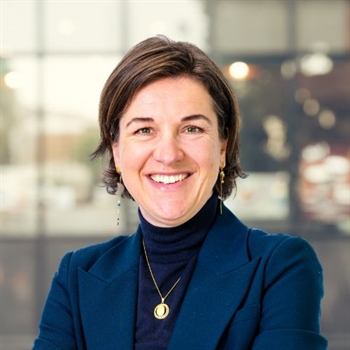
‘The real question is: how do you actually help people to change their behaviour in a sustainable way?’
From research to system change
There is now little debate about the important role lifestyle plays in health, recovery and quality of life. Yet lifestyle is still not a routine part of consultations, patient information, care pathways or clinical guidelines in everyday healthcare practice. This is closely linked to the way healthcare has historically been organised.
‘Our healthcare system was originally organised around illness, medical procedures and medicines. Lifestyle received insufficient attention for many years. To make lifestyle a lasting part of appropriate care, it must be embedded in guidelines, education, funding and daily practice,’ says Molema.
TNO was given a dual role: as an independent orchestrator of the network and the shared work agenda, and as a knowledge partner in the fields of lifestyle, health and behaviour change. Molema adds: ‘We had already been conducting research into lifestyle medicine and behaviour change for some time. When the Ministry of Health, Welfare and Sport asked us to establish and coordinate the coalition, we were able to combine that knowledge with our experience in public-private collaboration.’
According to Molema, lifestyle change is not only about medical knowledge, but above all about human behaviour: ‘It is relatively easy to say that more exercise or healthier eating is beneficial for someone’s recovery or treatment. The real question is: how do you actually help people to change their behaviour in a sustainable way? Healthcare has a role to play, but only to a limited extent. That is why it is important to provide healthcare professionals and patients with concrete guidance and practical options.’
The coalition’s first phase focused primarily on development, awareness-raising and creating practical tools for healthcare professionals and patients. ‘Healthcare professionals are expected to discuss lifestyle and work across domains, but what exactly is a healthcare provider supposed to do? How do you have that conversation? What information should be provided? When should a patient be referred? These were all open questions that we, as a coalition, started addressing from the perspective of each partner’s expertise,’ Molema explains.
Over a period of three and a half years, the coalition developed dozens of guidance documents, tools and implementation products for guideline developers, patient organisations, educational institutions and healthcare professionals working in primary care, hospital care and mental healthcare. Considerable attention was also paid to providing information tailored to different target groups and levels of health literacy.
Molema comments: ‘One important achievement is the expansion of reliable lifestyle information through Thuisarts.nl, Apotheek.nl and various patient organisations. Patients increasingly look for information themselves, and when they do, the answers they find must come from reliable sources and be both understandable and practical.’
Making use of ‘teachable moments’
The coalition places a strong emphasis on so-called ‘teachable moments’: moments when patients are particularly motivated to change their lifestyle. ‘Patients themselves indicated that certain moments have a significant impact. For example, when someone is placed on a waiting list, is preparing for surgery, or starts new medication. At those times, people are often more open to information about what they can do themselves. We have developed specific guidance for teachable moments related to surgery, mental healthcare waiting lists and medication changes. This helps healthcare and patient organisations understand what actions they can take. The emphasis is always on realistic and achievable support.’
According to Molema, there is now broad agreement about the importance of lifestyle in healthcare. The challenge is no longer whether lifestyle should play a role, but how it can be given a permanent place in everyday practice.
‘For example, a discharge letter should not only address wound care or medication, but should also pay attention to sleep, nutrition, exercise and recovery. Only when lifestyle is structurally included at such moments does it truly become part of healthcare.’
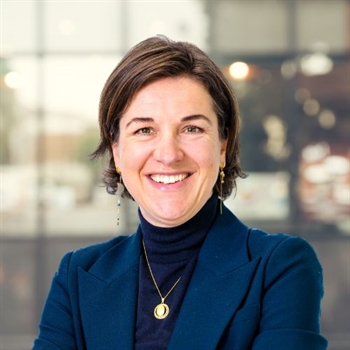
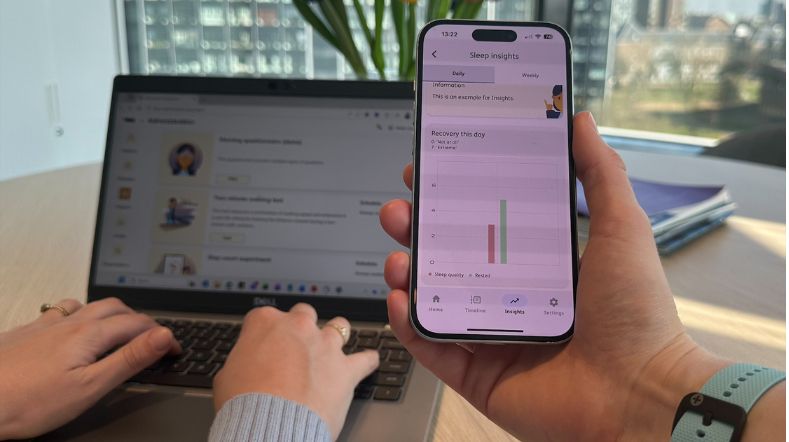
‘Patients on a waiting list receive support through a digital programme covering sleep, nutrition, exercise and meaning in life.’
From pilot to practice
Now that the Lifestyle in Healthcare Coalition has been extended until 2028, the emphasis is shifting towards implementation, scaling up and long-term embedding. ‘Change in healthcare is complicated,’ says Molema with a smile.
‘Everyone wants healthcare to change, but nobody wants to change themselves. That is why we chose a pragmatic approach from the outset. Rather than starting with major system reforms, we looked at what was already working. We identify where there is energy and where good examples exist. Instead of constantly reinventing the wheel, we encourage organisations to learn from each other and adopt successful initiatives.’
This approach resulted in more than two hundred implementation vouchers for healthcare organisations and patient associations. ‘We are not a talking coalition, but a doing coalition. What matters to us is that good ideas are actually implemented in practice. A good example is WachtActief from Lentis. The programme already existed on a small scale, but thanks to an implementation voucher from the Lifestyle in Healthcare Coalition, it was able to expand, train staff and be structurally introduced across multiple departments. Patients on waiting lists receive support through a digital programme covering sleep, nutrition, exercise and meaning in life.’
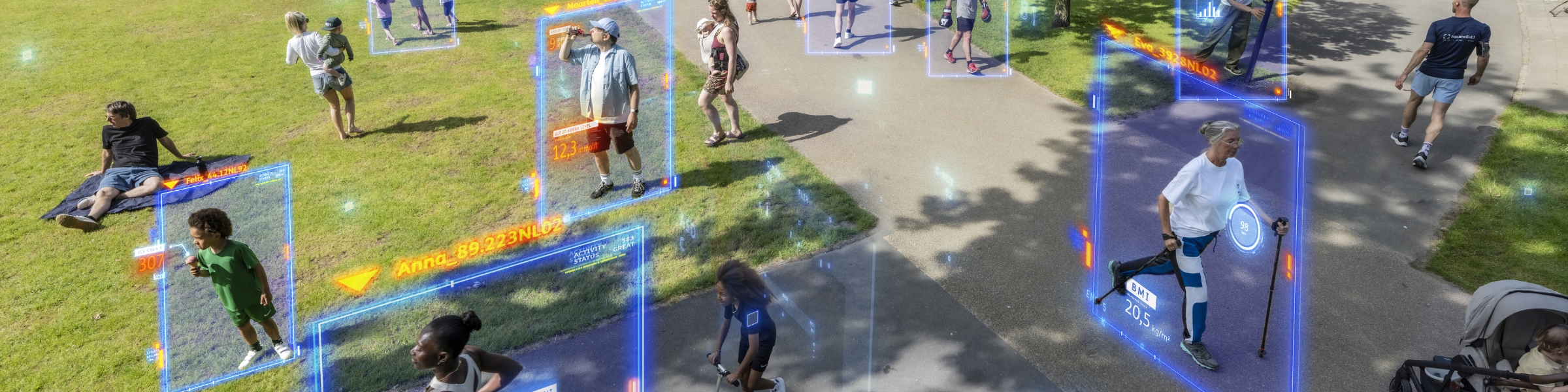
Technology is also increasingly being used in hospitals to integrate lifestyle into regular care pathways. Molema explains: ‘Around Jeroen Bosch Hospital, for example, lifestyle modules have been developed within existing remote monitoring programmes. The beauty of this approach is that you do not have to build something entirely new. You use existing technology in a smarter and more integrated way.’ According to Molema, digital support is essential if lifestyle is to become part of healthcare on a large scale.
‘A patient with diabetes may see the practice nurse for perhaps four hours a year. The rest of the time, they have to manage on their own. Quite simply, we will not succeed through face-to-face contact alone. Technology can make an enormous difference by supporting people at home.’ According to Molema, this technology does not need to be complex. Simple applications that fit into patients’ daily lives can make a significant difference.
‘Lifestyle as a natural part of appropriate care’
In the coalition’s new phase, sector organisations and umbrella organisations are increasingly taking the lead themselves. ‘If lifestyle is truly to become part of appropriate care, it must also become part of the regular structures within hospitals, GP organisations, mental healthcare institutions and educational programmes,’ Molema adds.
TNO has taken on the role of knowledge partner and connector. ‘Our strength lies in bringing together knowledge, practice and policy for mission-driven innovation. As an independent coordinator, we fulfil a connecting role. This also means constantly balancing different interests. Ultimately, it always comes back to the same question: what helps advance the mission?’
The ambition extends beyond individual lifestyle interventions. The aim is to shift the focus from illness and treatment towards health, behaviour and prevention. ‘The ideal outcome would be that, in five years’ time, lifestyle is no longer seen as a separate theme, but as a natural part of good, future-proof healthcare,’ concludes Molema.
This article was published in ICT & Health on 21 August 2026.
Contact us
-
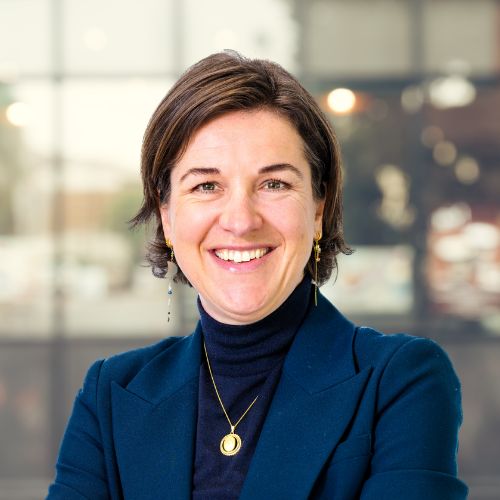
Hanneke Molema
Functie:Principal Consultant-
Standplaats:Leiden - Sylviusweg
-
Email:Email Hanneke
-
Get inspired
Can your own smartwatch predict an IBD flare? A bring-your-own-device study from IBDigital
TNO launches VIMtima: a new Organ‑on‑Chip model to improve vaginal health research

Fully digital personalised nutritional advice delivers measurable health benefits
Accelerating biomarker innovation is critical for the future of healthcare

From innovation to clinical impact: TNO and Orikami accelerate the path from digital biomarker development to healthcare implementation