Transition to a healthy living environment
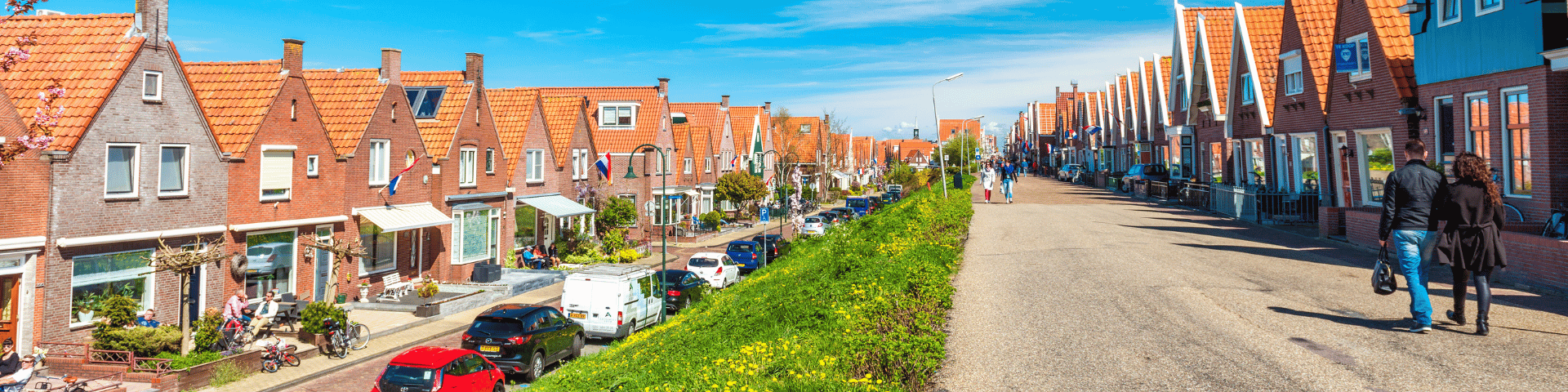
The Netherlands is facing major spatial and social challenges. Housing, urbanisation, climate adaptation, energy transition, mobility and quality of life will require far-reaching choices in neighbourhoods, districts and regions in the coming years. At the same time, an ageing population, chronic health conditions, health disparities and the pressure on health care are increasing. This requires a health transition: not only caring for people when they become ill, but above all strengthening health and preventing illness in daily life.
Health and living environment
The living environment plays a key role in this. The way we live, move, meet and have access to facilities influence health directly and indirectly. A healthy living environment can support healthy behaviour, strengthen social cohesion, limit health risks and contribute to reducing future healthcare pressure.
That is precisely why health should not be a separate theme, but a guiding principle in all policy areas: Health in all Policies. For TNO , the healthy living environment is therefore not an isolated subject, but an integral change task. We work on long-term solutions that connect health with spatial quality, social resilience and feasibility in policy, design and investments.
Project: Value-driven healthy area development
A practical guide to systematically embedding health and wellbeing in area development from the outset.
Living environment as key factor in the health transition
The living environment has a major influence on health, both directly through factors such as air quality, heat, noise, moisture and mould, and indirectly through behaviour, social interaction, accessibility and access to facilities. Especially in vulnerable neighbourhoods, unfavourable environmental factors accumulate more often. That is precisely why the living environment is an important starting point for prevention: an environment that supports exercise, social interaction and daily functioning can promote health, reduce health disparities and relieve the pressure on health care.
At the same time, challenges such as housing, energy transition, climate adaptation and mobility offer opportunities to include health from the start.
With the Health Transitions innovation area, TNO is working on this relationship between health, behaviour and the living environment. Together with municipalities, provinces, knowledge partners and private parties, we develop knowledge and solutions that help to embed health integrally in spatial development and area-specific transitions.
Want to learn more?
Would you like to know more about the relationship between health, behavior and the living environment of people with a low socioeconomic position? Download the paper 'Healthier Living Environments, Healthier Citizens' (in Dutch).
Integrated approach to healthy living environment
In order to get a grip on the integral relationship between health, behaviour and the living environment, we focus our innovative strength on three important pillars:
1. From data and scientific insights to substantiated choices for a healthy living environment
Many living environment interventions are promising for well-being, but there is often a lack of insight into how and to what extent they contribute to health and well-being, and how these effects affect the practice of area development. There is therefore still a lot of uncertainty in substantiating and quantifying the effects of a healthy living environment.
By using scientific literature, indicators, models and simulations, TNO makes visible how measures lead to effects on health through changes in behaviour, perception and exposure. This approach enables us to describe impacts not only qualitatively, but also to quantify and validate them based on data and scenarios. In this way, we make the impact of choices in the living environment concrete and tangible for policymakers and area developers. This helps to make better-informed considerations and to structurally include health in design, policy and decision-making.
The Core Set of Healthy Living Environment Indicators of TNO and RIVM has been developed to provide professionals with an unambiguous and practical instrument to provide insight into the quality of the living environment and the health of residents and to be able to steer, monitor and evaluate. The set combines both physical (such as air quality and greenery) and social factors (such as quality of life and social cohesion) in one integrated approach, because existing indicator sets are often fragmented and unbalanced.
The indicators have been carefully selected for relevance, measurability and action perspective, and make it possible to make differences between areas visible, to determine priorities and to monitor the effects of policy. Through applications such as the Area Check, users can spatially analyze and compare this data, with the aim of structurally including health in policy and area development and ultimately reducing health inequalities.
For more information, you can watch the webinar: Webinar Indicators for a Healthy Living Environment and Webinar (part 2) Indicators for a Healthy Living Environment.
IMPROVE Equity (IM EQ) is a European research project in which TNO works with international partners to reduce health inequalities in vulnerable neighbourhoods with regard to obesity. The project focuses on understanding the complex interrelationship between social, physical and policy factors that cause health inequalities (pdf), and translates these insights into local, structural policy measures.
By actively involving residents and stakeholders and using system modelling and (digital twin) simulations, the effects of interventions are made transparent and evaluated. In this way, IMPROVE-Equity contributes to the development and substantiation of effective, area-specific approaches that strengthen health and equality of opportunity and reduce obesity.
The design of the living environment can influence social cohesion and connectedness between residents. Spatial design can facilitate this, but the actual impact depends on the (in)formal possibilities that are offered and the extent to which they meet the wishes and needs of residents.
In our knowledge development and publications, such as 'Spatial design for social cohesion (pdf)' (Dutch) and 'Neighbourhood connectedness' (Dutch), we show how the direction of neighbourhoods contributes to meeting, trust and community building. We translate these insights into applicable tools for policy and area development, so that social cohesion becomes an explicit and controllable part of spatial choices.
An example of this is the Health Impact Twin for Social Cohesion (HITS). In this project, we work towards a model and dashboard to analyse the social impact of spatial interventions integrally from the perspective of the relationship between hardware, software and orgware. This allows it to support policymakers, designers and civil society organisations in comparing scenarios and optimising social impact in the built environment.
2. From shared ambition to feasible area approach
A healthy living environment requires cooperation between domains that traditionally often operate separately, such as housing, health care, mobility, climate, social policy and area development. In practice, health still too often turns out to be an additional theme, instead of an integral part of planning and implementation.
TNO supports parties in developing a shared vision, common language and action perspective. We help to position health at an early stage in area development, to better substantiate administrative choices and to organise cooperation in such a way that health is actually taken into account in design, decision-making and implementation.
How do you ensure that health and well-being really become part of area development? The Value-Driven Healthy Area Development guide offers project leaders and professionals concrete tools to structurally include health in vision, cooperation and decision-making from the start.
The guide, developed by TNO together with Brink, Urban Sync, Rho Adviseurs and Horizons, helps to make social values explicit and translate them into practical choices.
- It offers building blocks, models, process steps and tools to lay a solid foundation in the initiation phase.
- It supports the organisation of complex cooperation, the involvement of the right parties and the overcoming of resistance.
- It leads to a tangible result: a Programme of Values, in which joint ambitions and social goals are laid down as the basis for management, cooperation and investment choices throughout the development process.
How do investments in the living environment affect different policy areas and budgets, and how can we manage this integrally? Urban Financial Metabolism (UFM) is a systemic methodology that helps municipalities and area coalitions to make visible where money comes from, how it moves through an area and how investments in, for example, greenery, mobility or social facilities affect spatial and social effects, such as health, quality of life and sustainability. This also provides better insight into indirect benefits, such as avoided healthcare costs or improved quality of life.
In Dordrecht, among other places, TNO used UFM to investigate the relationships between policy goals, residents' needs, activities in the neighbourhood and financial flows for linking health with spatial challenges. This showed how investments affect different parts of the municipal budget and other parties. The approach thus supports governments and partners to connect and discuss financial and social logic and to steer more specifically towards a healthy, future-proof living environment from an integral perspective.
Read here about the application at the Municipality of Dordrecht: Financial flows healthy living environment (Dutch)
3. From policy and design to change in practice
A healthy living environment is not only created behind the drawing board. Residents, social organisations, governments and private parties all play a role in how a neighbourhood functions and develops. That is why TNO also focuses on the question of how change takes shape in practice: how residents are involved, how local initiatives can be strengthened and how social cohesion and collective resilience can contribute to health and quality of life.
By looking at physical, social and organisational factors in conjunction, we work on solutions that are not only well thought out, but also in line with the practice of neighbourhoods and districts.
TNO is researching how resident initiatives can contribute more effectively to social challenges by improving cooperation ('co-creation') with governments and other parties.
The Better Together programme focuses on understanding which factors determine the success of citizens' initiatives, such as cooperation, organisational strength and alignment with policy, and develops knowledge and tools to better support and scale up these initiatives. Through practice-oriented research and collaboration with partners, TNO wants to contribute to stronger, more sustainable citizens' initiatives that have a greater impact on their living environment and on social issues.
Let's work together
TNO actively collaborates with governments, knowledge institutions, civil society organisations and private parties that want to link health integrally to the living environment, area development and transitions. Are you looking for a partner to develop a joint vision, set up a pilot, develop data and tools, explore investment issues or better embed health in spatial choices? If so, we would be happy to start a conversation.
Contact us
-
Bas Kremer
Functie:Business Development Manager-
Standplaats:Leiden - Sylviusweg
-
Email:Email Bas
-
-
Marloes van der Klauw
Functie:Consultant Gezonde LeefomgevingI work on addressing tomorrow’s societal challenges by connecting people, knowledge and interests. My focus is on healthy living environments, societal value creation, and collaboration between government, industry, knowledge institutions and local communities to achieve sustainable impact.
-
Standplaats:Leiden - Sylviusweg
-
Email:Email Marloes
-
-

Jeroen Pronk
Functie:Senior ResearcherContact me if you want to know more about how the social and physical living environment can support the health and well-being of youth and adults and help reduce health disparities. You can also reach out to me about designing co-research with youth and/or adults.
-
Standplaats:Leiden - Sylviusweg
-
Email:Email Jeroen
-
-
David Dooghe
Functie:Senior researcher and advisor in space, technology, and transitionDavid Dooghe is a senior researcher and advisor on space, technology, and transitions at TNO Vector. Trained as an architect and urban planner, he focuses on spatial (policy) challenges and the integration of technologies, as well as broader transitions such as those in healthcare, energy, and mobility.
-
Standplaats:Den Haag - New Babylon
-
Email:Email David
-
-

Noëla Hantschel
Functie:Scientist Innovator-
Standplaats:Leiden - Sylviusweg
-
Email:Email Noëla
-
Get inspired
Thinking in diplomas wastes talent: switch to skills

Substances Information System: powerful online search engine for chemical substances further expanded

New expertise centre to help companies innovate more safely and sustainably

Over 300,000 workers in the Netherlands experience heat stress at work

TNO Announces the launch of ObjectivEye