Insight into growing foundation damage challenge through soil-structure interaction research
TNO and Deltares are observing a growing risk of foundation damage in an increasing number of regions across the Netherlands. Climate change is leading to longer periods of drought and heavy rainfall, causing certain clay soils to shrink and swell significantly. As a result, older buildings with shallow foundations are increasingly experiencing foundation damage. Both organisations now provide insight together.
To address this challenge, Deltares and TNO are combining their unique expertise in soils, ground water, foundations and buildings to provide residents, property owners and policymakers with better insight and practical guidance. This knowledge development forms part of the National Foundations Strategy (Nationale Aanpak Funderingen).
Shallow and timber pile foundations
Until the 1970s, shallow foundations and timber pile foundations were widely used in the Netherlands. In areas with soft soils such as clay and peat, these foundation types are vulnerable to damage caused by land subsidence and low groundwater levels. Timber piles can be affected by soil settlement or timber decay, while shallow foundations may suffer damage when buildings settle unevenly.
Although these issues have been recognised for many years, climate change is increasing the risks of foundation damage, including in areas where only limited cases have previously been reported.
Chris Geurts, Consultant at TNO: 'During the dry summers between 2018 and 2022, we saw a sharp increase in foundation-related claims and reports of damage. Both the geographical risk area and the scale of the foundation challenge grew significantly during that period.'

'Both the geographical risk area and the scale of the foundation challenge grew significantly during that period.'
Significant settlement in Roden
One example is the town of Roden in the province of Drenthe, where a number of homes suffered severe damage. Due to excavation works and prolonged drought, the groundwater level dropped, exposing a clay layer that had previously remained permanently water-saturated. As the clay dried out, it began to undergo shrink-swell cycles, leading to ground movements that damaged the homes. Similar clay layers occur in many other parts of the Netherlands, including North Brabant, North Limburg, Overijssel, and river areas.
Mandy Korff, Underground Structures Expert at Deltares: 'As drought becomes more frequent, foundation problems are spreading across the Netherlands. This affects buildings supported by timber piles where groundwater levels are lower than they used to be. It also affects shallow foundations where the subsoil is not composed entirely of sand. Deeper clay layers that were previously saturated are beginning to respond to fluctuations in groundwater levels.'
National Foundations Strategy (Nationale Aanpak Funderingen)
In 2024, the Council for the Environment and Infrastructure (RLI) published a report on the wide-ranging foundation challenges facing the Netherlands.
One of the key issues is that information about the type of foundation beneath a property is often incomplete or unavailable. To improve this situation, the Ministry of Housing and Spatial Planning (VRO) launched this component of the National Foundations Strategy. An important part of the programme is the development of a national foundation information system, to which TNO and Deltares contribute their technical expertise.
Chris Geurts: 'You can think of this system as a national information infrastructure that brings together and makes accessible data on foundations, buildings, soils and groundwater. As part of this effort, we are also developing a nationwide risk model that will enable buildings to be assigned a risk profile based on foundation characteristics, location, soil conditions and groundwater levels.'
TNO and Deltares combine expertise
Developing such a risk model requires a thorough understanding of the processes occurring both in the ground and within buildings. TNO and Deltares are therefore combining their expertise to monitor soils, foundations and buildings over an extended period and as an integrated system.
Mandy Korff: 'Monitoring buildings in relation to changes in groundwater and soil conditions is what makes this research unique. It has never before been carried out at this scale in the Netherlands. TNO contributes expertise on building condition monitoring and provides data on subsurface conditions and groundwater. Deltares contributes knowledge of groundwater systems, soils, different clay types and their interaction with foundations. Together, we cover the full scope of the challenge.'
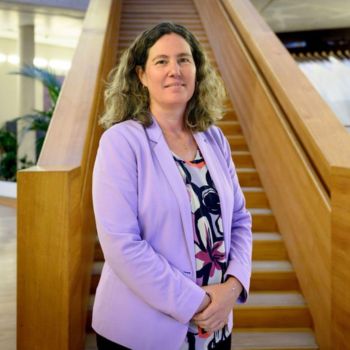
'Monitoring buildings in relation to changes in groundwater and soil conditions is what makes this research unique. It has never before been carried out at this scale in the Netherlands.'
Shrink-swell behaviour
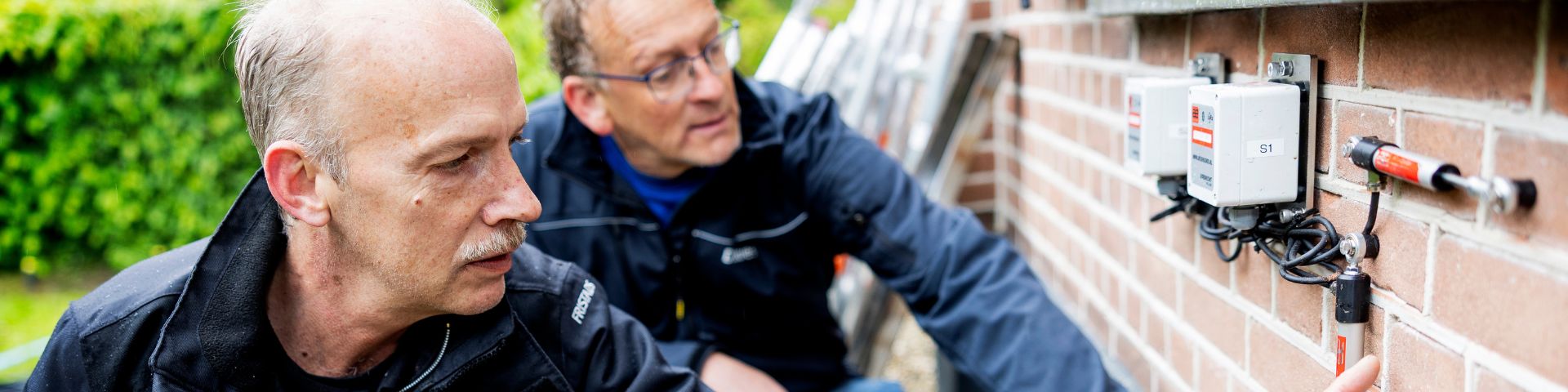
TNO and Deltares are jointly monitoring four locations with clay-rich soils, including a site in Zoelen where a range of instruments has been installed in and around residential properties.
Kay Koster, Geologist at TNO: 'We are studying measured ground movements, the interaction between soil and buildings, and the moment at which damage occurs. Dry springs and summers have caused the upper soil layer in some regions to dry out considerably. We suspect that this clay can shrink rapidly during periods of drought, causing uneven settlement of buildings and resulting in cracks and structural damage. When rainfall returns in autumn, the soil rises again. This process is known as shrink-swell behaviour.'
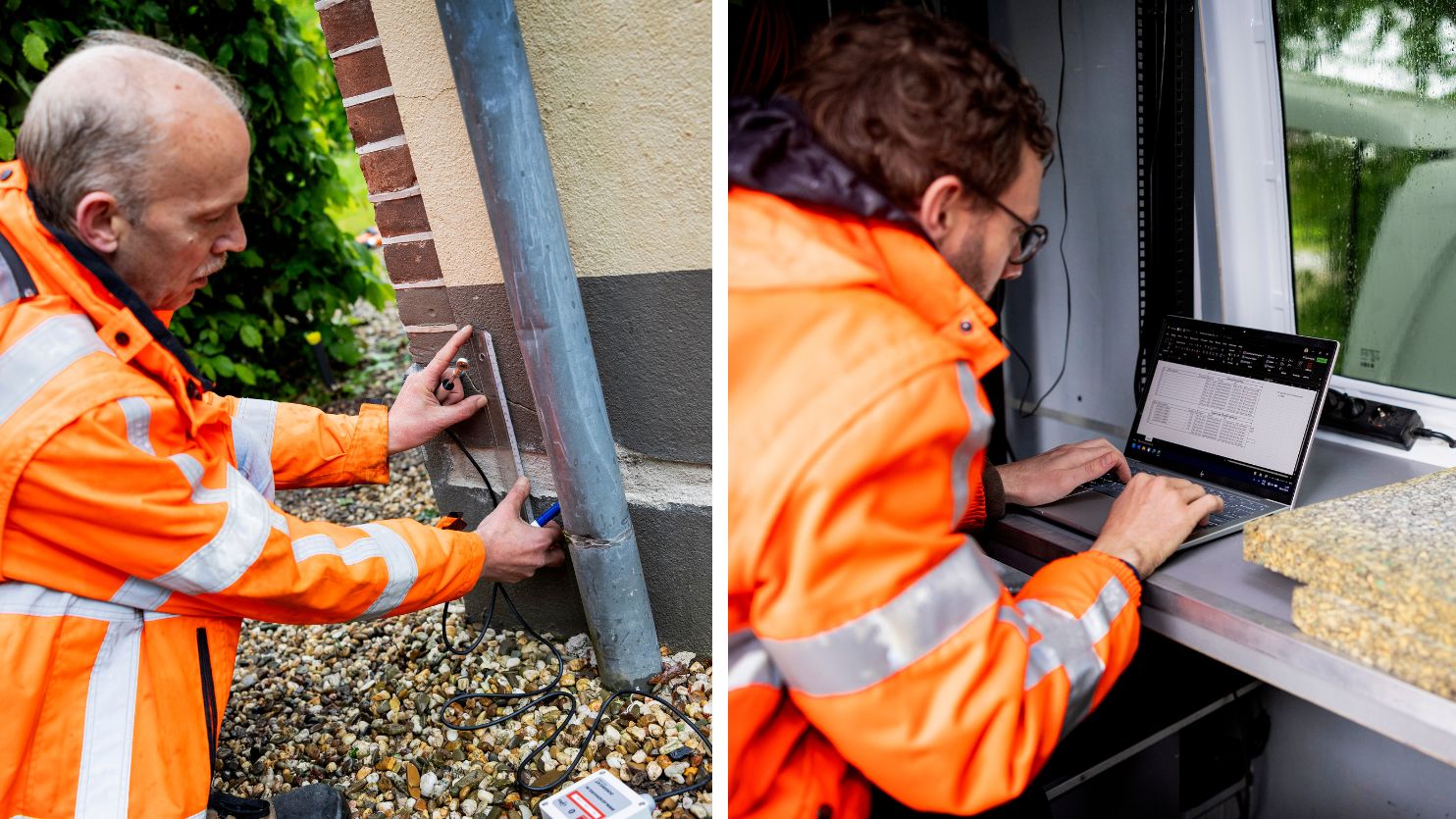
Brian Brongers, Scientist Integrator at TNO: 'In Zoelen and at our other monitoring sites, we use extensometers to record soil movement. At the same time, we monitor movement within the buildings themselves, allowing us to link the two processes.'
Powerful clay forces
Within the project, Otto Levelt, Researcher at Deltares, focuses specifically on the factors that influence shrink-swell behaviour in clay soils.
'The phenomenon itself is not unique,' says Levelt. 'In France, it is already one of the most significant climate-related causes of damage. Problems occur in clay minerals that are particularly sensitive to shrinking and swelling, such as smectite. These clay layers can generate such large forces that, in theory, they could lift a multi-storey building. To identify where these sensitive clay types occur, we are developing a national risk map for the Netherlands.'
Foundation damage occurs primarily when clay movement is uneven, Levelt explains: 'Buildings are often founded on heterogeneous soils, where clay layers vary in thickness. Moisture conditions also differ between the north and south sides of a property, as well as between paved surfaces and lawns. Even tree roots influence shrink-swell movements. We are investigating all these factors through both field studies and laboratory research.'

'Cracks appear to be relatively stable and mainly move in response to temperature changes. However, we do observe clear seasonal ground movements, with the ground subsiding by more than a centimeter during a dry spring.'
Long-term monitoring
The first measurement results from the monitored buildings mainly reveal short-term effects such as day-night cycles and temperature influences.
Kay Koster: 'Cracks appear to be relatively stable and mainly move in response to temperature changes. However, we do observe clear seasonal ground movements, with the ground subsiding by more than a centimeter during a dry spring. Following rainfall, the soil rises again. What matters most to us is the depth at which this movement occurs. If it is confined to the upper layer above the foundation, no damage will occur. However, problems arise if the movements also occur deeper in the ground, at the level of, or even below, the foundation.'
So far, no extreme responses have been observed in the monitored buildings. 'That is precisely why long-term monitoring is so important,' Koster explains. 'Damage may only occur once a certain threshold has been exceeded. We also need to distinguish between building movements caused by temperature and those caused by changes in the ground. Only then can we accurately determine which damage is genuinely attributable to the shrink-swell behaviour of clay soils.'
Providing practical guidance
Through this research, TNO and Deltares aim not only to improve understanding of the interaction between soils and buildings, but also to provide practical guidance for decision-makers.
Chris Geurts: 'We want to help residents, building owners, municipalities, provinces and water authorities make better-informed decisions. For example, groundwater management could be adjusted during periods of drought to reduce the vulnerability of residential areas. Homebuyers and sellers should also have access to clear and reliable information about foundation risks during property transactions. We are addressing a challenge that is becoming increasingly urgent as climate change progresses. That is why it is important and timely to draw attention to it now.'
Pictures: Guus Schoonewille for Deltares
Report: Framework Foundation Risk Model
This report focuses on risks to residential buildings associated with physical processes such as consolidation, peat oxidation, clay shrink-swell behavior, and fluctuations in groundwater levels caused by drought and climate variability.
Our experts


Contact us
-

Chris Geurts
Functie:Principal consultant Mobility & Built EnvironmentI work as principal consultant on Vulnerability of Buildings. My core areas of interest are the effects of dynamic and climatic actions on buildings, associated risks for safety of structures, physical damage to buildings and health issues for inhabitants.
Special interest goes to the effects of land subsidence caused by human activities and climate change which increasingly leads to risks and associated costs to our built environment.
-
Standplaats:Delft - Molengraaffsingel
-
Email:Email Chris
-
Get inspired
Smarter and faster construction: TNO helps Eindhoven Metropolitan Region with historic leap of scale
Earthquakes in Groningen: a method for finding out more quickly whether houses are safe