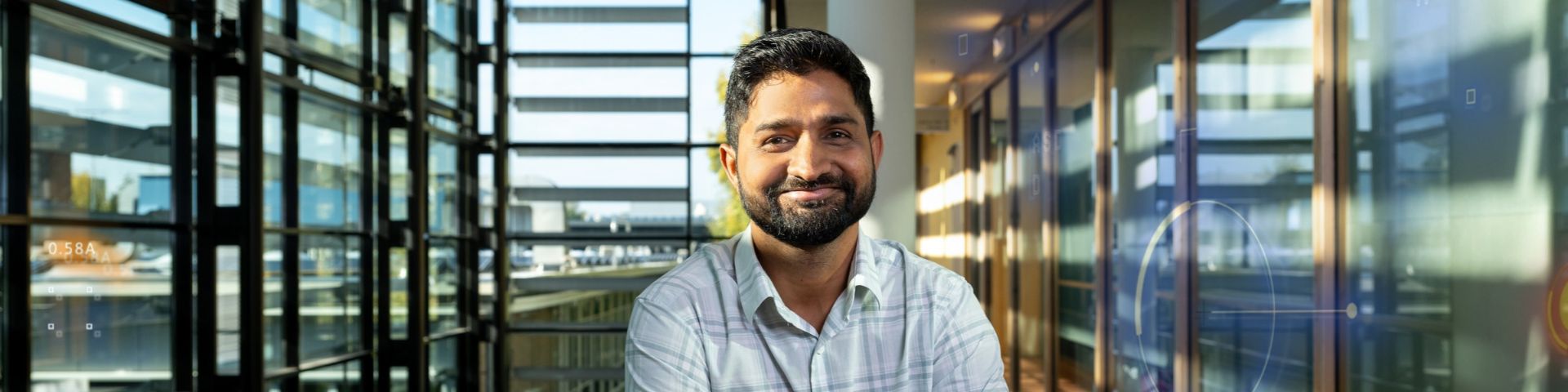
Time setter story: Akshay Verma helps to build the Dutch Photonic Chip Pilot Line
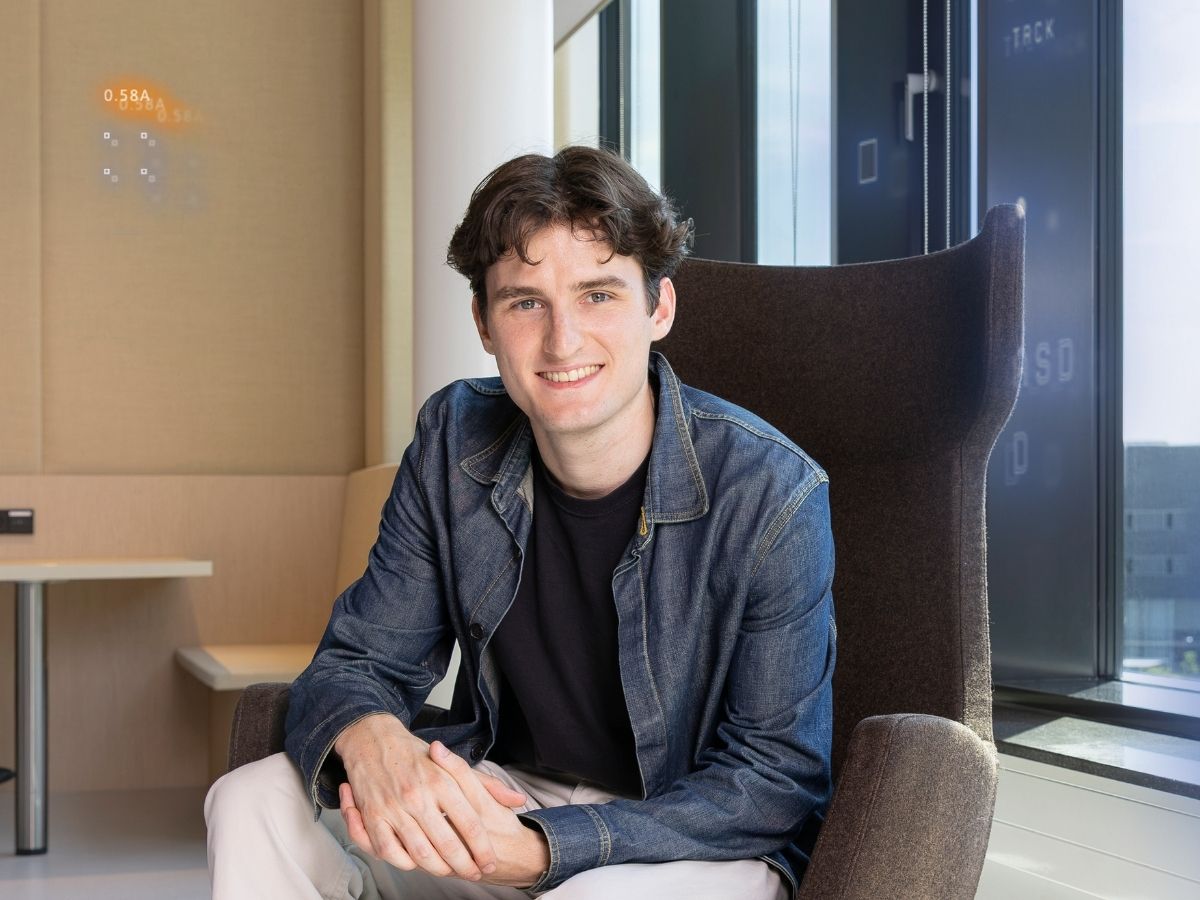
This is the time when innovation is crucial. To make our world safer, lives healthier and combat climate change. TNO employees make their mark on our time. In Eindhoven, the Dutch Photonic Chip Pilot Line is being developed. Time setter Akshay Verma moved to the Netherlands to be part of it from the very beginning. ‘I’m helping turn an idea into a fully operational pilot line. You only get an opportunity like this once in your career.’
Worth moving for
Some people start a new job. Process engineer Akshay Verma started in a new country, with a new team and on a production line that has yet to be built. This pilot line, hosted by TNO and part of the EU’s PIXEurope project, is Europe’s first pure-play pilot line for InP photonic chips at 6” wafer scale.
It was precisely the opportunity to help build it from the ground up that appealed to him. As a process engineer in Eindhoven, he is helping to develop the processes that will form the foundation of the entire pilot line.
Big decision
Moving to another country meant that more than just the job had to feel right. Akshay also considered the city, housing and what the move would mean for his partner’s career. Could Eindhoven become not just a new place to work, but a new home too?
‘Eindhoven turned out to be a real hub: an international technology city with a vibrant social scene and plenty of international companies. That made the decision a lot easier.’
'On previous international moves, I had to arrange everything myself. This time, I had help with practical matters such as housing and the move itself. I could focus on my work and settling into my new surroundings.'
Language barrier
Akshay has an international background: he studied physics in India before completing his PhD in Germany, where he specialised in the epitaxy of III–V semiconductors. He then took up a postdoctoral position at the National Epitaxy Facility in Sheffield, England, where he developed semiconductor processes for applications including quantum communication and photonic chips.
The local language was therefore a big factor in this latest move. ‘In Germany, particularly outside work, I found that English was not always an option in social situations. At times I really did experience a language barrier.’
International Work Desk
Making the decision is one thing; organising the move is another. For that, Akshay had support from TNO’s International Work Desk. ‘On previous international moves, I had to arrange everything myself. This time, I had help with practical matters such as housing and the move itself. That meant I could focus much sooner on my work and settling into my new surroundings.’
Want to know more about the Dutch Photonic Chip Pilot Line?
This is the time to work on a faster, more reliable and accessible manufacturing ecosystem for the fabrication of advanced photonic chips. This strengthens Dutch industry and reinforces Europe's position in photonic innovation.
The challenge of scaling up
The pilot line focuses on six-inch wafers, allowing more chips to be produced on each wafer and making manufacturing more efficient. ‘Scaling up sounds simple, but it is technically very complex and involves an enormous amount of work. As a team, we are laying the foundations for the entire pilot line. That is a big responsibility.’
The cleanroom is being built in late 2026. The equipment will then be installed, configured and tested. Next, the team will develop the core processes that will ultimately be used to manufacture lasers and other photonic components. Akshay works with an MOCVD reactor that grows extremely thin crystalline semiconductor layers.
Building from scratch
Meanwhile, the team is growing and the facilities are being set up. Eventually, every element will need to work seamlessly together. ‘The building, the cleanroom, the equipment, the processes: everything has to align. The sheer variety of elements coming together here is what got me excited straight away.’
For Akshay, working on the pilot line feels like being part of a start-up. ‘Together with colleagues from a wide range of specialisms, we are building a fully operational factory from scratch. And we are doing it fast.’
‘I want to see it all come together’
Akshay is currently training at Eindhoven University of Technology, while the team works closely with Smart Photonics. Detailed process-transfer and implementation planning are prepared, so the team can get straight to work as soon as the equipment is installed.
‘I want to see it all come together,’ he says. ‘The most exciting moment will be when the pilot line produces its first working devices. Data centres and AI applications need ever more capacity. Photonic chips can help process more data while using less energy.’
Want to become a time setter too? Discover the opportunities
Get inspired
Integrated photonics accelerates the search for new medicines
Time setter story: Inez Erwin Magino on TNO Traineeship

Time setter story: Lars Geluk on TNO Traineeship
Time setter story: Karla Rojas Martínez on TNO Traineeship
Time setter story: Saskia Lensink about GPT-NL