Battery
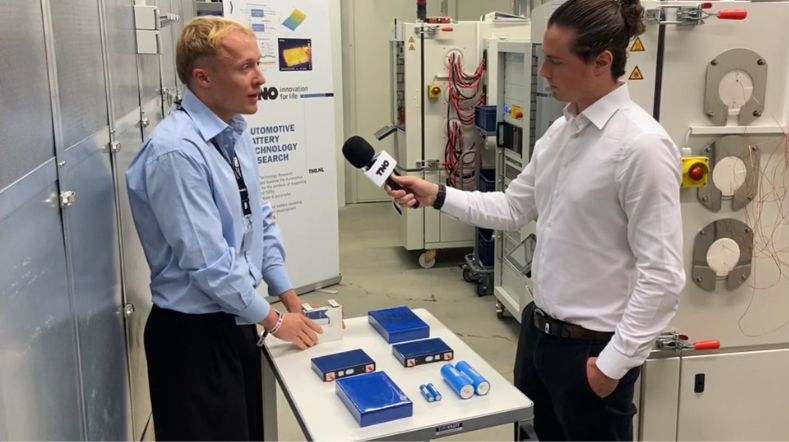
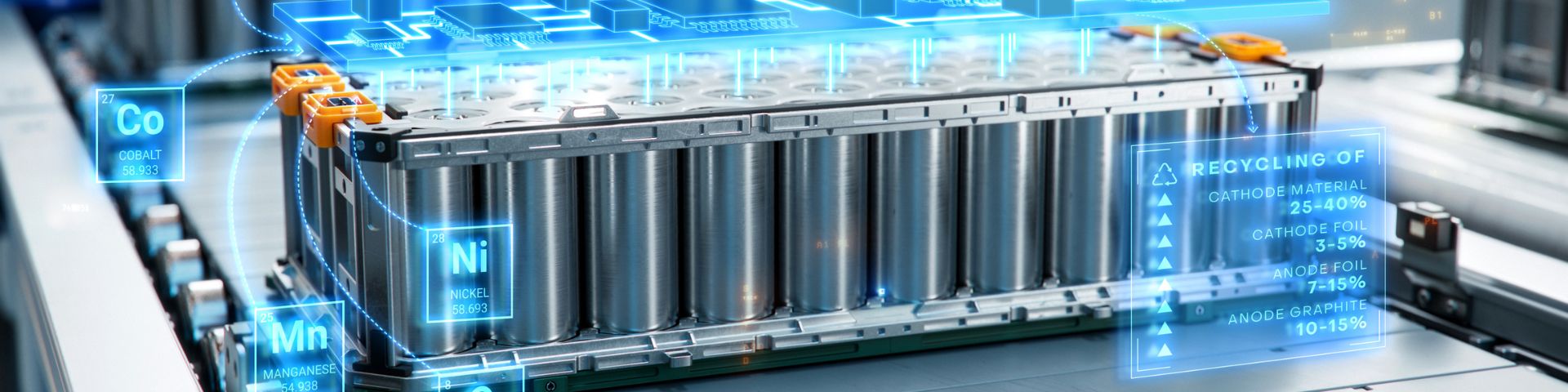
The energy transition increasingly relies on the use of batteries across a wide range of applications, from mobile phones to electric vehicles. To accelerate electrification as a whole, TNO develops tailored, innovative solutions. Discover everything about advancements in battery technology and lifespan.
Raw materials for battery production
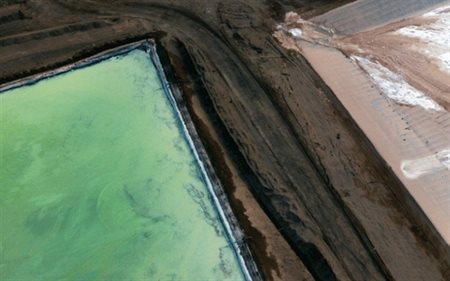
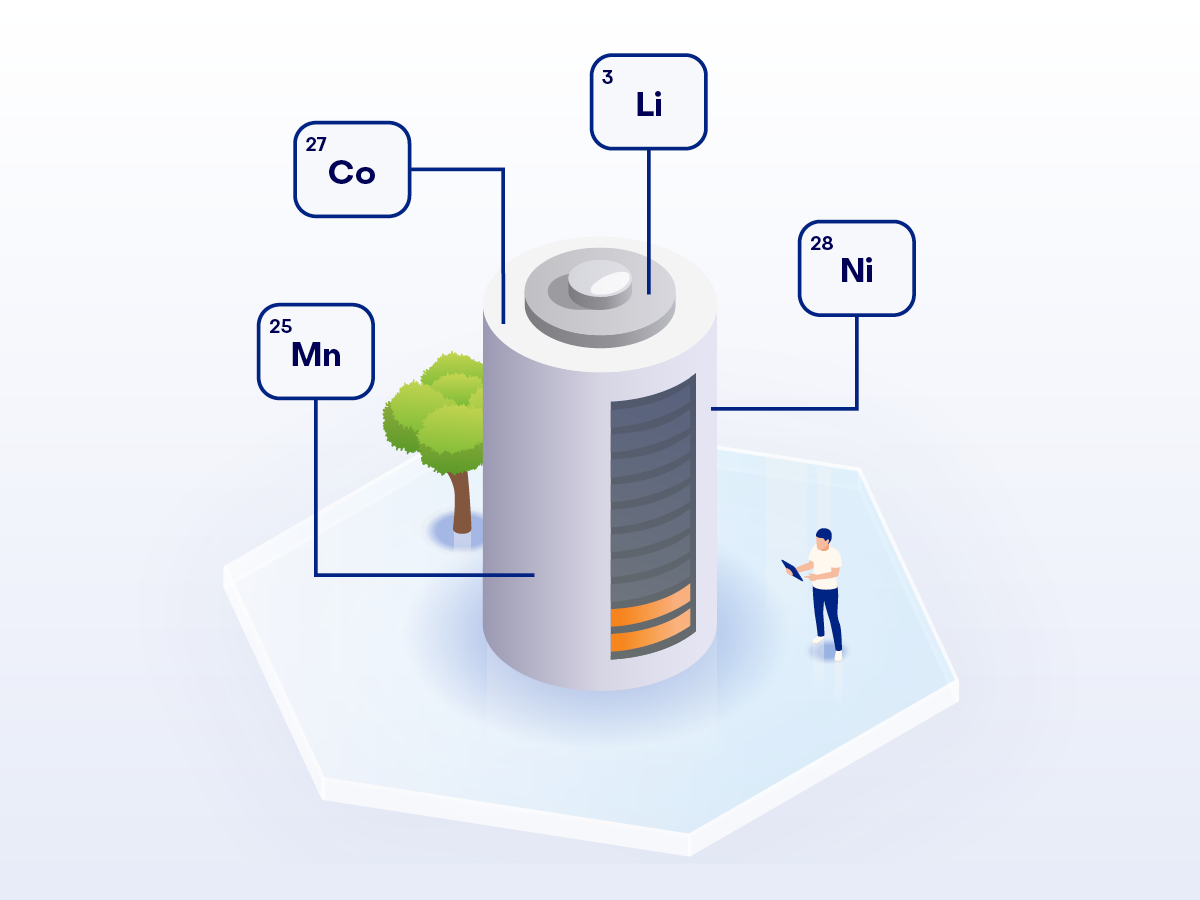
From cobalt and lithium for producing batteries to iridium for hydrogen production; the success of the energy transition largely depends on the availability of scarce raw materials sourced from a limited number of countries.
Battery production
Do you need support in developing new battery technologies, for example by integrating and/or optimising new materials for different cell designs?
Battery optimisation and lifespan
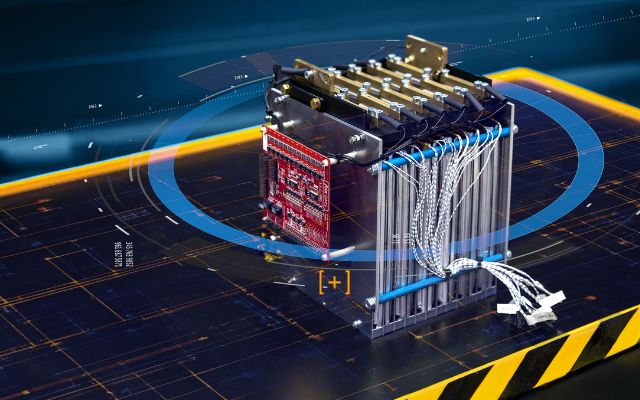
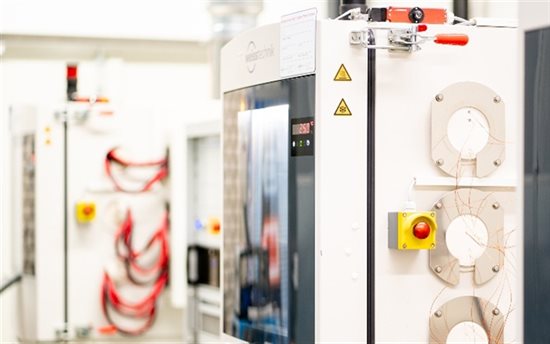
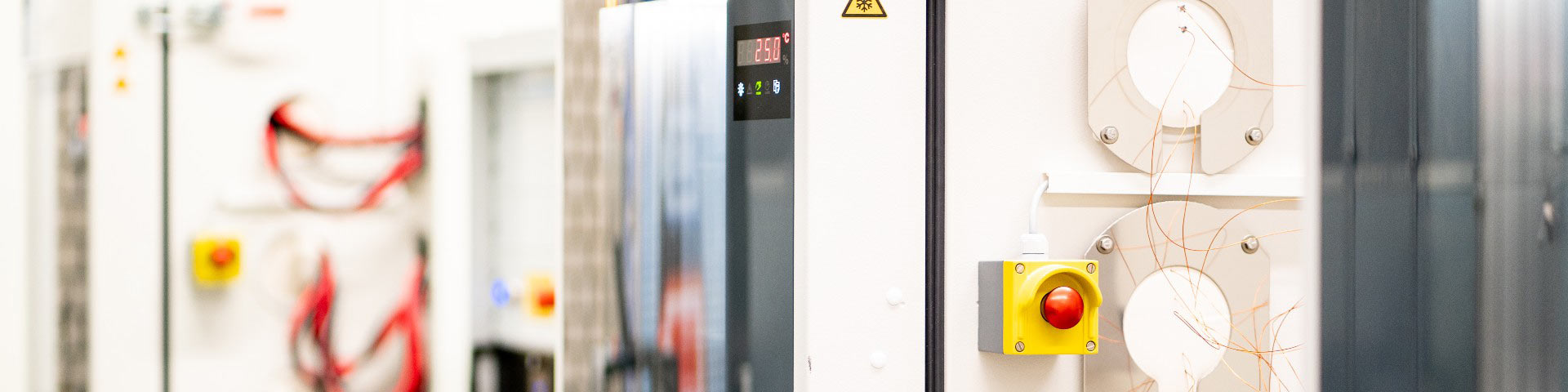
Our state-of-the-art Battery Lab offers fully climate-controlled testing facilities for battery packs and complete electric vehicles, with temperature control ranging from –40°C to +150°C and humidity regulation. The facility includes a 300 kW battery cycler and liquid cooling systems for both heating and cooling. It also provides safe, inert environments with gas detection systems for secure testing. The lab is designed for validating performance models and algorithms at battery system level.
Recycling of raw materials
What happens to used batteries, for example from laptops or electric vehicles? LFP (lithium iron phosphate) batteries are increasingly used in electric vehicles due to their safety, longer lifespan and lower costs. However, recycling these batteries remains a challenge due to the relatively low value of their raw materials.
Innovations in battery technology
-
SeBaPaD 2: Secure Battery Passport Demonstrator 2
Status project
January 2026 – October 2026
In cooperation with
NXP Semiconductors
-
SeBaPaD: Secure Battery Passport Demonstrator
Status project
October 2024 – October 2025
In cooperation with
NXP Semiconductors, ELEO Technologies B.V., INND Batteries, ...
-
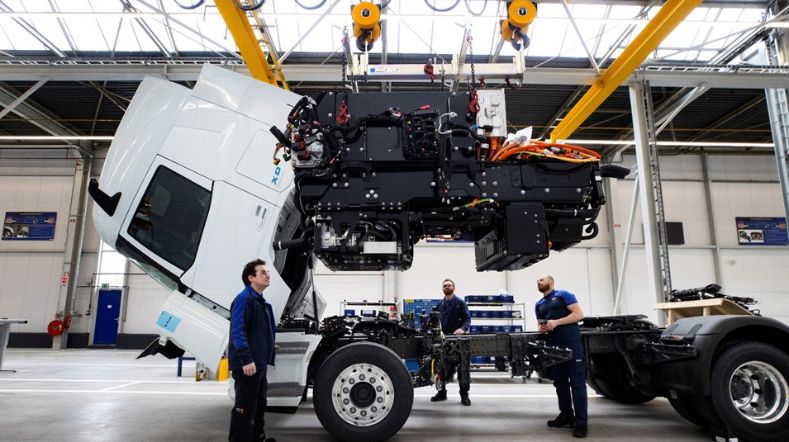
CIMBATT: Towards a Dutch circular battery chain for heavy transport
Status project
1 April 2025 – 31 March 2029
In cooperation with
VDL Groep, DAF Trucks, Damen Shipyards Group and more
-
NEXTBMS: Battery remaining useful life prediction

Status project
1 June 2023 – 30 September 2026
In cooperation with
AIT, UL, VUB, BOSCH, NXP, AVL, EDF, TOFAS, Uniresearch
-
VITALISE: Battery diagnostics and life extension

Status project
2021-2025
In cooperation with
Arriva, Heliox, Chargepoint
-
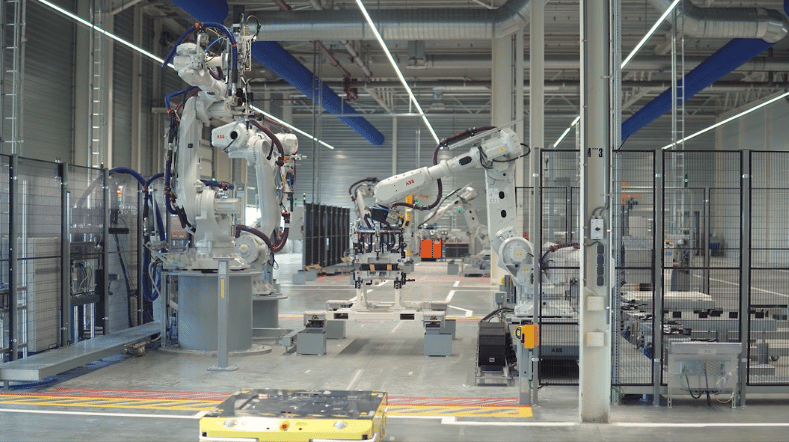
Green Transport Delta – Electrification (GTD-E)
Status project
1 October 2021 – 31 December 2024
In cooperation with
Ministery EZK, Brainport, VDL, DAF, NXP, Heliox, ELEO, ...
-
Battery Competence Cluster – NL boosts energy transition and Dutch earning power
Status project
2021 - present
Our spin-offs


All about battery technology
A battery stores energy in chemical form and converts it into electricity. Each cell has two electrodes: a positive (cathode) and a negative (anode), separated by an electrolyte. During discharge, ions move through the electrolyte from the anode to the cathode, while electrons flow through the external circuit, generating electrical current. During charging, this process is reversed. In lithium-ion batteries, lithium ions move back and forth between the electrodes.
A cell is the smallest functioning unit of a battery. It contains the core components: anode, cathode, electrolyte and separator. A single cell delivers relatively low voltage (typically 3 to 4 volts for lithium-ion). To achieve usable voltage and capacity, multiple cells are combined into modules, and modules are assembled into a battery pack. A Battery Management System (BMS) monitors and controls the entire system.
Batteries are typically classified by their chemistry. The most widely used is the lithium-ion family, with cathode variants such as NMC (nickel-manganese-cobalt) and LFP (lithium iron phosphate). LFP offers strong safety performance, long lifespan and contains no cobalt, while NMC provides higher energy density. Solid-state batteries are essentially lithium-ion batteries with a solid electrolyte instead of a liquid one, offering improved safety and energy density.
Sodium-ion is an emerging chemistry driven by cost and raw material availability. Flow batteries operate on a completely different principle, storing energy in liquid electrolytes in external tanks, making them suitable for stationary storage.
Battery technology is used in heavy transport, non-road mobile machinery (NRMM), maritime applications, stationary energy storage, aviation and drones.
A BMS is the electronic system that continuously monitors and controls a battery pack. It measures variables such as voltage, current and temperature to ensure performance and safety. Reliable and safe batteries are essential for the clean energy transition, and every battery pack is therefore monitored by a BMS.
Under the NEXTBMS project, TNO is developing the next generation of BMS technology. Current systems often rely on simple, conservative algorithms based on datasheets or basic models, which limits performance and can pose safety risks. NEXTBMS focuses on modelling internal battery behaviour and applying these models directly in the BMS. Combined with cloud-based, data-driven methods, this enables improved range, longer lifespan and enhanced safety for grid storage and electric vehicles.
Battery lifespan is strongly influenced by usage, including charging speed, temperature and charging/discharging patterns. By managing these factors intelligently, lifespan can be significantly extended.
The VITALISE project aims to extend battery life by developing fleet management strategies that take actions based on battery status and usage schedules. These actions may include adjusting charging speed or battery temperature. The approach will be demonstrated in a pilot project with part of Arriva’s electric bus fleet. Supporting tools include the ‘CheckUp Tool’ for battery diagnostics and a bidirectional charger.
Commonly used LFP batteries contain strategic materials such as lithium, phosphorus, aluminium and copper. These materials are critical for the Netherlands and Europe due to their scarcity.
Battery recycling involves dismantling used batteries and recovering valuable materials and metals for reuse. A key challenge is that the raw materials are relatively inexpensive, making recycling less economically viable. Within the TKI programme ‘Green Chemistry and Circularity’, SusPhos and TNO are developing economically viable recycling processes. These combine phosphate recovery from wastewater (SusPhos) with metal recovery from electronic waste streams (TNO), resulting in a more circular and economically feasible solution.
The market share of batteries in electric vehicles has doubled over the past five years to over 40%, driven by strong EV growth in the US and Europe. By 2030, the number of electric vehicles could more than quadruple, significantly increasing demand for batteries. This will ultimately lead to large waste streams, making the recovery of critical materials essential.
- The growing diversity of applications requires flexibility in testing. New components, modules and battery packs must be tested quickly, which is why TNO is developing prototyping facilities for rapid validation of new concepts.
- New EU regulations require manufacturers to demonstrate which gases are released during thermal runaway, an uncontrolled chain reaction in which a battery overheats and may rupture or catch fire. TNO’s Battery Lab enables safe thermal runaway testing combined with detailed gas analysis, even for larger systems. This combination of capabilities is rarely available commercially.
- Battery systems are also moving towards higher voltages. Higher voltage systems are more efficient, requiring lower current for the same power.
Many manufacturers are transitioning from 400 to 800 volts, with heavy-duty vehicles even exceeding this. TNO is expanding its test capacity to significantly above 1,000 volts in anticipation of this trend. - There is also a shift towards understanding why batteries behave as they do, rather than just measuring performance. TNO therefore combines system-level testing with component-level analysis, including dismantling batteries to study internal processes. This enables the development of physics-based models for faster and more reliable lifetime predictions.
- A key milestone is the establishment of the Open Battery Industrialisation Center (OBIC) in Helmond, a joint initiative by TNO, VDL ETS and BCC-NL. This pilot facility (2–4 MWh capacity) bridges the gap between laboratory innovation and industrial production.
Battery applications range from heavy transport and maritime to stationary storage, aviation and drones. This diversity requires flexibility in testing, with rapid validation of new components and systems. TNO is therefore investing in prototyping facilities that enable faster innovation and demonstrable results.
EU regulations require detailed insight into gas emissions during thermal runaway.
TNO’s Battery Lab enables safe thermal runaway testing combined with gas analysis, providing unique insights that are rarely available commercially.
Higher voltage systems are more efficient and enable faster charging with less heat generation. As a result, manufacturers are transitioning to 800 volts and beyond. TNO is adapting its testing capabilities to support these developments.
Traditional testing is time-consuming because each battery must be tested individually. The industry increasingly wants to understand internal chemical processes. TNO combines cell-level measurements with component-level analysis to create physics-based models that enable faster, more reliable predictions.
The OBIC in Helmond is a joint initiative by TNO, VDL ETS and BCC-NL and a key step forward for Dutch battery technology. This pilot production facility (2–4 MWh capacity) focuses on scaling up and industrialising battery innovations, bridging the gap between research and market application.
Get inspired
Five tips for driving plug-in hybrid more efficiently

Forces combined: how TNO supports LionVolt to accelerate next-generation battery technology

How Arriva and TNO are shaping the next phase of electric bus transport
Li-ion battery recycling in the Netherlands: Big ambitions, small volumes
From lab to ice sheet: how TNO accelerates battery innovation with Team Polar