Cricket bread Nigeria: building new pathways for sustainable nutrition
How can alternative protein sources contribute to affordable, nutritious food while strengthening local economies? In Nigeria, a project on cricket-based bread explores this question in practice by linking food innovation, local production and entrepreneurship.
Cricket protein for food products
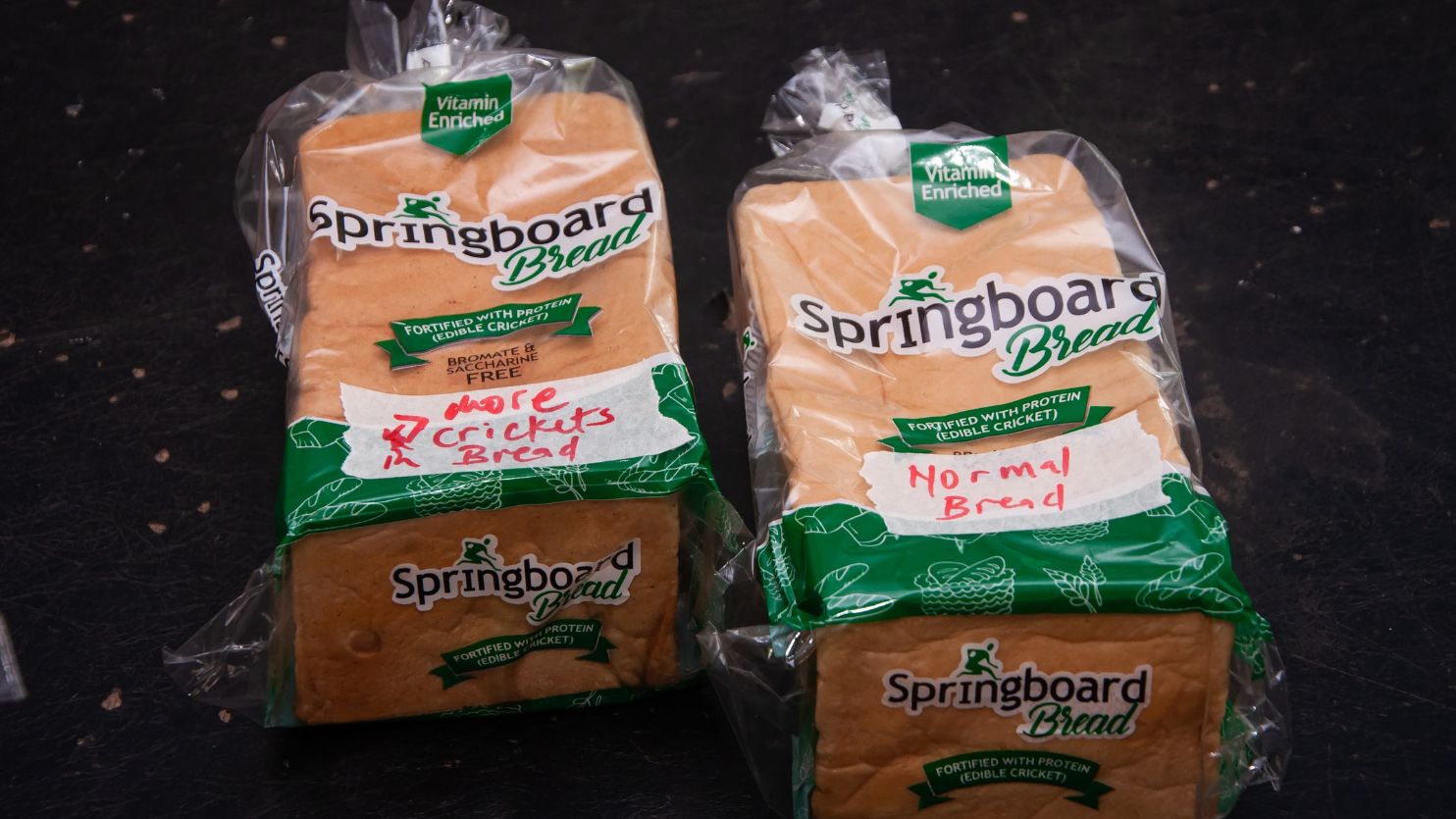
The project focuses on the use of cricket protein as an ingredient for everyday food products. Crickets are rich in protein and micronutrients, require relatively little land and water, and can be produced locally. By incorporating cricket powder into bread, a widely consumed staple, the project aims to lower the threshold for adoption of alternative proteins and create nutritional and economic benefits.
From ingredient to food system innovation
Introducing an alternative ingredient is not just a technical challenge. It requires alignment across production, processing, distribution, and consumption. The SBIR Cricket Bread project (Small Business Innovation Research project funded by Enterprise Agency of the Netherlands) therefore looks beyond the recipe itself and addresses questions such as: How can cricket production be organized locally? Which processing steps are needed to ensure food safety and quality? And how can new products fit within existing bakery and retail structures?
In the Nigerian context, these questions are particularly relevant. Urbanization, rising food demand and pressure on conventional supply chains increase the need for affordable and resilient protein sources, while local food businesses offer entry points for innovation and job creation.
TNO’s contribution: connecting technology, business and scale
TNO’s involvement in the SBIR Cricket Bread project builds many years of experience with alternative protein and food system innovation, including work developed under the Flying Food Initiative. Through this initiative and related projects in countries such as Kenya and Uganda, TNO has gained practical
insight into the introduction of insect-based ingredients for human consumption, addressing not only technological feasibility but also market uptake, regulation and consumer acceptance in diverse contexts.
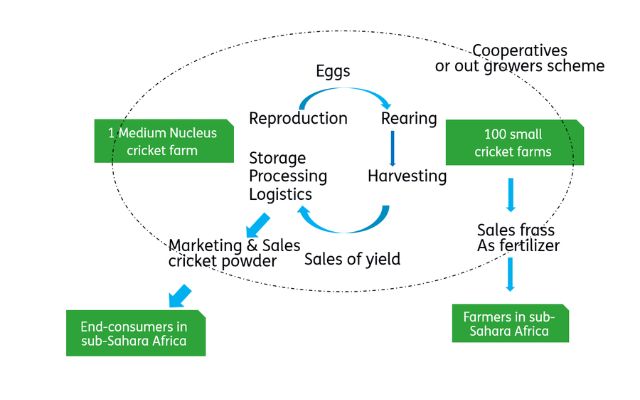
TNO’s contribution is further grounded in hands-on experience with the 101-cricket farm model. This model combines one medium-scale “nucleus” cricket farm with a network of smallholder producers, linking local production, training and guaranteed offtake through a cooperative or out grower structure. The approach enables scalability while keeping investment requirements for individual farmers low and has proven effective in embedding insect-based protein production within local food systems.
Within the Cricket Bread project, TNO applies this experience through collaborative business modelling and system analysis. Together with project partners, TNO:
- connects product and process design to economic and organizational choices;
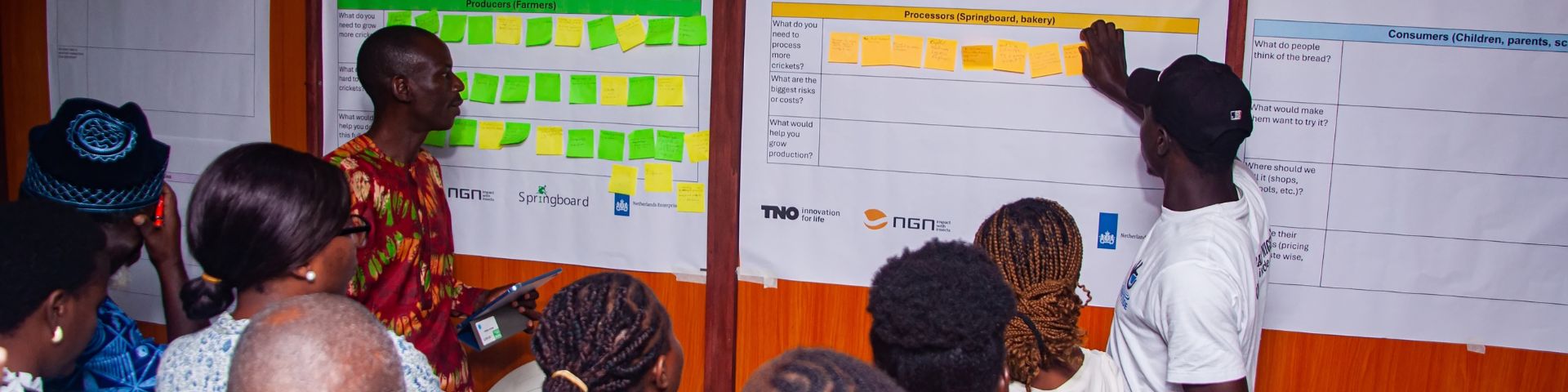
- maps the emerging value chain from cricket farming to bakery products; and
- explores realistic scale-up pathways within the Nigerian context.
By combining experience from earlier initiatives across multiple African contexts with hands-on collaboration in the current project, TNO helps ensure that technical innovation is embedded in a robust, scalable and locally grounded business logic.
Project partners
Besides TNO the following partners collaborate in this project:
New Generation Nutrition (NGN) is lead partner (based in both the Netherlands and Nigeria), contributing specialized technical knowledge on cricket farming and processing.
Springboard acts as a local partner, working with bakeries and farmer cooperatives and supporting the integration of cricket farming as an additional economic activity for cooperative members.
Looking ahead
The SBIR Cricket Bread project in Nigeria runs until the end of 2027. In the coming period, the focus will be on learning from the pilot, further strengthening the business model, and exploring pathways for replication and scale-up in Nigeria and beyond.
Contact us
-

Mathilde Miedema
Functie:Programme DirectorWith TNO Innovation for Development (I4D), Mathilde Miedema launches innovative solutions for societal problems in low and middle-income countries. In this way, TNO helps to create greater equality in the world.
-
Standplaats:Leiden - Sylviusweg
-
Email:Email Mathilde
-
Get inspired
Entobox Ghana
Plastic waste management in Indonesia

Flying Food takes next step in protein transition with crickets in Africa
Businesses in low and middle income countries
Training professionals for clean energy in Indonesia