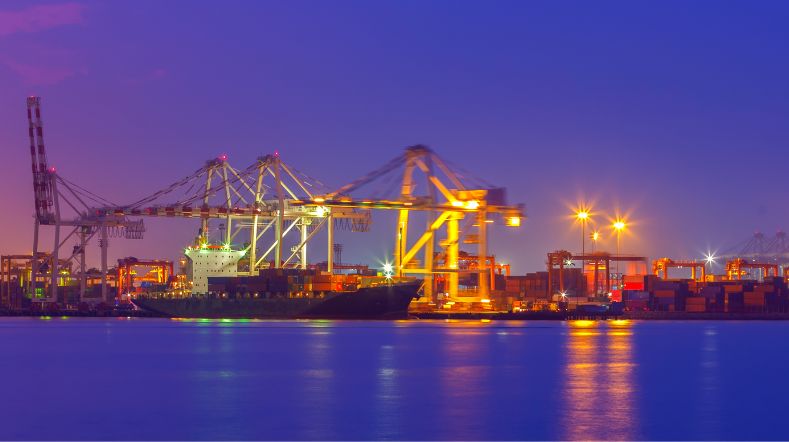
Europe's chemical industry can become more sustainable without losing its foundations
The European chemical industry is under pressure. High energy prices, global competition and climate targets are forcing the sector to make fundamental choices. New TNO research shows that the transition to greater sustainability does not have to lead to industrial decline, but can instead build on existing strengths.
A strategic industry
The Trilateral Chemical Region, comprising the Netherlands, Flanders and North Rhine-Westphalia, lies at the heart of Europe's chemical industry. The region has a unique network of production clusters, pipelines and industries that has been built up over decades. This integrated industrial system, with production clusters, cross-border pipelines, shared facilities and existing production assets, provides a strong starting point for the transition. At the same time, it makes the region vulnerable when essential installations disappear.
Transform rather than dismantle
According to TNO, the transition does not have to start with replacing factories, but with replacing fossil carbon. By gradually replacing fossil feedstocks with circular and renewable alternatives, and electrifying downstream processes where possible, much of the existing industrial base can be retained.
'The question is not whether Europe needs a chemical industry, but how we can free that industry from fossil carbon without losing its competitiveness.'
Looking beyond production
A key insight from the research is that sustainability is not only about emissions during production. For many chemical products, a significant share of the climate impact occurs at the end of their life, for example when materials are incinerated.
From this perspective, it is important to consider not only production emissions, but also the full product life cycle and the origin of the carbon used.
A bridge towards a chemical industry with lower fossil dependence
According to TNO, methanol, ethanol and paraffins produced from waste and biomass can serve as new building blocks for the chemical industry. These feedstocks make it possible to continue using existing installations while reducing dependence on fossil resources. Because sustainable carbon and renewable energy are available only in limited quantities, targeted choices are needed regarding the use of local feedstocks, imports and processing capacity.
Competitiveness and sustainability
The study shows that sustainability and competitiveness do not have to be mutually exclusive. By using existing industrial infrastructure, replacing fossil carbon with circular and renewable alternatives, and promoting sustainability at product level, Europe can work towards both its climate goals and greater economic resilience. Three conditions are essential: reliable access to low-carbon energy and feedstocks, a viable business case for more sustainable production routes, and clear, verifiable product standards that make sustainability recognisable and valuable in the market.
From insight to transformation
The challenges facing the chemical industry are not solely technological. They also involve investment decisions, infrastructure, value-chain collaboration, regulation and market development. It is at this intersection that TNO supports companies, public authorities and value-chain partners in the transition towards a sustainable and competitive industry.
Through analyses of technologies, value chains, feedstock flows and energy flows, TNO maps the dependencies and impacts of different transition pathways, from individual production routes to industrial clusters and cross-border value chains. In this way, we help organisations make well-founded decisions on investment, innovation and collaboration in a changing industrial landscape.
About the client and research partners
This research was commissioned by the Dutch Ministry of Economic Affairs within the framework of the Trilateral Chemical Region. The findings provided input for the previously published 3CVaCS project (pdf) on competitive chemical value chains in the Netherlands, Flanders and North Rhine-Westphalia. This joint project was carried out by VITO/EnergyVille, DECHEMA and TNO.
Would you like to know more?
Would you like to know what the findings of this research mean for your organisation, sector or value chain? Or are you looking for practical guidance on making industrial processes, feedstock chains or energy systems more sustainable? TNO would be pleased to explore the opportunities, conditions and choices needed to make industry future-proof.
Contact our experts and download the report 'Breaking Free from Fossil Dependence' for the full analysis and recommendations.
Contact us
-

Martijn de Graaff
Functie:Business Director Industrial Transformation and Power-2-XMartijn is in charge of programme management and business development for the VoltaChem Shared Innovation Programme on Power-2-X, and for cluster management at TNO’s programme on industrial transformation.
-
Standplaats:Rijswijk - Kesslerpark
-
Email:Email Martijn
-
LinkedIn:Martijn on LinkedIn
-
Get inspired
Li-ion battery recycling in the Netherlands: Big ambitions, small volumes
Discover your pathway to tomorrow’s energy system today
Faster reinforcement of low-voltage grids requires improved collaboration
A fossil-free 2050 is technically achievable
Temporary Special Economic Zone around Rotterdam can prevent climate delays and GDP losses