Time setter story: Stefania Monni on antennas and radar technology
This is the time when innovation is crucial. To make our world safer, lives healthier and combat climate change. TNO employees make their mark on our time. In this series, we share stories of our time setters. Time setter Stefania Monni is senior scientist antenna and microwaves. ‘Being an engineer at TNO allows me to combine my scientific interests with a positive impact on society.
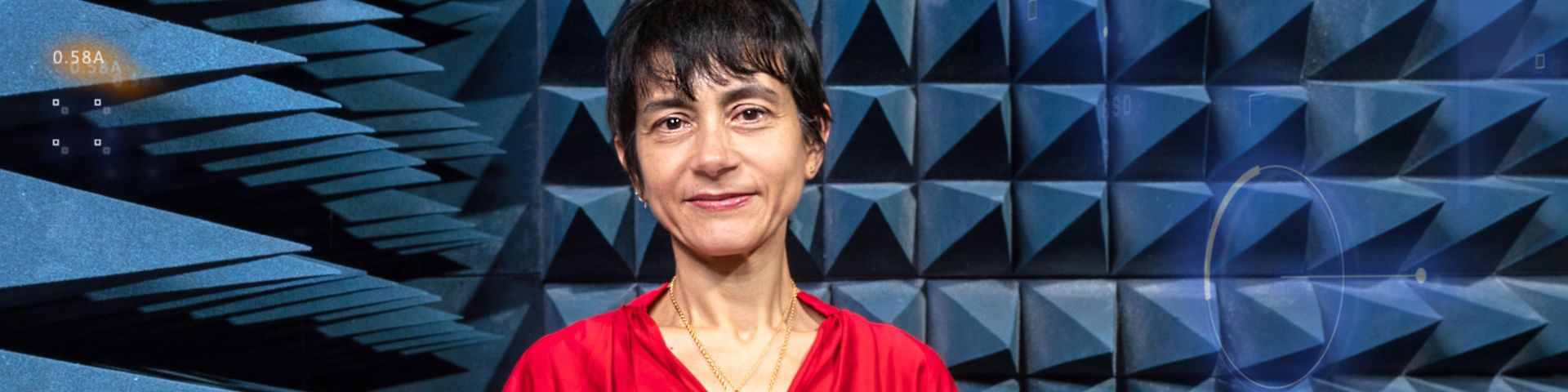
For nearly twenty-five years, Stefania Monni has called the Netherlands home. She came to Eindhoven as an Italian student, stayed on for her doctoral research, and rose to become a senior scientist at TNO’s Radar Technology department. She also holds a part-time professorship at Eindhoven University of Technology. At TNO, she leads the 'antenna team', comprising specialists who work daily on one of the most complex and essential technologies for our security.
‘The work is constantly changing, that keeps me sharp,’ says Stefania. In her day-to-day work, she develops antenna concepts that determine what a radar can detect. ‘An antenna essentially functions as the mouth and ears of the system. It transmits energy into the world and captures it again. What radar does is to detect objects, such as aircraft or missiles, that we can't see with the naked eye, day and night, in any weather condition. This allows you to protect airports, ships or military installations, for instance. If you use the right signal waveform, you can even distinguish very small objects, such as cheap drones.’
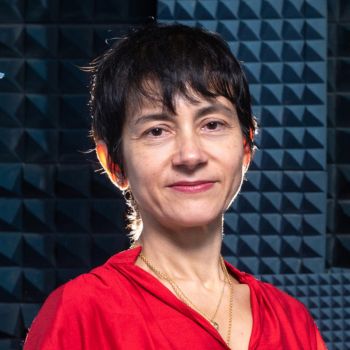
‘By applying science, we can solve problems and have true impact on people's lives. That made me want to work at TNO. The work keeps changing and challenging me, so I never left!’
New threats, new technology
The security environment has changed rapidly over the past year. Swarms of drones, hypersonic weapons and an increasingly congested electromagnetic spectrum make Stefania's work more urgent than ever. ‘Hypersonic objects move so fast that time becomes a critical factor. That means that our antenna design, together with power amplification and signal processing, must constantly evolve.'
'TNO radar departments offer an unique research environment to tackle these challenges, where the antenna team closely cooperates with the integrated circuit team and the radar system and signal processing teams. For example, we have recently developed an array antenna-IC integrated concept that allows radiating an unprecedent level of power.’
Robustness and resilience
We increasingly hear the terms "resilience" and "resilient society". According to Stefania, robustness and resilience begin with technology. ‘Without technological knowledge, you can't have a strong economy, security or industry. Think of aviation safety, preventing collisions with autonomous vehicles, coastguard operations or monitoring space debris. All these applications help make the Netherlands safer and more resilient. If you focus specifically on defence, the situation in Ukraine demonstrates that modern threats can be unexpected and multifaceted.'
'This shifts our priorities: we need to innovate faster, collaborate more, both multidisciplinary and internationally, and develop technologies that are broadly applicable. New developments sometimes come from the defence sector, sometimes from the civilian market, such as mobile or satellite communications. Through this cross-pollination, we can develop technology faster and apply it more effectively.’
Adaptability and a clear vision
According to Stefania, adaptability is key to security. ‘Radar systems that can adapt themselves to their environment - for example, to congestion in the spectrum or unexpected threats - are becoming increasingly important. Flexible antennas, intelligent software, integrated systems: that's the future.’ Furthermore, a European vision and an executable industrial strategy are essential.
‘In the space sector, we're contributing to a process in which the Netherlands Space Agency (NLSA), and the Space National Delegations of other countries that are members of the European Space Agency (ESA) are developing technology roadmaps. These form the basis for lists of critical space technologies within European space and defence organisations, which are used to define the objectives of European research programmes. This harmonisation process is extremely important but requires time, which does not match with the sense of urgency dictated by current geopolitical situation. The question remains how to accelerate the realisation of a stronger European industry and defence capability.’
TNO's strength
What motivates her daily? ‘There's always a new puzzle. We're constantly searching for solutions that push closer to the limits of physics. Transmitting more energy, measuring more sensitively, enabling and exploiting new materials and manufacturing technologies: it requires creativity.’
TNO provides a special environment for this, she believes. ‘We have excellent laboratories and measurement facilities. But we don't just build theoretical models. Together with industrial partners, operating both in the civilian and defence domains, we look at how we can apply the technology in their products. That's precisely TNO's strength: we connect different domains.’
‘There's always a new puzzle. We're constantly searching for solutions that push closer to the limits of physics. Transmitting more energy, measuring more sensitively, enabling and exploiting new materials and manufacturing technologies: it requires creativity.’
Energy and fulfilment
What energises Stefania most? ‘Those moments when a new insight suddenly opens up a new challenge, often a research assignment that builds directly on what we've just discovered. And seeing young talent develop and grow, that's incredibly rewarding.’ She also values the freedom to shape her own research agenda, albeit with an important caveat. ‘Everything we do is purpose-driven. It always stems from a question from a stakeholder. The better you understand their context, the stronger your solution becomes.’
Valuing technological knowledge
Stefania's wish for 2026? ‘I'd like people to better understand how important technology is for our daily comfortable lives, and for our security and economy.’ We benefit from innovations, but according to her, we invest far too little in them. ‘Education is key aspect. More attention is needed at school to cultivate love and appreciation for technical subjects. Moreover, you see Philips divisions and companies like NXP, Ampleon and Nexperia ending up in foreign hands. That means losing control over crucial technology. If we take our future seriously, we must value, strengthen and protect our technological knowledge. Only then can we preserve security, freedom and prosperity. TNO contributes to raising this awareness.’
Want to become a time setter too? Come work at TNO
Get inspired
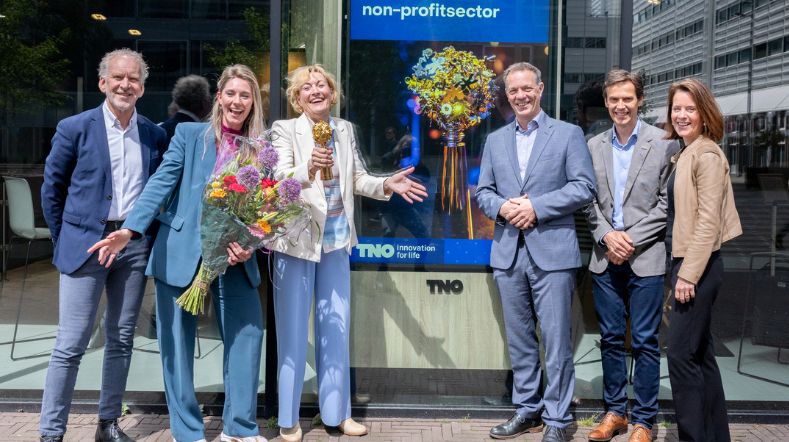
TNO named Most Attractive Non-Profit Employer in the Netherlands for the fifth time
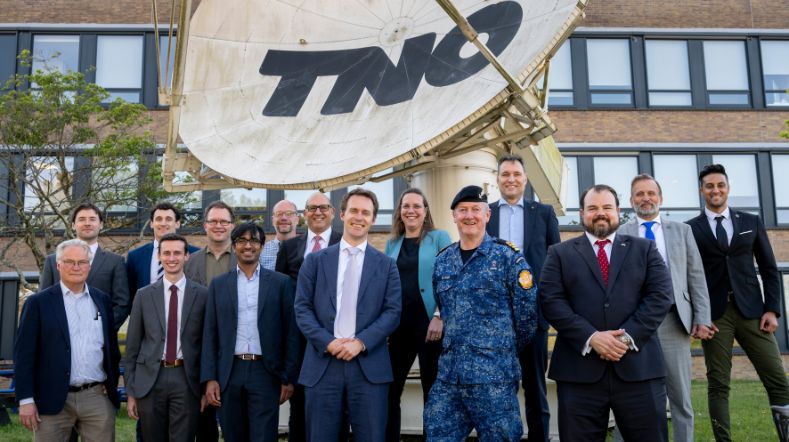
TNO and MBDA sign agreement to advance laser weapon capabilities
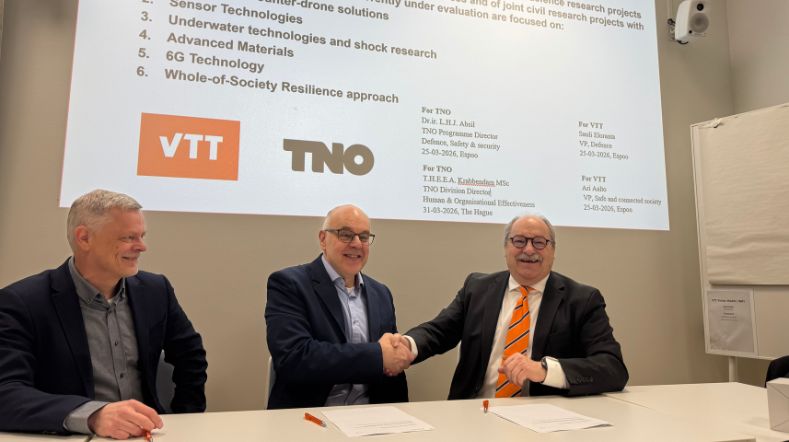
Closer cooperation between TNO and VTT (Finland) in the field of defense
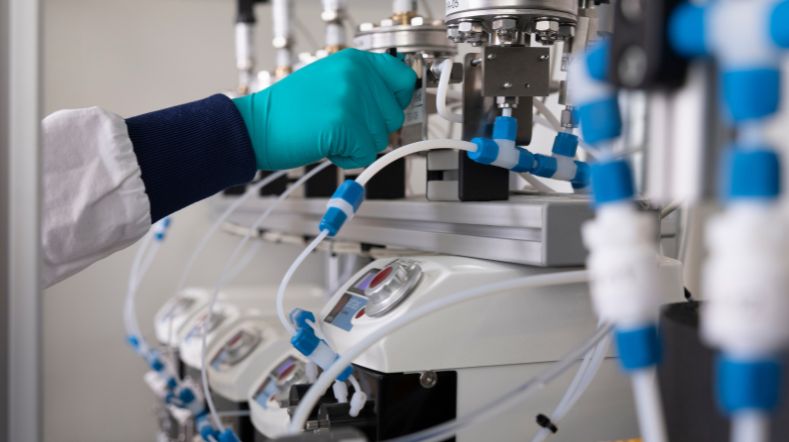
From dependence to control: microfactories as the key to European access to energetic materials
State of Dutch Tech 2026: The Netherlands must dare to scale at a global level