Smart radar protects bats at Eemshaven wind farm
Can wind farms minimize harm to bats without sacrificing clean energy production? TNO, Dopplium and RWE are testing a radar-based monitoring system at Eemshaven that tracks bats in real time. The technology could replace broad precautionary shutdowns with targeted turbine responses when bats are actually at risk, improving both biodiversity protection and renewable energy output.
A genuine tension at the heart of the energy transition
Limiting climate change and its impacts on the natural environment requires a rapid expansion of renewable energy generation. Wind energy plays a crucial role in reducing global CO₂ emissions, and achieving climate goals will require the deployment of wind power at an increasing pace. At the same time, it is important to recognize and mitigate potential local impacts of wind turbines on wildlife, particularly bats that forage or migrate near wind farms.
To protect bats, wind turbines are often shut down as a precaution whenever environmental conditions indicate a higher risk of bat activity, even when no bats are actually present. TNO, Dopplium and RWE are now testing a radar-based approach at Eemshaven that turns this logic around.
Instead of relying solely on precautionary shutdowns, the system detects and tracks bats in real time, enabling future turbines to respond only when bats are actually at risk. This has the potential to improve bat protection while reducing unnecessary turbine downtime and associated energy losses, thus identifying an optimal win-win for nature and clean energy production.
The Netherlands takes many precautions to protect natural habitats surrounding man-made structures. All European bat species are protected under both EU and national legislation. As a result, turbines are regularly shut down during periods of elevated bat activity, regardless of whether bats are actually nearby.
More than 30 per cent of European wind turbines are subject to bat-related curtailment regulations. The associated energy losses can be up to a couple of % of the annual production, and the protection is not always effective: when shutdowns are triggered by weather conditions used as a proxy for bat presence, the precision falls short.
With the installation of an advanced monitoring system at Windpark Westereems in Eemshaven, TNO, Dopplium and RWE are taking a concrete step towards a scientific approach.
Radar at the core of a multi-sensor system
The installation marks a milestone in the Turbine Bat Trace project, which launched on 1 January 2026 with support from RVO under the EKOO Electricity 2025 programme. At the centre of the system is BatGuardian: the radar-based bat detection technology developed by Dopplium.
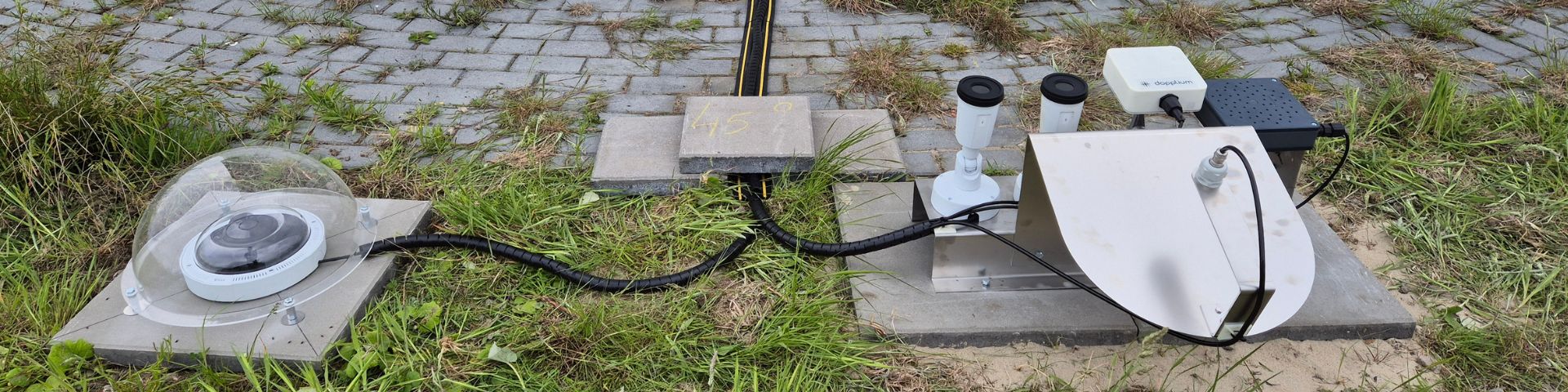
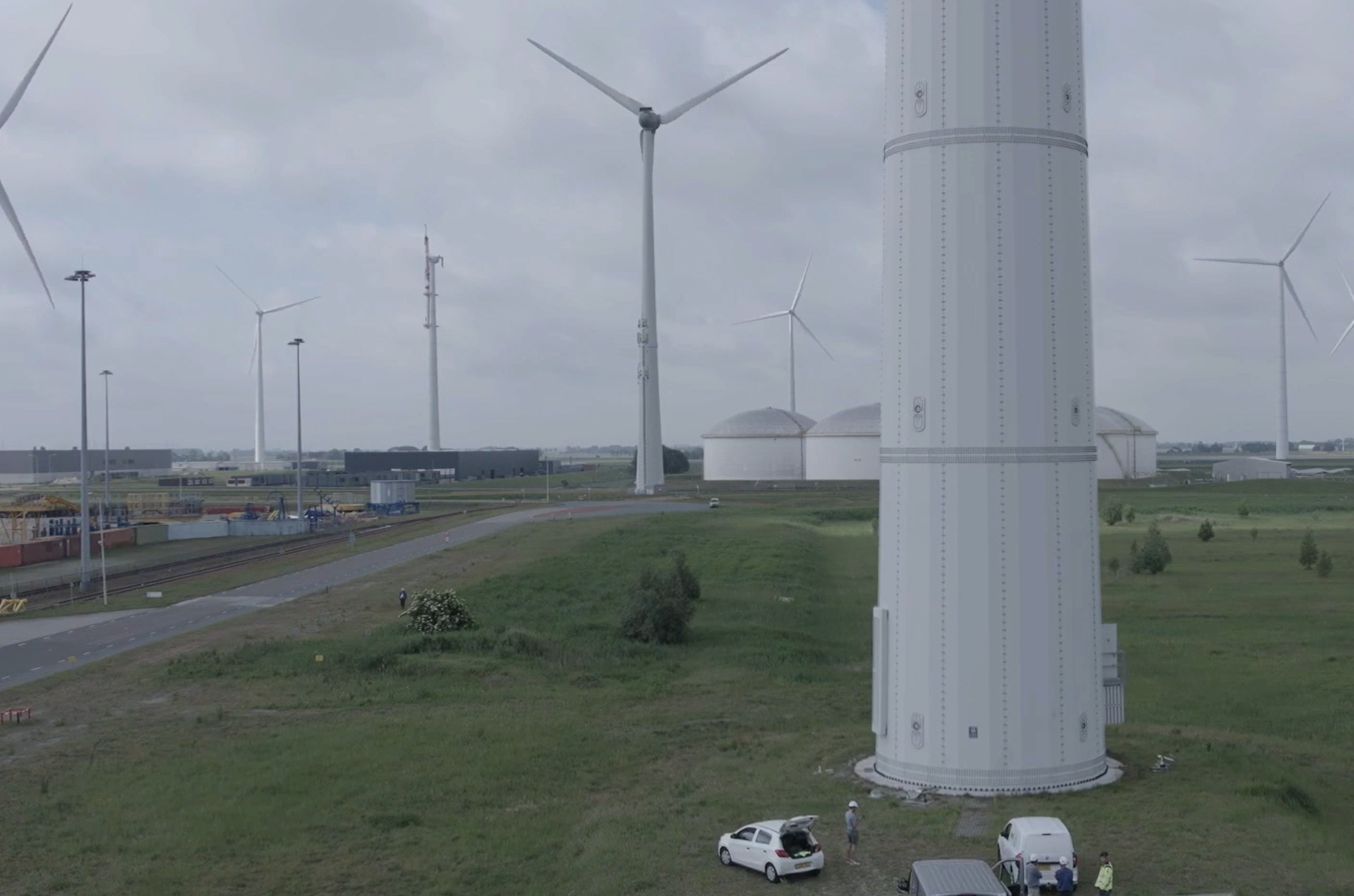
Three compact radar units are mounted around the turbine and together provide 360-degree coverage of the surrounding airspace, enabling turbines to shut down in a targeted, localised way, and only when bats are genuinely present.
Dopplium's radar technology has its roots in years of scientific research at the Microwave Sensing, Signals and Systems group (MS3) at Delft University of Technology, focusing on millimetre-wave radar and signal processing. The system operates in darkness and under challenging weather conditions, where conventional methods such as acoustic monitoring reach their limits.

‘The question is no longer whether we can detect bats. It is whether we can do so reliably enough to make targeted, decisions about turbine operation based on actual bat behaviour around turbines.’
Multiple sensors, greater reliability
Within the project BatGuardian does not operate in isolation. TNO integrates the radar system with a complementary suite of sensors installed in and around the turbine: thermal infrared cameras, ultrasonic bat microphones, acoustic monitoring systems and panoramic cameras. It is precisely this combination that makes the system robust.
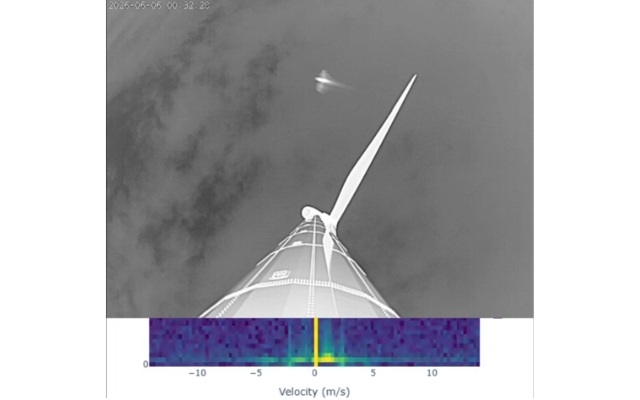
By combining multiple detection methods, TNO and its partners can cross-validate the outputs of each individual sensor. The thermal cameras provide visual confirmation that, when timestamp-matched with acoustic detections, yields concrete bat observations. The panoramic cameras supply environmental context. Ultrasonic microphones capture species-specific echolocation calls.
Together, they produce a dataset that illuminates three-dimensional movement patterns, species identification and bat behaviour around the spinning rotor, information that no single sensor type could provide on its own.
In this project, TNO provides independent validation: testing and comparing sensor methods, interpreting combined data, and building a reliable scientific foundation for further deployment of the system. This to enable future radar-based curtailment as a basis for operational decision-making and permitting frameworks.
Why real-time detection makes all the difference
The current practice of blanket curtailment, i.e. shutting turbines down entirely during periods deemed high-risk on the basis of weather data, is a blunt instrument. Many turbines are stopped for entire nights during critical activity periods, even when no bats are present. The societal costs include reduced energy and revenue without always delivering the intended protection.
BatGuardian addresses precisely that gap. When the system detects no bats, the turbine keeps turning. When bat activity is detected, a targeted, localised response can be triggered. The logic shifts from the precautionary principle to factual substantiation: the turbine stops when that is genuinely necessary, not when a weather model suggests it might be.
For operators such as RWE, that translates directly into a reduction in unnecessary production losses. For policymakers and permitting authorities, it offers a pathway to nature-inclusive operation that is grounded in measurement data rather than modelled assumptions.
'The turbine stops when that is genuinely necessary — not when a weather model suggests it might be.'
From detection to understanding bat behaviour
The Turbine Bat Trace project goes beyond testing a detection system. The measurements also generate deeper insight into how bats behave around wind turbines: where they fly, when they are active, which species approach the turbine and how their movement patterns relate to weather conditions, season and turbine operation.
Current knowledge gaps about which species are most affected, to what extent mortality occurs and whether there are seasonal patterns, continue to hamper effective policy and targeted mitigation. The dataset that Turbine Bat Trace builds up over two bat-active seasons contributes directly to closing those gaps, for the Dutch context and for the broader European picture.
Nature-inclusive wind energy as a system objective
The Eemshaven installation provides a scientific method for optimal energy curtailment while protecting wildlife. The next phase focuses on further optimising the radar algorithms on the basis of collected field data, exploring potential enhancements such as three-dimensional detection capability, and investigating applications offshore, where the challenges of bat monitoring are still greater due to distance, climate and infrastructure. Because bat-curtailment requirements apply across much of Europe, the lessons learned at Eemshaven have relevance beyond the Dutch context.
The broader ambition is a proven, scalable monitoring solution deployable across wind farms throughout the Netherlands and Europe. That touches on a systemic question that extends well beyond a single turbine or project: how does the wind energy sector grow to the capacity that climate targets require, while meeting biodiversity obligations and keeping permitting processes predictable?
The combination of Dopplium's radar technology, RWE's operational context and TNO's independent validation methodology forms a serious building block towards answering that question.
Collaborate with TNO on nature-inclusive wind energy
Would you like to explore how real-time bat detection can contribute to the nature-inclusive operation of your wind farm or permitting strategy? Get in touch with TNO to discuss options for collaboration, validation or applied research.
Contact us
-

Grace Paranjape
Functie:Business developer Energy SupplyGrace drives the development of strategic partnerships and innovation pathways that accelerate the energy transition. She focuses on translating emerging opportunities into scalable solutions, fostering collaborations that connect market needs with cutting-edge research, and shaping sustainable business strategies for the energy systems of the future.
-
Standplaats:Rijswijk - Kesslerpark
-
Email:Email Grace
-
-

Joep Breuer
Functie:Senior Consultant Wind Energy/EcologyJoep accelerates the energy transition with a strong focus on ecology. He draws on TNO’s broad expertise to connect a wide range of stakeholders. Driven by a passion for innovation, he explores new technological possibilities that help solve complex challenges and move us towards a more sustainable future.
-
Standplaats:Rijswijk - Kesslerpark
-
Email:Email Joep
-
Get inspired
Scaling high-value recycling for wind turbine blades

Biodiversity
TNO and Jungle AI collaborate to detect cyberattack on wind turbine and improve detection capabilities
Improving wind turbine maintenance with the sensor installation robot
First study on public perception of wind turbine circularity