Escalation in fireworks-related violence requires new security and response strategies
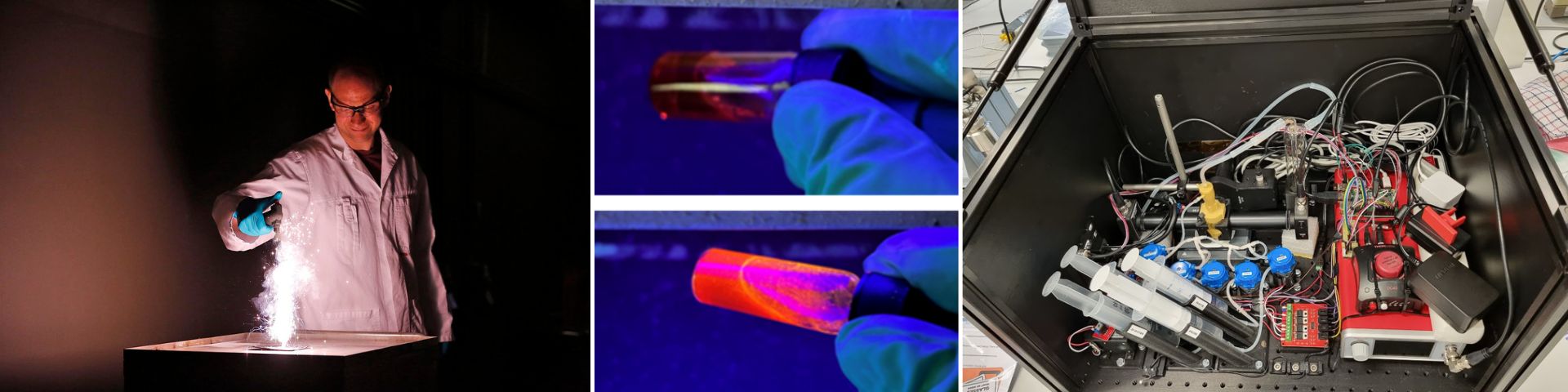
With more than 1,500 blast attacks each year, the Netherlands holds the unfortunate distinction of being Europe’s leader in this area.* The increase in blast attacks began in 2023 and has continued in the years since. Criminal gangs, particularly in major cities, use large, illegal fireworks to carry out attacks, motivated by extortion, retaliation and intimidation. Moreover, smuggled fireworks regularly cause injuries, even at sporting events and celebrations.
Can these incidents be prevented, or at least significantly reduced? Part of the solution may lie in prevention through the early detection of illegal fireworks. TNO project manager Joe and scientists Benjamin and Javier are working with partner Vention on a system capable of identifying traces of fireworks. They explain how the project came about, its current progress, and what it may mean for future safety regulations and legislation.

'These pyrotechnic explosives are based on different oxidisers and fuels. Detecting them requires a new technique, which we are currently developing.'
Explosions that disrupt society
'The wave of explosions is clearly a major problem – not only in the Netherlands, but across the EU and in the UK,' Joe emphasises. 'We can even say it is socially disruptive. While criminals target specific locations, people are often injured and buildings damaged in the surrounding area. This creates a deep sense of insecurity in neighbourhoods. In addition, criminal organisations frequently recruit vulnerable young people to carry out these attacks. By luring them with ‘quick money’, they are drawing more and more minors into criminal activity, with all the consequences that entails.'
'A house has been targeted in an attack. The damage to the property and the neighbouring building is enormous.'
Growing shift from conventional weapons to fireworks
'Previously, criminals relied on conventional weapons such as firearms and TNT-based explosives. These are regulated under the Weapons and Ammunition Act and are therefore more difficult to get a hold of. The growing shift to fireworks-based explosives is largely because the raw materials are inexpensive and easy to obtain. Fireworks that are illegal in the Netherlands may be legally produced, transported and stored in other European countries, allowing them to find their way here with ease.'
'Police have discovered a fireworks bomb in a shed in a residential area that is powerful enough to destroy a house completely. ‘It is the most powerful one we have ever found in this region.'
The need for new detection technologies
'The wave of fireworks attacks is relatively recent. Existing explosive detection systems are typically designed to identify molecules like TNT and similar military-grade materials,' Joe explains.
'They search for nitro groups, which are present in TNT, RDX and HMX. These molecules are not found in pyrotechnic explosives such as fireworks. These pyrotechnic explosives are based on different oxidisers and fuels. Detecting them requires a new technique, which we are currently developing.'
More information
Watch the Dutch Government video about the hidden dangers of storing and transporting illegal explosives.
Call for innovative research provides spark for creativity
Funding to develop the novel fluorescent chemistry and prototype came from the UK’s Innovative Research Call (IRC) 2023 for Explosives and Weapons Detection. This collaboration between several government departments and law enforcement agencies sought to develop and improve explosives and weapons detection capabilities across a range of use cases. The key goal was to enable earlier detection of terrorist and criminal activity.
When asked about the IRC call and fireworks-based threats, TNO scientist Javier noted: 'This funding enabled us to investigate and design a prototype that precisely targets these security concerns. We could really focus on developing a system that combined different areas of expertise to realise a technology that ultimately proved successful for the detection of pyrotechnic explosives.'
Building on existing TNO research
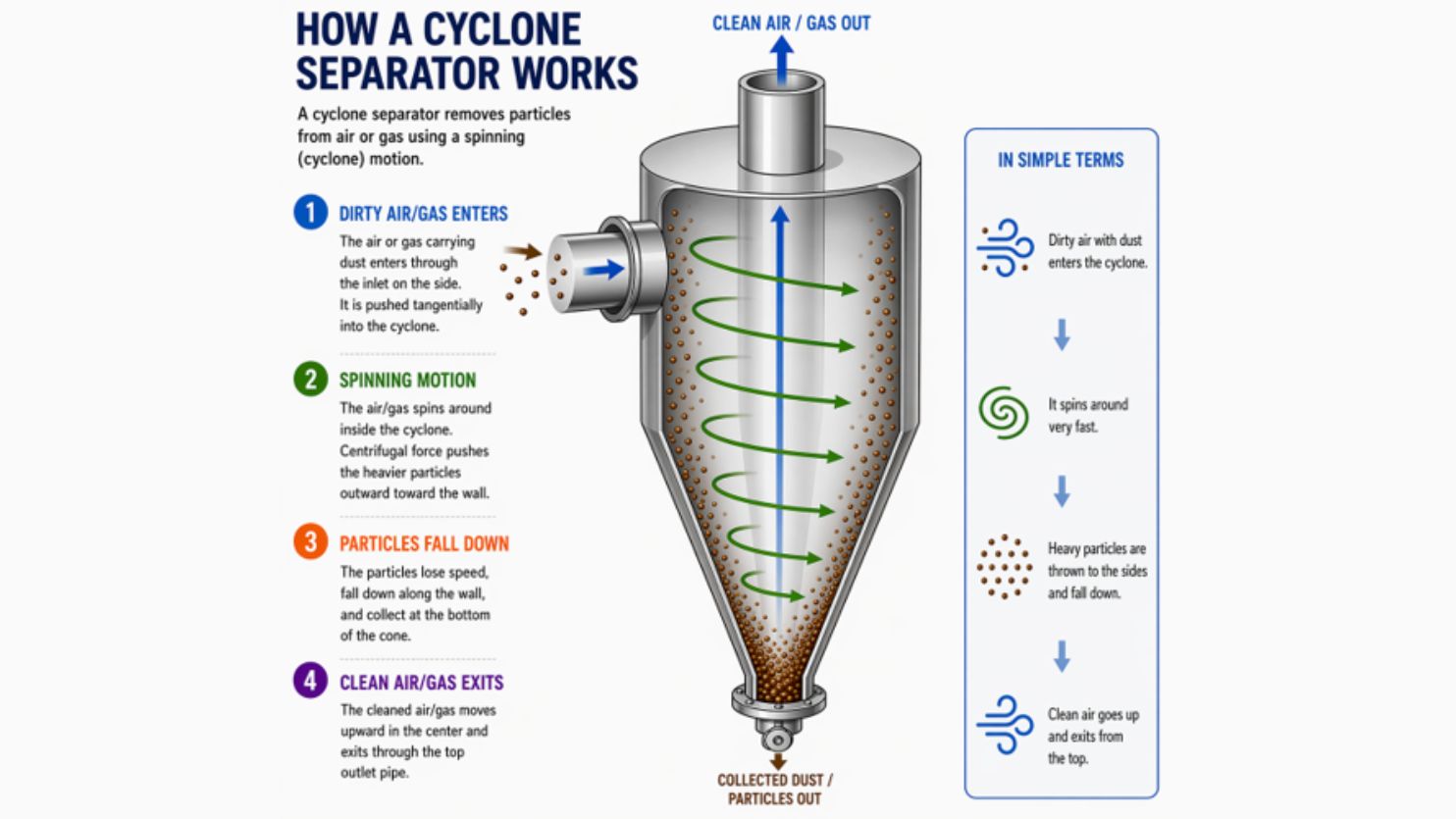
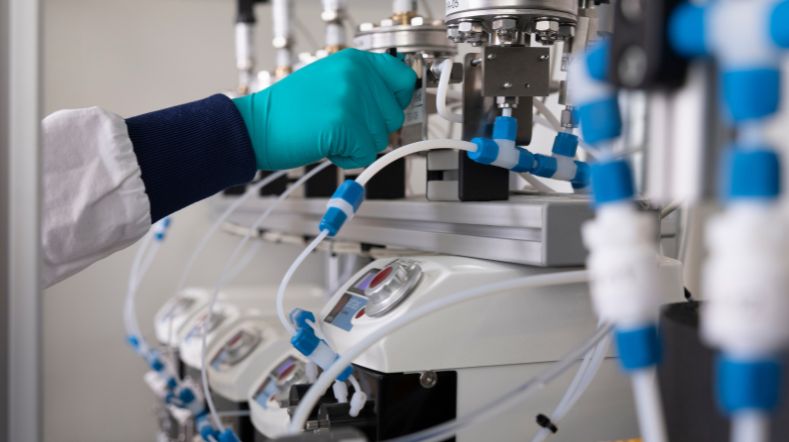
'One of the key components of the technology builds on earlier TNO research aimed at detecting microscopic dust particles that can cause serious health damage when inhaled. A cyclone separator was developed to collect such particles. This system became a core element of the plan to detect fireworks and other pyrotechnic materials. The powerful ‘mini vacuum cleaner’ is used to collect pyrotechnic particles that have adhered to hands, clothing, packaging, vehicles, and more.'
Making hidden fireworks detectable
Benjamin, who developed the chemistry behind the technology, adds: 'Of course, the cyclone does not only collect fireworks particles, but also other substances. Imagine a full vacuum cleaner bag. How do we demonstrate that microscopic pyrotechnic particles are present among all that material?
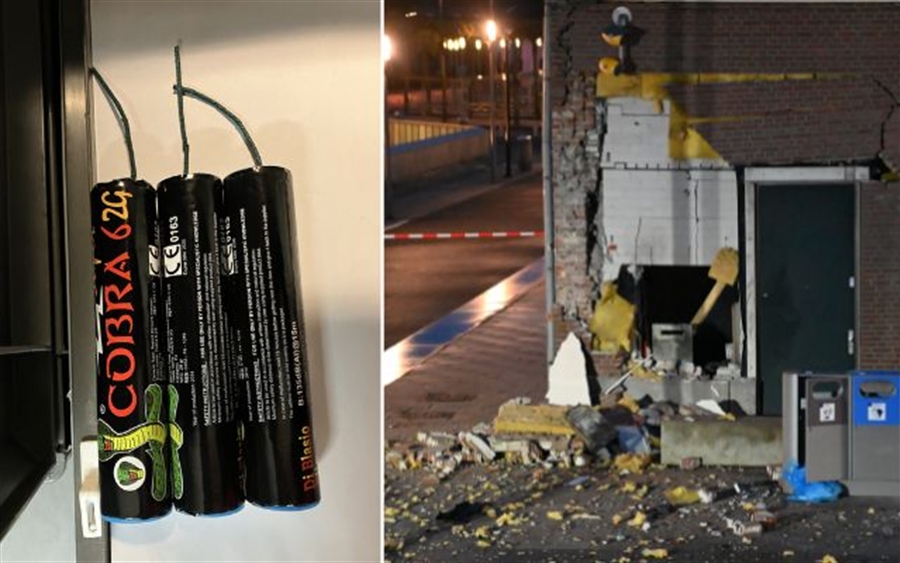
For this, we developed a fluorescent chemical that is highly sensitive, selective and fast-acting. It emits light when it comes into contact with the particles we are looking for. This makes it possible to detect even minimal quantities of pyrotechnic materials, with a very low rate of false positives.
We demonstrated in a laboratory setting that the detection method using the cyclone and fluorescent substance works. Following this ‘proof of principle’, the project moved into its next phase: converting the detection process into a chemical cycle, so that the mechanism can regenerate itself after detection. Both the collection technology and the detection mechanism are reusable, enabling continuous operation.
Achieving this phase is a crucial step towards effective, practical application, with the system’s reversibility enabling repeated use after multiple detection events. One possible use would be a device positioned above a conveyor belt in a parcel delivery hub, scanning passing items. However, before that becomes reality, further development is needed. That is what we are currently working on together with our development partners at Vention.'
Collaboration between domain experts
'The practical development of detection technology for pyrotechnic materials requires various specialists: chemists, engineers, optics experts, and system integrators,' says Vention CEO Leendert. 'Vention specialises in embedded electronics, software, and system integration. We help partners turn complex technologies into innovative products used in real life. At this stage of the project, our contribution is to provide domain expertise to work with TNO in developing the detection method further.
We are currently working with a prototype roughly the size of a microwave. The technology performs as intended. Our focus is now on understanding in what context the technology will find its application, so we can turn the technology into a product. One of Vention’s core principles is to deliver solutions for real-world impact. With this project, we can make a positive contribution to safety in Europe and beyond.'
Future prospects for safety
'The collaboration with Vention highlights the complexity of modern innovation,' Joe concludes. 'The project is currently in the mid-phase of technological development; we are testing the technology under realistic conditions. To bring a commercial product to market, further development and integration are required. In later stages, collaboration with commercial partners will also be essential.
There is a strong demand for novel fireworks detection methods. For police, customs authorities, and security services – as well as locations such as airports and parcel delivery hubs – this development means that large, illegal fireworks can be identified at an earlier stage, helping to prevent more incidents. The expectation is that the technology will be adopted rapidly once it becomes available. Within a few years, I foresee this detection method being operational, enabling us to improve detection capabilities greatly and make society a little safer.'
*source: overheid.nl
Contact us
-

Frans van Gemerden
Functie:Director Protection, Munitions & Weapons-
Standplaats:Den Haag - Ypenburg
-
Email:Email Frans
-
Get inspired
TNO and MBDA sign agreement to advance laser weapon capabilities
From dependence to control: microfactories as the key to European access to energetic materials
Why continuous knowledge development is crucial in munitions safety
TNO’s Unit Defence, Safety & Security strengthens ties with South Korea

How the use of passive radars and satellite signals can detect and identify aerial threats