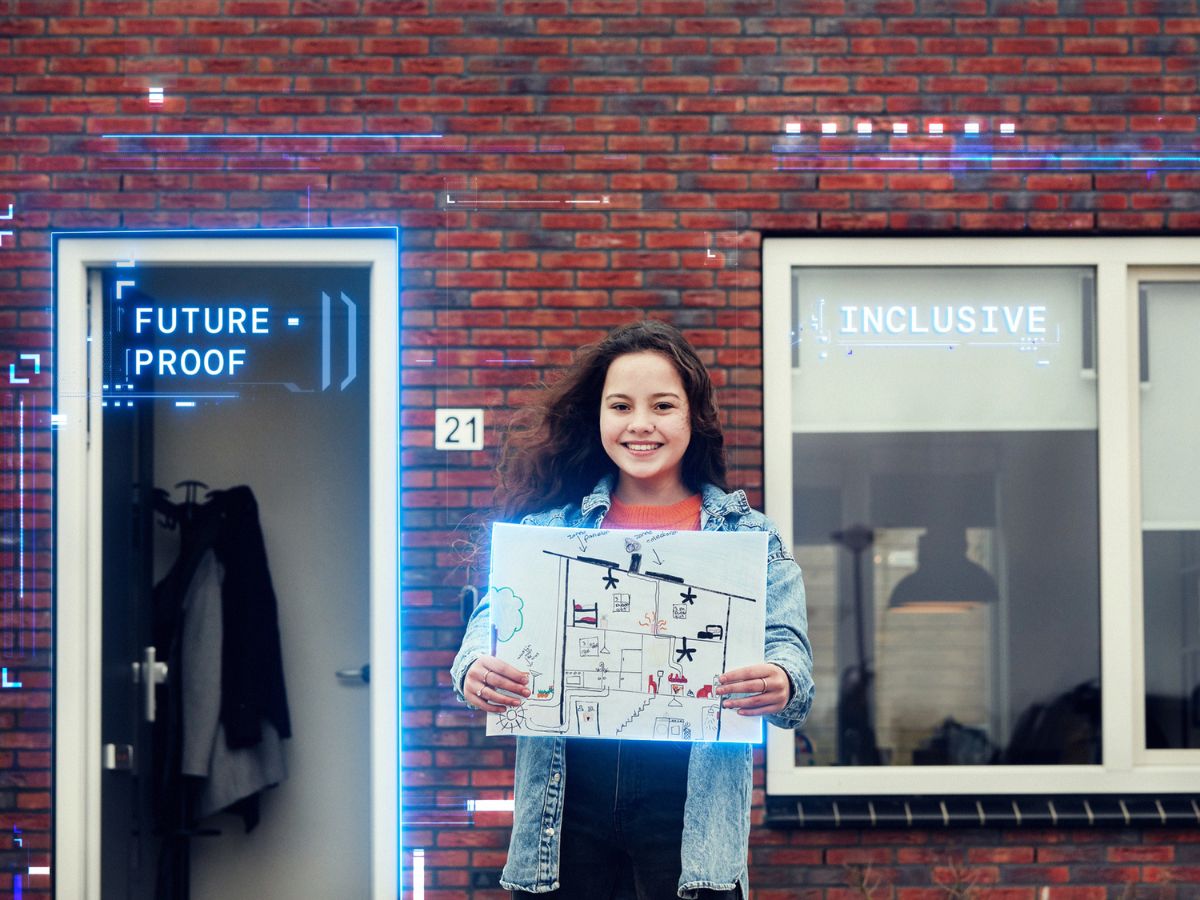
Five future scenarios to support choices in the heat transition
The Netherlands Environmental Assessment Agency (PBL), TNO and social design agency Afdeling Buitengewone Zaken developed five future scenarios for the transition to sustainable heating in the built environment towards 2050. The scenarios show how different interpretations of societal values, such as security of supply, affordability, fairness and freedom of choice, can lead to different choices regarding technology, governance and the distribution of costs.
The scenarios are presented in the study ‘Making choices based on social values in the heat transition’. They help municipalities, public administrators and policymakers discuss policy choices, identify dilemmas and explicitly consider the values underlying those choices.
The heat transition requires more than technology
The heat transition is part of the Dutch government's ambition to achieve a climate-neutral built environment by 2050. Municipalities play an important role: they translate national climate objectives into practice and coordinate the local heat transition.
The transition to a climate-neutral built environment is a major societal challenge and requires more than a technical perspective. Municipalities, residents, housing associations, grid operators and market parties face choices about investment, responsibilities, decision-making and collaboration.
These choices are shaped by different values. What do we consider important? Who decides? Who bears the costs? How much scope should there be for individual choice? The five scenarios illustrate how different answers to these questions can lead to different visions for the future of heat supply.
From societal values to future scenarios
By exploring different interpretations of values such as affordability, security of supply and fairness, five distinct visions of the future were developed:
- National direction – The national government takes the lead in managing the heat supply.
- Regional balance – Regional authorities and other parties work together to maintain a balanced energy system.
- Locally connected – Local communities take the lead in organising the heat supply.
- Organised market – Market parties organise the heat supply within a strongly structured energy market.
- Autonomous and deregulated – Individual freedom of choice and self-reliance are central to the heat supply.
The scenarios help explore and compare possible pathways for the heat transition. They are not predictions and do not favour one particular direction. Instead, they show how different interpretations of societal values can influence policy choices and the way the energy system is organised.
Practical perspectives for municipalities and policymakers
The scenarios were developed to make societal values an explicit part of discussions about the heat transition. They help municipalities, regions and other stakeholders explore different visions of the future, identify dilemmas and make better-informed policy choices.
In this way, the scenarios contribute to a better understanding of the societal choices involved in the heat transition.
TNO knowledge and expertise
TNO brings together knowledge and innovation in energy systems, societal impact, governance and decision-making. By connecting technical, governance and societal perspectives, we provide public authorities, regions, grid operators and businesses with insights that support better-informed decisions in complex energy and sustainability transitions.
Our expertise includes:
- scenario development and futures studies;
- system and impact analyses;
- insights into behaviour, motivations and barriers;
- governance and decision-making expertise;
- stakeholder dialogues and societal integration;
- transition pathways for energy and heating systems
Work with TNO
Is your organisation facing choices around the heat transition, energy systems or other complex transition challenges?
Discover how TNO can help you make better-informed decisions in complex transitions.
Contact us
-

Anouk Geenen
Functie:Medior Scientist IntegratorDr Anouk Geenen is a medior researcher at TNO and works on various studies in the field of participation, future scenarios and social innovation within the Socio‑economic Energy Transition Studies (SES) research group.-
Email:Email Anouk
-
Get inspired
Energy sharing
Collaborative EMS Programme explores pathway to a smart and people-centred energy system

Business sustainability
Community energy initiatives
Discover how behavioural change can help shape tomorrow’s energy system