
The Netherlands is falling behind on R&D, and in ten years we will pay the price
What is needed to ensure that the Netherlands structurally increases its spending on Research & Development (R&D)? The government has drawn up an action plan for this. A positive development, because R&D is the main driver of innovation. And there is a great deal at stake. Because if we become less innovative, this will affect not only our economy and therefore our prosperity, but also matters that are important to our well-being.
On Friday 9 October, the government sent the action plan for the 3% target to the House of Representatives. The message is concerning: the Netherlands invests too little in research and development (R&D), and after 2028 this is at risk of falling even further. TNO calculated what is needed to turn the tide: an additional €40 billion over four years. Why is that money so urgently needed? And what happens if we do nothing?
Below the target for 25 years
In 2002, the EU countries made an agreement: we would spend 3% of our GDP on R&D. Almost a quarter of a century later, the Netherlands stands at around 2.3%. In all those years, we have never exceeded 2.4%. For a long time, this did not attract much attention, because comparable countries also remained below 3%. But the playing field has changed. Belgium, Germany and Denmark are now above 3%. And in other regions of the world, such as the US and Asia, progress is many times faster. The Netherlands is falling behind.
The action plan shows that R&D spending will still rise slightly in 2025. But this will be short-lived. Schemes to stimulate R&D are being modified or are coming to an end, such as the National Growth Fund. As a result, the percentage is at risk of falling sharply after 2028. The gap with other innovative countries will then only widen.
What is at stake?
The Netherlands will need a great deal of money in the coming years. Due to an ageing population, healthcare costs will rise considerably. We need to adapt to climate change. And geopolitical tensions require greater investment in security. Those bills have to be paid somehow.
At the same time, fewer and fewer people are entering the labour market. We therefore need to find ways to do more work with fewer people. ‘That is only possible if we work smarter,’ emphasises Marcel de Heide, Chief Economist at TNO. ‘How? Through better products, smarter processes and more automation. This requires new knowledge, and that is precisely what R&D focuses on. R&D is the most effective way for the Netherlands to become more productive.’
Increasing our problem-solving capacity
R&D does not only generate money. It also contributes to solving problems. Consider new knowledge about cleaner and safer production processes. Or new knowledge in the field of recycling, so that we need fewer new raw materials. R&D can also produce knowledge that contributes to solutions for the overloaded electricity grid and the nitrogen problem. These are just a few examples.
Growth without compromising our quality of life is therefore possible. If we invest in it now. And continue to invest in it.
What R&D delivers: the example of ASML
What does R&D look like in practice? Take ASML’s most advanced chipmaking machines. In these machines, a powerful laser fires at droplets of tin 50,000 times per second. They become so hot that they burst apart and emit extreme ultraviolet (EUV) light. Special mirrors direct that light towards a silicon wafer, where it prints the patterns for chips. That idea did not emerge from a single brainstorming session. The knowledge required to make it work was the result of decades of research. ASML, its partners and suppliers invested heavily in this. They received assistance from research organisations, including TNO. They also received financial support from the government. Without that support, ASML would probably not be where it is today.
But no matter how great a lead is, those who stand still will sooner or later be overtaken. ASML therefore continues to invest heavily in R&D to improve its machines further and maintain its position. In 2024, this amounted to more than three billion euros in the Netherlands alone: more than the other companies in the top 10 investing in R&D in the Netherlands combined.
‘But surely ASML can pay for that itself?’
‘We hear that often,’ says De Heide. ‘In theory, that is correct, but practice is more unpredictable. With R&D, you do not know in advance whether it will deliver anything. A great deal of research fails. ASML, for example, needed countless attempts before the idea involving the laser, tin droplets and mirrors worked.’
‘To some extent, this is an entrepreneurial risk,’ he continues. ‘But there are also situations in which it is clear that the Netherlands as a whole will benefit greatly from certain research in the long term, while individual companies consider the risk too great and have doubts about the potential returns in relation to the costs. In those cases, it is justified for the government to provide co-funding.’
What we save now, we will pay for later
R&D often focuses on complex issues that require a completely different approach. And that takes time. De Heide: ‘It takes five, ten or sometimes twenty years before new knowledge makes a difference. Extend that into the future and it becomes uncomfortable. Money that we save on R&D now may feel like a gain today. For example, we allocate money to reduce excise duty on petrol instead of investing that amount in innovation. But in ten years, we will pay the price: fewer new companies, fewer good jobs and less money for healthcare, climate and security. That is not an imaginary scenario. It is only a matter of time before we feel the consequences. And that could be painful.’
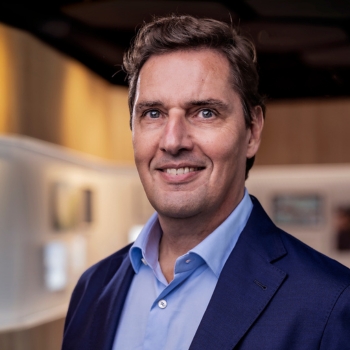
'It may seem logical that companies should invest in research themselves, but the reality is more complex: much R&D delivers no results, and breakthroughs often require countless failed attempts. Particularly when research has the potential to generate significant long-term societal and economic value, yet is considered too risky for individual companies, government co-investment is justified.'
What needs to happen?
‘To begin with, companies in the Netherlands need to be able to do business effectively. This requires certain preconditions, which are precisely what is currently lacking. There is little physical space and little room under nitrogen limits. In many places, companies are on a waiting list for a connection to the electricity grid. And the regulatory burden is high. This makes the Netherlands less attractive to companies that want to conduct research and innovate.’
‘In addition, the government can make R&D more attractive,’ De Heide continues. ‘Subsidies and tax incentives reduce the cost of research, making companies more willing to invest. The government therefore has a clear role to play. The question then is where that money should go. Should we invest everything in one sector in which we are already strong, such as the chip industry? Or spread it thinly across all sectors? At TNO, we advise against both. It is better to invest in several promising sectors. This allows you to maintain focus while spreading the risk.’
‘Finally, we must dare to renew our economy. That is the only way to maintain our earning capacity. We need this not only to continue paying the bills, but also to be able to invest in security, health and well-being. For us and for the generations that follow us.’
Political courage
R&D is a difficult subject for politicians. You do not know in advance what it will deliver. And the results only become visible after years. The temptation is therefore great to spend R&D funding on something that provides more immediate relief. ‘Unfortunately, this happens regularly,’ says De Heide. ‘The government has committed to spending 3% of our GDP on R&D, as stated in the coalition agreement. We are still a long way from that, while other countries are investing heavily.’
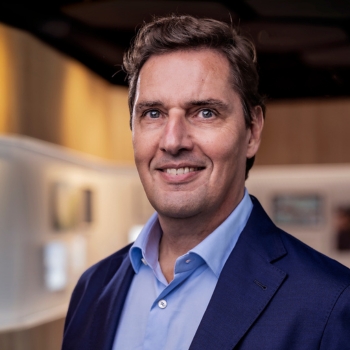
‘If we want to maintain our earning capacity, we must continue investing in renewal and innovation. In doing so, we not only pay the bills of today, but also create the means to invest in the security, health and prosperity of tomorrow.’
How it can be done
When it comes to Europe’s R&D champions, De Heide explicitly mentions Belgium. ‘No less than 3.5% of GDP is spent on R&D there: the highest percentage in Europe. The major difference compared with the Netherlands is that the Belgian government is very consistent when it comes to stimulating R&D spending. And that is despite the fact that Belgium, like the Netherlands, has a large services sector and relatively little industry. The argument that higher R&D spending is not necessary in our country because we produce relatively little therefore does not hold.’
And if there is one lesson that the Netherlands can learn from Belgium, according to De Heide it can be summed up in a single word: ‘Consistency!’
‘It is not the case that the Netherlands never tries to give R&D a boost. The National Growth Fund is a good example. But at some point, it comes to an end again. And for R&D, that is disastrous. Because you then see a brief peak, followed by another decline. And that is exactly what is happening at present. But it is not yet too late to prevent us here in the Netherlands from paying the price in ten years’ time. However, we must act quickly to create the right preconditions and introduce policies that no longer zigzag, but under which our country invests 3% of GDP in R&D year after year, or even more.’
What exactly is R&D?
Statistics Netherlands measures Dutch R&D spending according to OECD rules, so that we can make meaningful comparisons with other countries. An activity counts as R&D when a creative, systematic and planned approach is used to find a solution to a practical problem. Or when existing or new ideas are developed into products or processes that actually work. Put more briefly: R&D is the creation of new knowledge.
Contact us
-
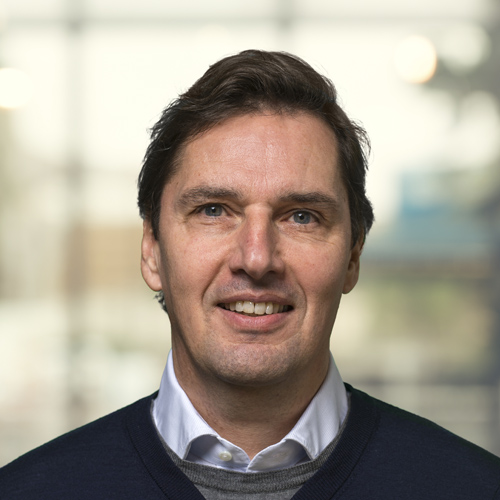
Marcel de Heide
Function not known-
Standplaats:Den Haag - New Babylon
-
Email:Email Marcel
-
Get inspired
How TNO creates openness around mental health

Brightlands Circular Space opens: TNO helps companies scale up plastic innovations faster
From test lab to digital twin: how TNO makes heat pumps smarter
Product group analysis