Liveable cities and regions
A pleasant and safe living environment where we live, work, travel, and recreate. Decision-makers face a complex challenge to ensure such an environment. How do you achieve sustainable cities and villages, accessible to everyone, and resilient to climate change? How do you do that when space is scarce? Where do you find reliable data and how do you make those complex decisions? With our innovations, we support governments, area developers, and construction companies to keep cities and regions liveable and resilient.
Why TNO?
How do we ensure business activity and employment while building enough homes in this overcrowded region? How do we make the city cleaner, more accessible, and resilient to climate change?
The energy system, air quality, housing shortage, mobility and climate. All issues with a significant impact on the scarce space in the Netherlands. To create a liveable and resilient environment for everyone, data and insights are needed. Smart, innovative solutions like digital twins and AI can provide insights into the effects of policy and investment choices. Combined with in-depth knowledge in a wide range of fields "under one roof," TNO offers reliable, independent support and innovative solutions.
TNO has already assisted many municipalities, provinces, regional partnerships, and companies in making data-driven decisions with an eye on the future. TNO holds a unique position in the innovation ecosystem, between the market, government, and universities. TNO can demonstrate and apply innovations on a larger scale for the first time, ready for further scaling.
Our activities
How can we prevent heavy showers or extreme heat from completely disrupting the city? How can we limit the "recovery time" after heavy rain or extreme heat? And what other disruptions could hit cities?
Climate change has regularly led to disruptions in our road network in the past period. We also regularly see the consequences of climate change camps on the railways and on rivers, with delays (or worse), which underlines the need to build climate-robust infrastructure. The challenge is to achieve this with respect for nature, with nature-inclusive designs and "nature-based solutions".
How do we achieve a low-carbon mobility system in our city? How can we realise a modal shift to zero emission mobility?
The intention is often there, but the practise in which emission-free vehicles determine the street scene still seems far away. Grid congestion, charging problems, accessibility issues surrounding zero-emission zones. And then the consequences for vulnerable residents who are dependent on the car but cannot afford an e-car. Many parties, such as transporters, municipalities and electricity companies, are looking for solutions in which cities and regions remain accessible, but also become cleaner.
How can the number of motorised kilometers traveled in a region be reduced? How can alternatives to the car contribute to better quality of life in the city without compromising accessibility?
The current mobility system is stuck in many places. Cities are growing in population, while the space for mobility often does not grow. Important functions must also remain easily accessible for residents and visitors. This makes it necessary for many municipalities to shift their budget from cars to more sustainable transport options (that take up less space).
TNO combines existing with innovative, new mobility concepts, based on the principle that important functions in cities and regions remain easily accessible to everyone. With an innovative "agent-based" traffic model we can model urban dynamics on a large scale. Compared to current simulations, this technology is more realistic and allows predictions to be made that take human behaviour into account.
Examples of issues that TNO can assist with are:
- making the concept of the 15-minute city applicable (proximity to functions/facilities) and linking this to changes in mobility (more active modalities, less motorised traffic).
- cost savings in the mobility domain without this having an impact on accessibility.
- apply broad prosperity in, for example, new-build neighborhoods with an eye for access/accessibility for all residents, including vulnerable groups.
How can we change the mobility system so that it requires less space? How can we guarantee accessibility of the city for everyone? How can spatial decisions regarding area development be accelerated?
Complex challenges for many cities and regions. After all, a growing and aging population, smaller households and new generations with different needs compete for scarce space. And matters such as climate change, energy transition, mobility, activity, recreation and biodiversity must also be taken into account.
To arrive at the right solutions it is necessary to look at the entire spatial puzzle. Insight, innovations and solutions in sub-areas (per district, business park or village) will not get us there. TNO offers an integrated view to make better decisions about the organisation of our country.
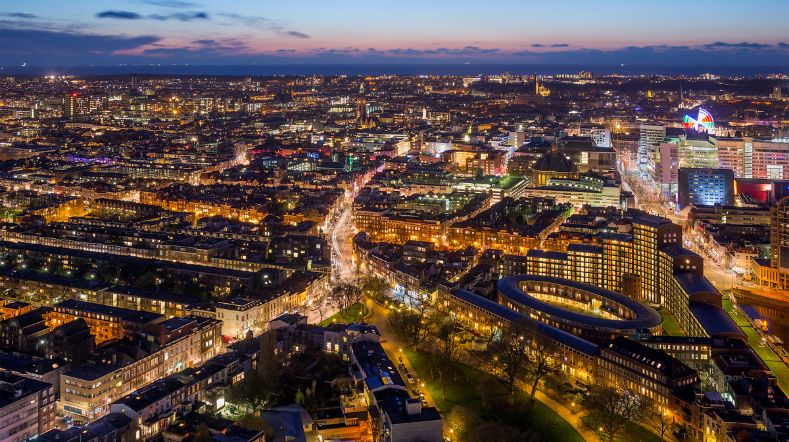
Scalable innovations to expand the solution space of urban decision makers
We aim to create cities and regions that are sustainable, resilient, safe and accessible for everyone, places where residents, visitors and businesses can truly thrive. To achieve this, we develop, apply and scale innovations that enable integral, data driven and fast decision making.
This is urgently needed, given that urban and regional decision makers navigate multiple, compounding challenges. As solutions that fit all needs are hard to find and human mental space is limited, this complexity increasingly slows down decision making.
Building on our expertise and our right to play, we focus on three breakthroughs that will define the next generation of decision making for thriving living environments.
We redefine modelling of mobility and use of space to deliver deeper insights at unprecedented speed. Our next-generation modelling approach brings together:
- High resolution, behaviour aware simulations: capturing differences between groups and personas, enabling more effective decisions at detailed spatial and temporal levels.
- Dynamic models that reflect real life: no longer based on an 'average day' or 'peak hour', but covering full daily patterns and realistic behavioural dynamics.
- Integrated system thinking: linking spatial planning, mobility, broad prosperity, energy demand and charging behaviour, resilience, biodiversity and logistics in one coherent modelling ecosystem.
This enables governments, software service providers, consultancies and engineering firms to make better, faster and more cost effective decisions. By integrating domains and capturing real world behaviour upfront, next generation modelling reduces duplication, limits costly redesigns, and allows faster exploration of alternatives – lowering overall analysis and implementation costs.
Our offerings: our Large-scale Agent-Based Simulation facility (LABS) and the related LABS4U ecosystem for cocreation of high fidelity, scalable modelling capabilities, open source solutions and proprietary modules.
We leverage generative AI to shift from analysis and prediction to prescription. Generative AI expands the solution space by moving beyond a small, familiar set of options and surfacing a much broader range of viable solutions, making complex trade-offs transparent and manageable.
The leap forward: from "what happens if I do this" to "how can I realise my goals". We deliver tools for planners and policymakers that help generate and assess optimal urban design and policy scenarios, sped up with AI agents.
Our work focuses on:
- AI-enhanced optimal design generation: prescriptive digital twins that automatically create optimised scenarios.
- AI agents as co pilots for decision-support: policymakers interact with the system by defining objectives and values, with agents guiding them through the process, validating constraints and allowing seamless iteration without loss of time or information.
- Platform agnostic solutions: allowing for easy implementation and connecting easily to the platforms and technologies that organisations already use.
We co-create these capabilities with service providers currently offering solutions to stakeholders in the spatial development value chain.
Our offerings: AI agents and optimisation modules.
Technological innovation alone is not enough. Breakthroughs occur when mental models shift, when people see the broader system, embrace shared interests and open themselves to new solution spaces. We therefore focus on:
- Broad prosperity and system thinking: moving beyond siloed perspectives toward integral, cross domain understanding.
- Creating alignment and shared direction: reducing friction, enabling compromise and helping teams recognise possibilities rather than constraints.
- Addressing barriers in the current zeitgeist: challenging assumptions that hold systems back and creating the conditions for real transformation.
Mental models are a powerful lever for change, not a soft accessory. They are essential in embracing new integral approaches and in strengthening the impact of technological innovations.
We target organisations and ecosystems facing complex, system wide decisions for thriving living environments. Our offerings: A toolbox for mapping mental models, identifying conflicting views and supporting alignment, enhanced with AI based applications.
Contact us
-
Marianne Aalbersberg
Functie:Business Developer Living environment, climate adaptation and spatial choicesI am responsible at TNO for the innovation programmes for liveable cities and regions, with a focus on mobility, climate adaptation, and spatial planning decisions. How do we solve the spatial puzzle effectively, both for now and the future? We work closely with businesses and governments to achieve the most impactful innovations.
-
Standplaats:Delft - Molengraaffsingel
-
Email:Email Marianne
-
-
Isabel Wilmink
Function not known-
Standplaats:Den Haag - New Babylon
-
Email:Email Isabel
-
Our latest developments
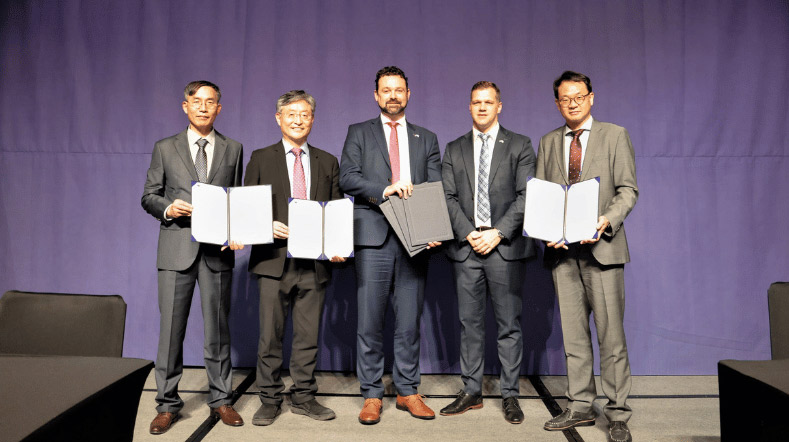
TNO signs MoU with leading Korean knowledge institutes to accelerate the development of smart cities
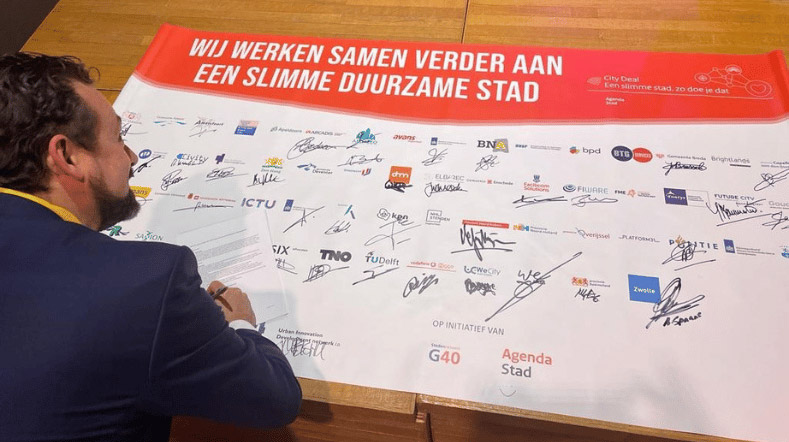
TNO a partner of the ‘A smart city, that’s how you do it’ City Deal
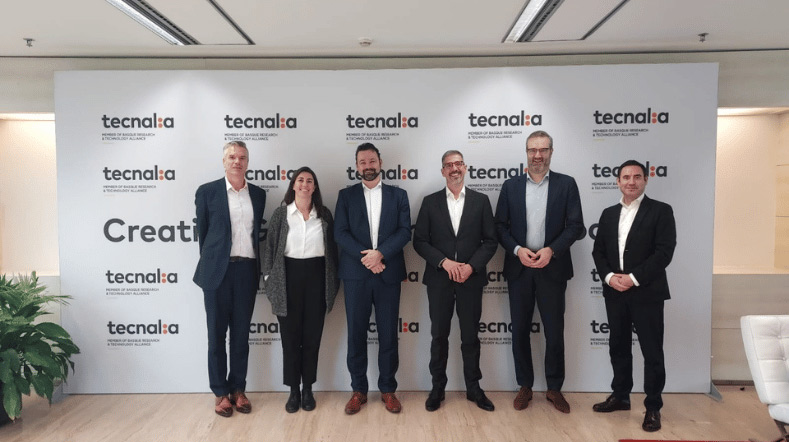
TNO and TECNALIA collaborate on Digital Twins for Smart & Sustainable Cities
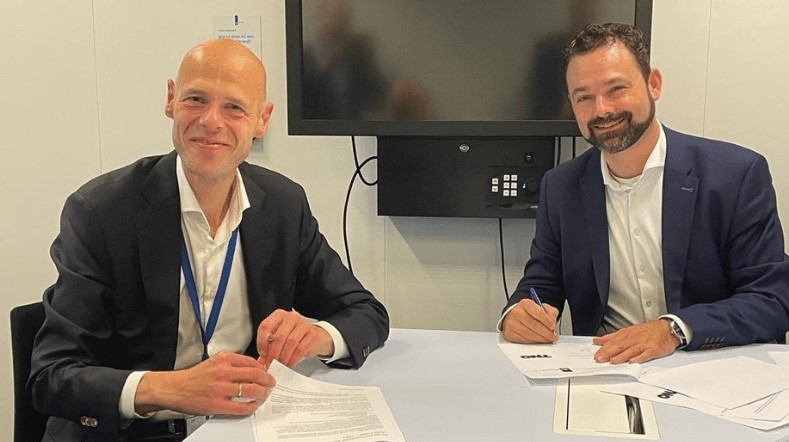
Partnership ‘Overall Well-being’ Ministry of Infrastructure and Water Management and TNO
Open call for European SMES and start-ups